
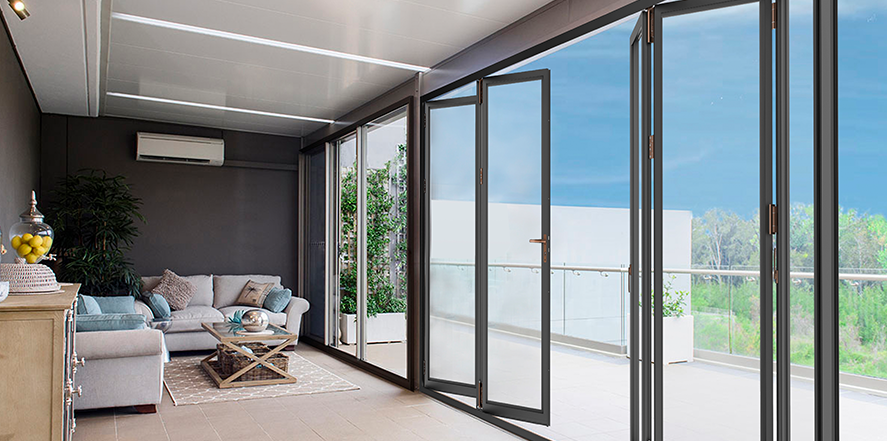


Bi-fold doors are a popular choice for maximizing openings in both residential and commercial spaces. Panels fold and stack to the side, creating wide, unobstructed clearings without the swing space of a hinged door. But the performance of any bi-fold system comes down to its hardware. Here is what you need to know about the key components, how hinges work, and what installation involves.
What Is Bi-Fold Door Hardware?
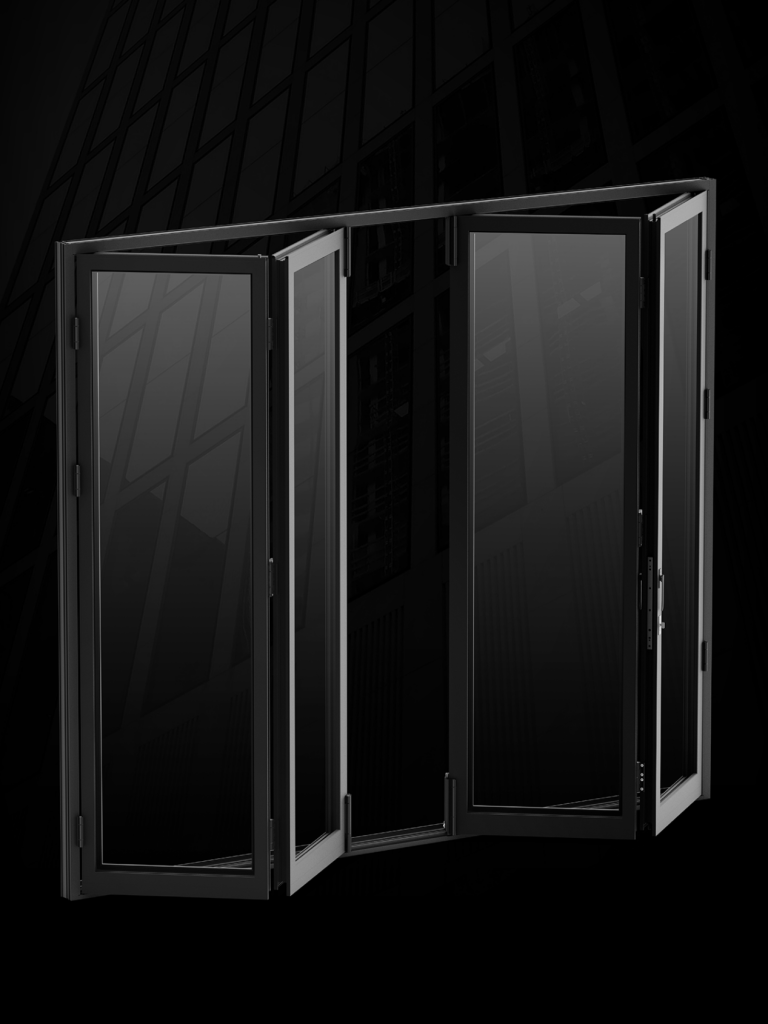
A bi-fold door consists of multiple panels that fold toward each other when opened. The hardware system coordinates all panel movement through a set of matched components. Understanding bi–fold door hardware means understanding each part’s specific role in the folding and sliding sequence, and why the quality of each component directly affects long-term performance.
Core Components
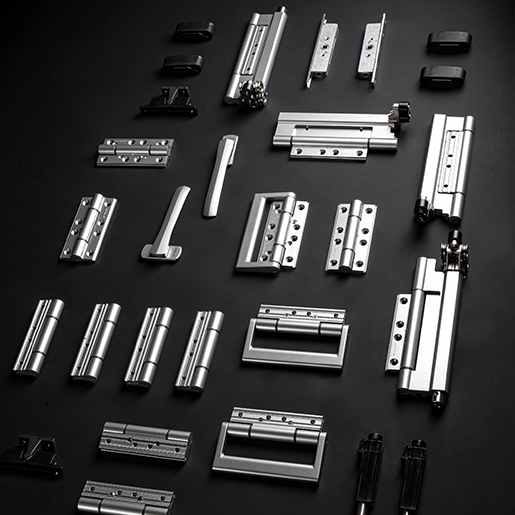
- Track: The main rail, typically steel or aluminum, mounted at the header or threshold to guide panel movement.
- Rollers: Carry the panel weight and allow smooth travel along the track. Quality rollers use dual guide wheels to prevent lateral sway.
- Pivot brackets: Anchor the outermost panels at the jamb, enabling end panels to both swing and slide simultaneously.
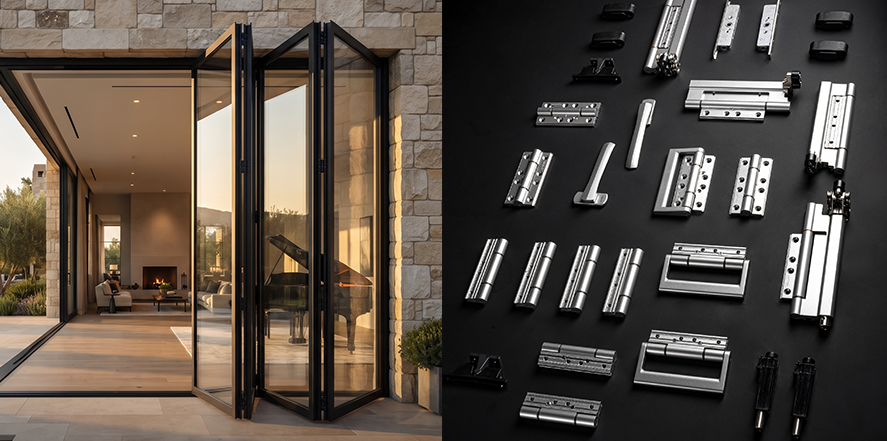
- Hinges: Connect adjacent panels and allow them to fold as a unit. The hinge bears dynamic loads on every operation, making it the most frequently stressed component.
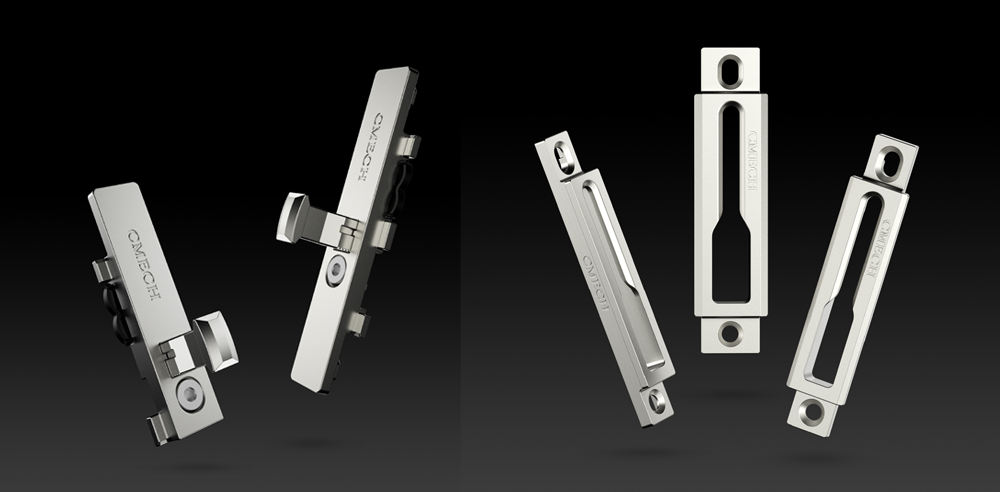
- Shootbolts: Extend into the top and bottom frame to lock intermediate panels in place when the door is closed.
- Multi-point lock and handle: Operate the main active leaf for latching and security.
- Panel stops: Magnetic or adjustable stops hold the folded stack steady when fully open, preventing swinging or rattling.
How the Hinge System Works
The hinge enables the bi-fold action. Each pair of adjacent panels shares a hinge that allows them to fold toward each other. The end panels connect to the frame via pivots, so the whole panel set swings and slides along the track simultaneously. Since the hinge handles combined rotational and lateral loads on every operation, hinge quality is a primary performance indicator for any bi-fold system.
Adjustable vs. Fixed Hinges
Bi–fold door hinges fall into two categories:
- Adjustable hinges allow fine-tuning of panel gaps in multiple directions after installation. They compensate for frame irregularities and panel settling over time, making them the preferred choice for most exterior applications where field conditions vary.
- Fixed hinges are simpler in construction and more rigid, suited to perfectly square openings where no post-installation adjustment is expected.
For exterior bi-fold doors, adjustable hinges are generally recommended. Real-world openings are rarely perfectly square, and correcting gaps without dismantling the system saves significant installation time. For exterior applications, hinges should also feature anti-pry construction — such as knurled pins or riveted caps on the hinge barrel — to resist forced-entry attempts.
Installation Basics
The opening must be square and level within 2 mm before any hardware is fitted. An out-of-square frame is the most common cause of operational problems and premature wear in bi-fold systems.
Key Installation Steps
- Verify the opening for square, plumb, and level. Shim or reinforce as needed before any hardware goes in.
- Mount the track to the header, with all screws sitting flush to avoid roller interference during travel.
- Install pivot brackets at both ends of the track at the jamb.
- Hang the panels, attaching rollers to each panel top and connecting adjacent panels with hinges.
- Fit shootbolts and locks on intermediate panels, then install the main leaf lock and handle on the active leaf.
- Adjust alignment using adjustable hinges and roller height settings to achieve equal, consistent panel gaps.
- Install panel stops to secure the folded stack when fully open.
CMECH Bi-Folding Door Hardware System
CMECH is a premium hardware brand with over 25 years of global industry experience, serving architects, developers, and door manufacturers worldwide. The CMECH Bi-Folding Door hardware system is engineered for even-numbered panel layouts and covers every component needed for a complete, high-performance installation.
Key features and specifications:
- Panel configurations: Supports multiple even-leaf layouts including 431, 633, 651, 871, and 853, covering a wide range of opening widths
- System durability: Rated for over 30,000 operating cycles
- Adjustable and fixed hinges: Bi-directional gap adjustment with clamping and safety locking screws; anti-pry knurled pins and riveted end caps on hinge barrels for enhanced security
- Dual sealing: Hinge-side and main panel sealing gaskets provide double-layer weather protection
- D-type square spindle handle: Rated to 120,000 open-close cycles, equivalent to over 32 years at 10 uses per day; break-resistance tested to 2,500 N
Choosing the Right System
When specifying bi-fold door hardware, matching component ratings to the actual panel weight, configuration, and site conditions is essential. Undersized rollers and hinges wear quickly and cause misalignment that worsens over time. For exterior installations, prioritize corrosion resistance — stainless steel rollers and hardware with documented salt-spray test results are reliable indicators of long-term durability. Working with a supplier that offers complete, matched hardware systems reduces the risk of compatibility issues on site and simplifies the entire installation process.
 English
 Arabic
 Chinese
 French
 Thai
Thai Vietnamese