



The window handle is the component people interact with every day, yet it often receives far less attention than the frame, glass, or profile during the specification process. A well-chosen handle shapes the feel of the entire window — how smoothly it operates, how secure it feels, and how well it integrates with the overall design.
Understanding the main types of window handles, how each one functions, and what distinguishes a quality product helps you make a more confident and informed decision for any window project.
What Does a Window Handle Actually Do?
The handle of a window does more than provide a grip. On most modern window types, it also activates the drive mechanism that engages or disengages the locking system.
When you rotate a casement or tilt-and-turn handle, you are driving an internal gearbox that moves the espagnolette — the perimeter linkage connecting all the lock points simultaneously. The quality of the handle’s internal mechanism therefore directly determines how smoothly, quietly, and reliably the locking system operates over time.
On sliding windows, the handle serves a different function: it provides a grip point and typically integrates a latch or hook lock that secures the sash in the closed position. In both cases, the handle is the interface between the user and the hardware system, and its durability, feel, and precision reflect the overall quality of the window.
Main Types of Window Handles
Spindle Drive Handle
The spindle drive handle is the standard handle type for inswing casement, tilt-and-turn, and outswing casement windows. The handle body rotates around a central spindle, which turns the drive gearbox inside the sash. Different spindle formats, typically hexagonal or square, are used depending on the gearbox specification. This is the most widely used handle type globally.
Baseless Handle
A baseless handle sits flush against the sash surface without a visible base plate or rose. The fixing screws and mechanism are concealed behind the handle body, giving the window a much cleaner, more minimalist appearance.
Recessed Pull Handle
Used primarily on sliding windows, a recessed pull handle sits flush within a cutout in the sash rail. This eliminates protrusion between overlapping panels and is the correct choice for any sliding window with a fly screen or where panel clearance is tight. It typically integrates a latch or bump lock function.
Key Performance Factors
Internal Mechanism
The mechanism inside the handle is what determines long-term feel and reliability. A steel ball roller bearing in the pivot point significantly reduces friction, producing a smoother rotation that remains consistent over many thousands of cycles. Handles with plastic-only internal components wear faster and develop play earlier.
Anti-Sag Design
A handle that droops out of position after extended use is a common complaint. The correct engineering solution is a spring auto-return mechanism inside the handle body that maintains the handle’s position regardless of orientation. This keeps the handle upright and looking correct throughout its service life.
CMECH Handle Series
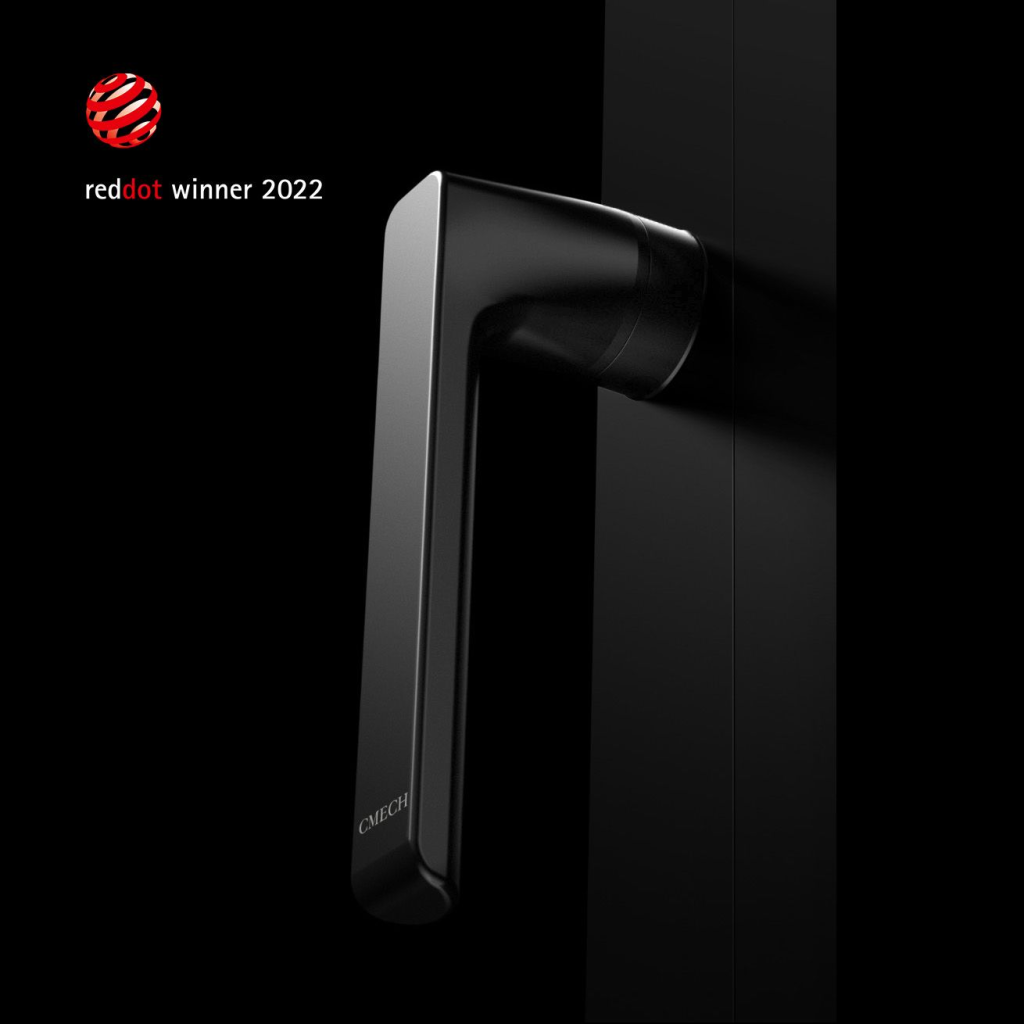
CMECH is a premium window and door hardware brand with nearly 30 years of global industry experience, and its handle of window range has been recognised with multiple international design awards. The CMECH Handle Series covers the full range of window types across six distinct product lines, each engineered to balance performance, durability, and aesthetic quality.
Key features and specifications across the CMECH Handle Series:
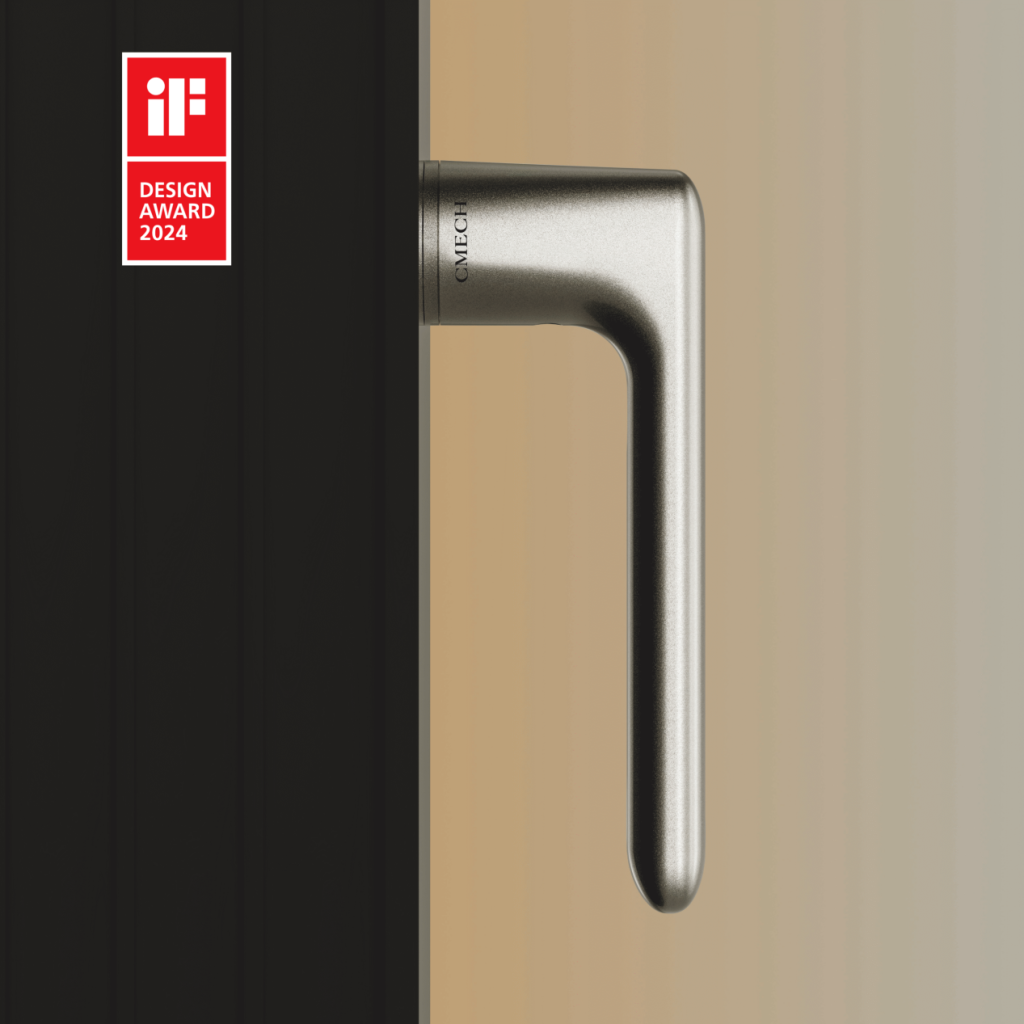
- Venice Series: Winner of the 2024 German iF International Design Award, the Venice Series draws its design concept from the waterways of Venice, translating the city’s graceful curves into a handle form that feels as refined as it looks.
The core components use stainless steel one-piece precision casting for lasting structural strength, while a patented rolling spring steel ball structure reduces friction for noticeably smoother operation.
A triangular three-screw fixing structure keeps the handle firmly in place without wobble, and the versatile profile integrates cleanly with tilt-and-turn, exposed, concealed, and inswing casement window systems. - Milan Series: Built around a baseless minimalist design inspired by Milanese fashion, the Milan Series eliminates the visible base plate entirely, producing a cleaner and more refined look on any window face.
An iron triangle structure paired with a patented rolling spring steel ball mechanism keeps the handle stable and prevents sagging over time.
Every unit is manufactured using robotic automation technology and passes over 2,000 hours of neutral salt spray testing, reflecting the series’ commitment to long-term quality.
It is compatible with a wide range of outswing casement, tilt-and-turn, inswing casement, sliding door, and hinged door systems.
The full CMECH Handle Series is available across casement, tilt-and-turn, inswing, sliding window, and door applications, with handle-to-gearbox compatibility matched across the complete hardware system.
How to Choose the Right Handle
Three factors should drive the selection decision. First, window type: the handle must be mechanically compatible with the gearbox and drive system installed in the sash.
Second, aesthetics: the handle’s profile, finish, and visible fixing arrangement should suit the design intent of the window and the interior it opens into.
Third, durability requirements: for high-use applications such as commercial buildings, hospitality, or multi-residential projects, cycle-tested handles with documented durability ratings are a practical minimum specification.
Matching all three criteria from a single hardware supplier ensures system-level compatibility and simplifies both installation and any future servicing.


 English
 Arabic
 Chinese
 French
 Thai
Thai Vietnamese