
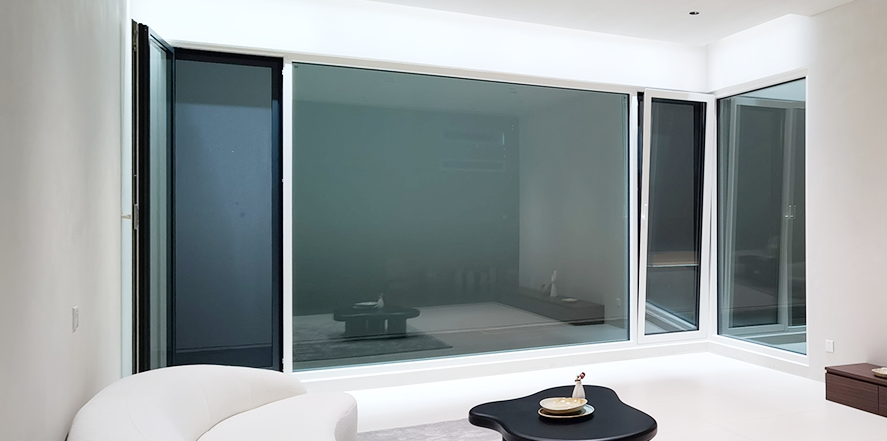


A tilt and turn window is a European-style window that opens in two different ways from a single sash, using one handle to switch between modes. It looks similar to a casement window from the outside, but the mechanism behind it is far more advanced. This guide explains how the system works, what hardware makes it possible, and what to look for when comparing suppliers.
What Is a Tilt and Turn Window?
A tilt and turn window features one large sash that can either tilt inward from the top for ventilation or swing fully open from the side like a door. When closed, it functions much like a picture window, offering an unobstructed view and a tight seal around the entire frame.
How a Tilt and Turn Window Works
The entire system operates through a single handle connected to an internal multi-point locking mechanism.
Closed Position
With the handle pointing down, the sash is fully closed and locked at multiple points around the frame, creating a tight, secure seal.
Tilt Position
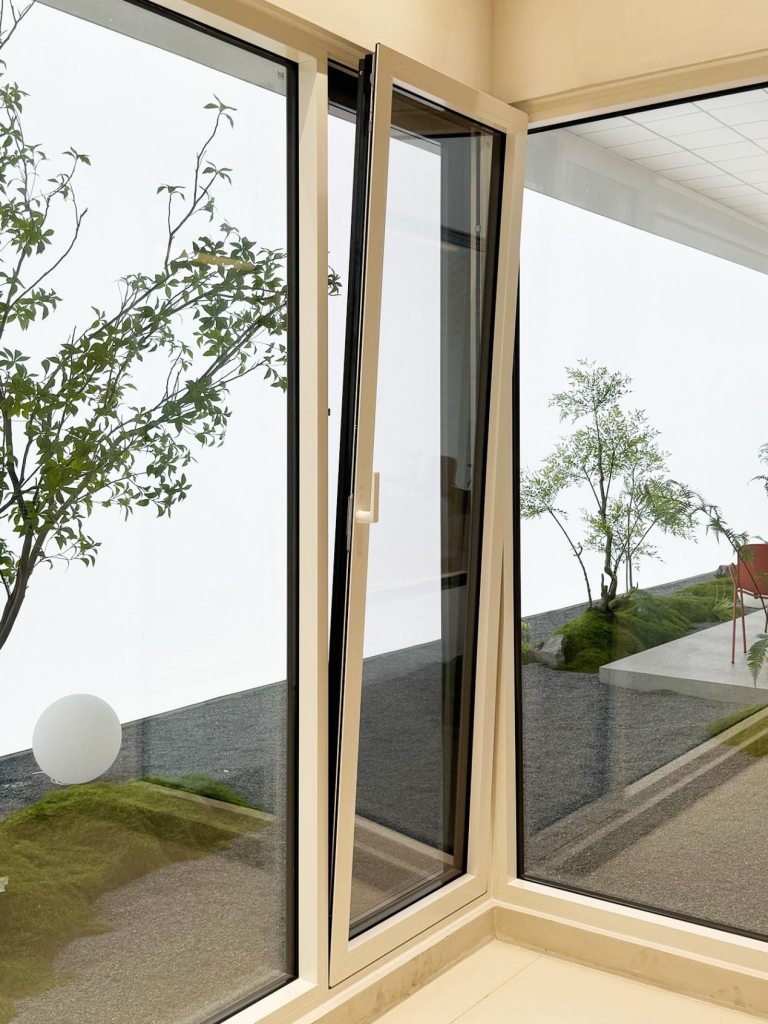
Rotating the handle upward to 180 degrees releases the top of the sash while keeping the bottom securely locked. The sash tilts inward slightly, providing safe, controlled ventilation without fully opening the window.
Turn Position
Turning the handle to the horizontal (90-degree) position disengages the locking points and allows the entire sash to swing inward on its side hinges, providing maximum ventilation and easy access for cleaning.
Key Benefits of Tilt and Turn Windows
- Security: Multi-point locking engages the frame at several points, making forced entry more difficult
- Energy efficiency: A tight compression seal when closed reduces drafts and heat loss
- Easy cleaning: The inward-swinging turn position allows both sides of the glass to be cleaned from inside
- Controlled ventilation: The tilt position allows airflow without leaving the window fully open
- Child safety: The tilt mode provides a narrow, secure opening that limits the risk of falls
Because the mechanism depends on precise internal hardware, many tilt and turn window manufacturers focus heavily on the hinges, gearbox, and locking components rather than the visible handle alone.
Hardware Components Behind the Mechanism
Several coordinated parts work together to make tilt and turn functionality possible.
- Handle: Connects to the internal gearing and determines which mode the window operates in
- Drive gearbox: Transfers handle rotation into the movement of multiple locking points at once
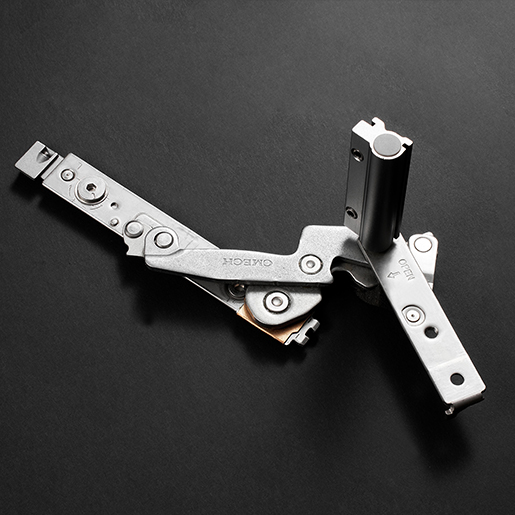
- Concealed or exposed hinges: Support the sash weight and allow the pivot point to shift between tilt and turn modes
- Corner drives: Redirect motion around the corners of the frame to operate locking points on all sides
- Tilt bolts and strikers: Engage when the window is in tilt mode to hold the sash securely at a fixed angle
Introducing CMECH
CMECH has supplied window and door hardware to architects, developers, and fabricators for nearly 30 years, with regional teams covering the Middle East, Southeast Asia, Australia, and Greater China. Its tilt and turn hardware reflects a broader focus across the company’s product lines on systems that combine multiple operating functions without sacrificing long-term reliability.
CMECH Tilt and Turn Window Hardware
For projects requiring a dependable dual-function system, CMECH offers a tilt and turn window hardware series with a concealed hinge configuration, built around three core components.
Handle
- Available in the Milan Series or Venice Series, both honored with the German Red Dot and iF Design Awards
- Built with a precision-engineered mechanism for smooth, stable, and long-lasting operation
Drive Gearbox
- Powered by patented dual-gear technology, with perfectly meshed gears that eliminate play and backlash
- Includes a smart anti-drift design to keep components aligned over time
- Finished with a premium stainless steel faceplate that resists wear and deformation
Hinge
- Available in load ratings from 80 kg up to 130 kg to suit different window sizes
- Reinforced with thickened 304 stainless steel support arms for added strength
- Features fully adjustable sealing geometry for improved weatherproofing
This tilt and turn window hardware series supports sash widths from 490 mm to 1,200 mm, sash heights from 600 mm to 2,800 mm, and a load-bearing capacity of up to 130 kg, making it suitable for both residential and larger commercial openings.
Choosing a Reliable Hardware Supplier
When comparing tilt and turn window manufacturers, a few factors help separate dependable suppliers from the rest.
- Confirm the hinge and gearbox load ratings match the project’s sash dimensions
- Ask whether components have been cycle-tested for long-term reliability
- Look for corrosion-resistant materials such as stainless steel in load-bearing parts
- Check for design recognition or third-party certifications that reflect engineering quality
Specifying a specialist like CMECH enables architects and developers to integrate advanced tilt and turn mechanisms with confidence. Through precise component coordination, validated performance testing, and consistent manufacturing standards, CMECH helps ensure smooth operation, reliable sealing, and long-term stability in dual-function window systems.

 English
 Arabic
 Chinese
 French
 Thai
Thai Vietnamese