
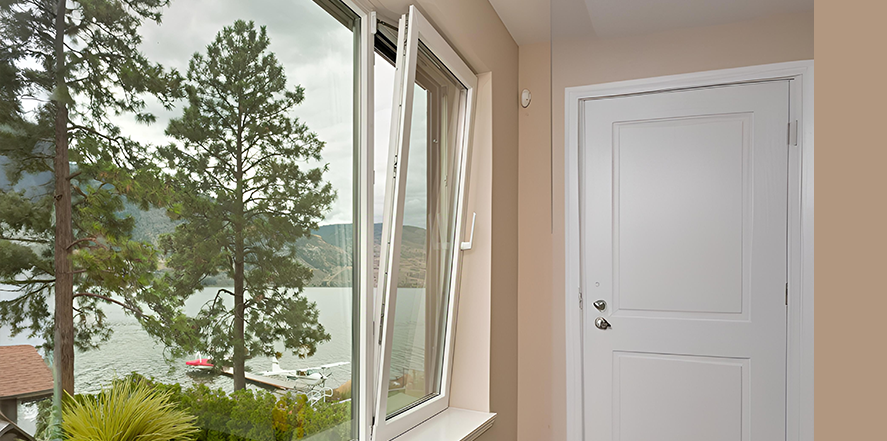


If you have come across windows that open both inward from the top and swing fully open from the side, you have seen a tilt and turn window in action. This dual-function design is now widely used in residential and commercial buildings across Europe, Australia, and increasingly in other global markets. Understanding how they work, what makes them perform well, and what hardware they require is useful for anyone specifying or purchasing windows.
What Are Tilt and Turn Windows?
What are tilt and turn windows, and why do they operate differently from other window types? A tilt and turn window is a single sash that operates in two distinct modes, controlled by a single handle. In tilt mode, the top of the sash tilts inward by a fixed distance, allowing ventilation while keeping rain out and maintaining a level of security. In turn mode, the entire sash swings fully inward on its vertical axis like a casement door, providing full access for cleaning and maximum airflow.The handle position determines which mode is active. Pointing the handle downward closes and locks the window. Rotating it 90 degrees engages turn mode, allowing the sash to swing open fully from the hinged side. Rotating it 180 degrees switches to tilt mode.
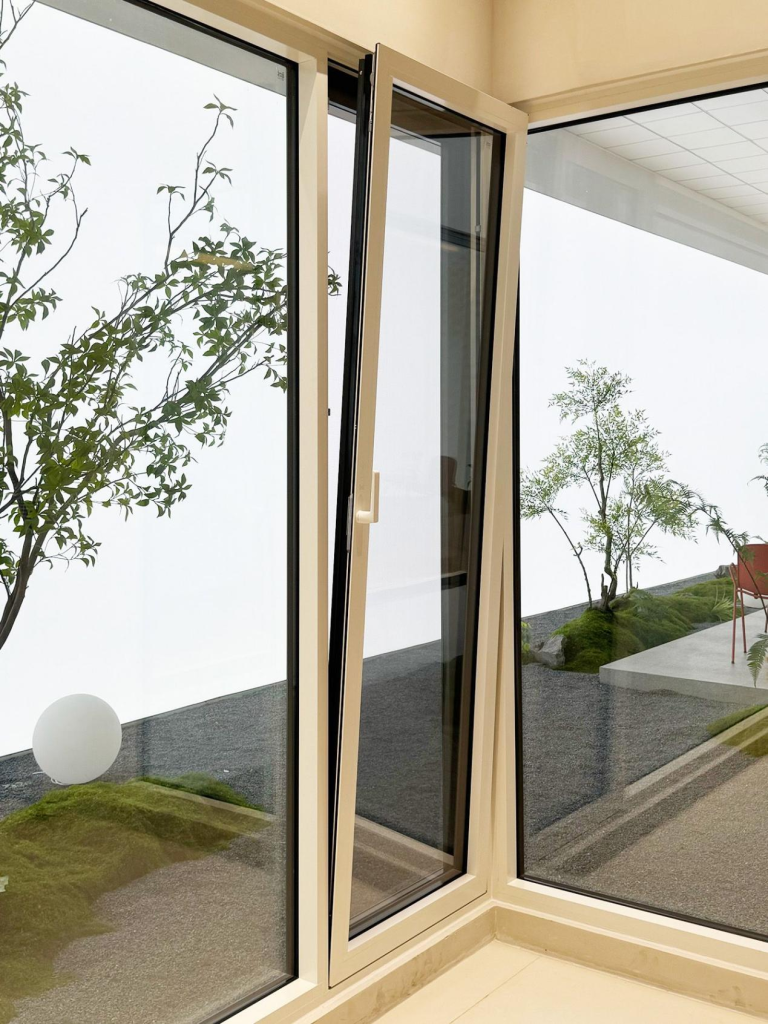
How the Mechanism Works
The operating logic of a tilt and turn window is managed by a perimeter espagnolette system, which is a continuous linkage running around the sash that connects the handle to multiple lock points and the tilt bolt.
The Tilt Function
When the handle is turned to the tilt position, the espagnolette disengages the side lock points while keeping the bottom pivot engaged. The tilt bolt at the top of the sash locks into the tilt striker in the frame, limiting how far the top of the sash can travel inward. The result is a controlled tilt opening, typically up to 160 mm at the top, that allows ventilation without the sash swinging freely.
The Turn Function
When the handle is turned fully, the bottom pivot disengages and the side hinges take over. The sash pivots on the lower concealed hinge and swings inward on its vertical axis. A fail-safe corner drive prevents the window from being operated in the wrong sequence, which would otherwise cause the sash to disengage from the frame incorrectly.
The Role of the Corner Drive
The corner drive transmits the handle’s linear motion around the corners of the sash perimeter. It is a critical component because it must change the direction of force at each corner without play or binding. A fail-safe corner drive adds a mechanical interlock that prevents simultaneous tilt and turn engagement, protecting both the hardware and the window frame.
Key Hardware Components
A tilt and turn window relies on a coordinated set of hardware components, all of which must work together precisely.
Handle and Gearbox
The handle connects to a drive gearbox embedded in the sash. The gearbox converts the rotational motion of the handle into the linear motion of the espagnolette. Gearbox quality directly determines how smoothly the handle turns across its full range of positions.
Tilt Bolt and Tilt Striker
The tilt bolt is the component that limits and controls the tilt opening. It must engage cleanly with the tilt striker in the frame without binding. The tilt distance is determined by the length of the tilt bolt arm.
Concealed Hinges
The concealed lower hinge is the primary load-bearing component for the turn function. It must carry the full static and dynamic weight of the sash when it is swung open. Hinge capacity must be matched to sash weight, and the hinge geometry must allow full-clearance opening without the sash fouling the frame.
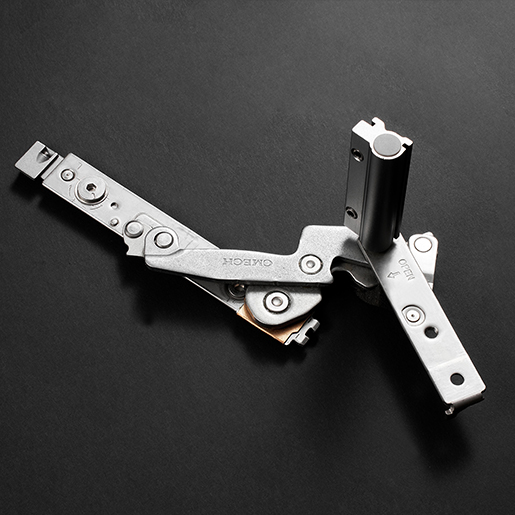
CMECH Tilt and Turn Window Hardware — Concealed Configuration
CMECH is a premium window and door hardware brand with nearly 30 years of global industry experience. The CMECH Tilt and Turn Window Concealed Configuration is designed to deliver outstanding sealing, long-term durability, and a clean aesthetic through fully concealed hinge placement.
Key features and specifications:
- Opening angle options: 90 kg hinge supports a 100° fixed opening angle; 100 kg hinge supports a 175° fixed opening angle
- Patented dual-gear drive gearbox: Paired gears compensate for backlash, eliminating play in handle operation; anti-drift design keeps the gearbox aligned within the sash channel; stainless steel faceplate resists wear and deformation
- Milan Series baseless handle: Precision steel triangular clamp structure prevents wobble; spring auto-return keeps the handle upright; imported wear-resistant polymer slider for a long service life
- Silent damping: The drive gearbox, concealed upper hinge, fail-safe corner drive, and tilt support all incorporate damping structures for quiet operation throughout the full operating range
- Roller lock points: 304 stainless steel roller-style lock points deliver smooth engagement and strong anti-pry resistance
Choosing the Right Hardware for Your Application
Matching hardware ratings to the actual sash weight and dimensions is the most important step in specifying a tilt and turn system. For projects requiring concealed hardware aesthetics, a concealed hinge configuration eliminates visible hinge knuckles from the interior face of the window, producing a significantly cleaner finished appearance.


 English
 Arabic
 Chinese
 French
 Thai
Thai Vietnamese