


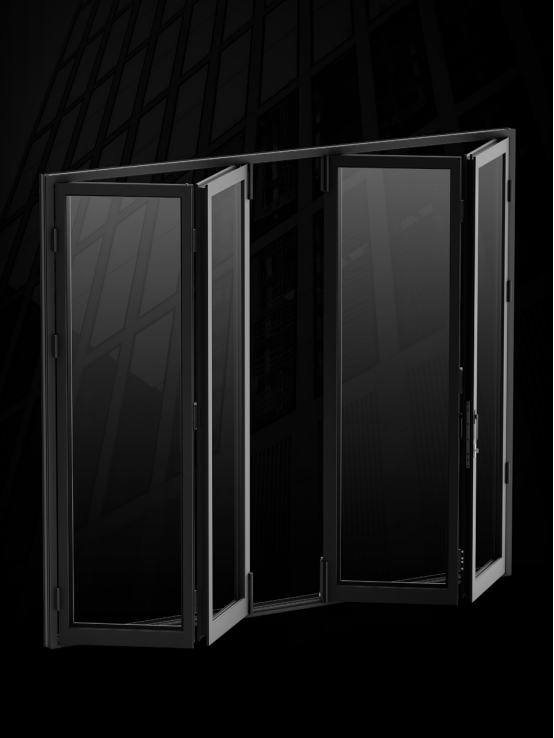
Metal bifold doors use interconnected panels that fold along designated hinge points, with tracks, pivots, and rollers guiding the movement of the door leaves. This arrangement allows multiple panels to be stacked to one side of a wide opening. However, smooth operation depends on how well the tracks, pivots, rollers, and hinges work together.
For door manufacturers and hardware buyers, understanding these components helps prevent common problems such as uneven panel gaps, difficult operation, and premature wear. Choosing suitable metal quincaillerie pour portes pliantes also requires considering panel weight, dimensions, and installation conditions.
How Does Metal Bifold Door Hardware Work as a Complete System?
Metal bifold door hardware works as an integrated mechanism that guides panel movement and controls folding positions. Each component has a specific function, but all must remain compatible.
What Are the Main Components of a Bifold Door System?
A typical metal bifold door assembly may include several key hardware components, depending on its configuration:
- Tracks: Guide the movement of designated panels or roller carriers.
- Pivots: Define the rotation points of designated door leaves and help guide their movement during folding.
- Rollers: Support guided movement along the tracks.
- Hinges: Connect adjacent panels and allow them to fold.
- Locks and shootbolts: Secure the door when closed.
How Do These Components Work Together?
When a bifold door opens, adjacent panels fold around their hinge connections while designated pivot and roller assemblies guide the movement according to the door’s hardware configuration.
The general process involves three stages:
- The locking mechanism is released, allowing the panels to move.
- Hinges allow adjacent panels to fold while pivots maintain their designated positions.
- Rollers travel along the tracks, guiding the moving panels toward the open position.
Because these movements happen simultaneously, poor alignment in one component can affect the entire system. A misaligned track, for instance, may increase roller resistance and make the door harder to operate.
What Roles Do Bifold Door Tracks, Pivots, and Rollers Play?
Tracks, pivots, and rollers control the direction, positioning, and movement of bifold doors. Understanding their functions makes it easier to evaluate bifold door tracks and hardware before purchasing a complete system.

How Do Bifold Door Tracks Guide Panel Movement?
Tracks provide a defined path for the moving hardware. Depending on the door design, bifold doors may use top-supported, bottom-supported, or combined guidance arrangements. The selected arrangement determines how the panel load is transferred to the supporting structure.
| Track arrangement | Main function | Key consideration |
| Top-hung | Supports designated moving panels from above | Requires suitable overhead support |
| Bottom-rolling | Guides rollers along a floor track | Requires a stable, aligned floor surface |
| Combined guidance | Uses upper and lower guidance components | Requires accurate alignment |
For top-hung systems, the overhead structure must support the specified load. For bottom-supported configurations, the floor track and supporting surface should be installed accurately and kept clear of debris to allow the designated rollers to move along their intended path.
The appropriate arrangement depends on panel weight, opening dimensions, and building conditions.
How Do Pivots Control Door Position?
Pivot assemblies establish the rotation points of designated door panels. They help maintain panel positioning as the connected leaves fold.
Incorrect pivot positioning can cause uneven gaps, panel contact, or difficulty closing the door. Installers should therefore follow the manufacturer’s specified positioning and adjustment instructions.
How Do Rollers Support Door Weight and Movement?
Rollers allow designated panels or carriers to travel along the tracks with reduced sliding resistance. Their load capacity, wheel material, and adjustment range all influence system performance.
When selecting rollers, buyers should consider:
- Load capacity: Whether the roller assembly suits the assigned panel load.
- Material: Whether the wheel and supporting components suit the operating conditions.
- Guide design: Whether the rollers maintain the intended travel path.
- Adjustment: Whether installers can correct panel height and alignment.
Roller selection should therefore account for the track profile, pivot arrangement, and actual panel weight. The complete assembly must be checked for compatibility rather than evaluated by roller load capacity alone.
How Do You Choose Bifold Door Hardware for Heavy-Duty Applications?
Choosing bifold door hardware heavy duty requires evaluating the complete door assembly rather than focusing on one component’s load rating. Panel dimensions, materials, and operating frequency all affect hardware selection.
How Does Door Panel Weight Affect Hardware Selection?
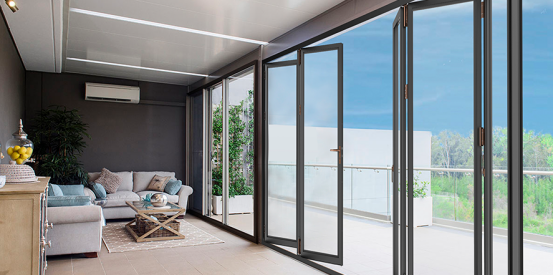
Door weight determines the mechanical demands placed on rollers, pivots, and supporting structures. Large panels containing metal frames and substantial glazing may require hardware designed for higher loads.
Before choosing a system, establish:
- The weight of each door leaf.
- The width and height of each panel.
- The total number of panels.
- The folding configuration.
- The expected opening frequency.
These details help manufacturers check whether the selected hardware matches the intended application.
It is also important to distinguish between a system’s maximum load capacity and the rating of an individual roller. They are not necessarily the same measurement.
Why Do Roller Materials and Adjustment Mechanisms Matter?
Roller materials influence wear resistance and suitability for different operating conditions. For example, 304 stainless steel offers corrosion resistance, making it a useful material consideration where moisture exposure is possible.
Adjustment mechanisms are equally important. Small differences in panel height can create uneven gaps or interfere with smooth movement.
Vertical adjustment allows installers to correct panel positioning after assembly, helping maintain consistent alignment.
How Can Incorrect Installation Affect Performance?
Even suitable hardware can develop operating problems when installation is inaccurate. Common issues include uneven tracks, incorrectly positioned pivots, loose fasteners, and inconsistent panel spacing.
A basic inspection should include:
- Checking track alignment and fixing points.
- Confirming pivot positions.
- Verifying roller engagement.
- Adjusting panel height and gaps.
- Testing the complete folding movement.
- Checking that locks engage correctly.
Regular inspection and track cleaning also help prevent debris buildup and identify loose connections before they affect operation.
How Does CMECH’s Bifold Door Hardware Address Load and Movement Requirements?
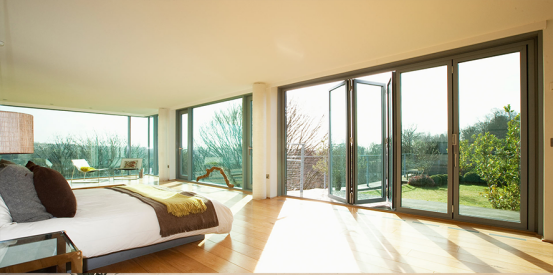
CMECH’s Even Configuration Bifold Door Hardware combines rollers, adjustment mechanisms, hinges, and locking components for even-numbered door configurations.
CMECH provides door and window hardware solutions for architectural applications, including its Even Configuration Bifold Door Hardware Solution for even-numbered folding door layouts.
What Makes CMECH’s Even Configuration Suitable for Multi-Panel Doors?
According to CMECH’s official product page, the Even Configuration system has the following specifications:
| Caractéristiques techniques | Published value |
| Maximum load capacity | 150 kg |
| Sash width | 500–900 mm |
| Sash height | 1,900–3,500 mm |
| Tested durability | Exceeds 30,000 operating cycles |
| Door configuration | Even-numbered leaves |
These specifications help manufacturers assess whether the Even Configuration hardware solution matches the proposed door dimensions, weight, and even-numbered leaf arrangement.
The published maximum weight for the Even Configuration hardware solution is 150 kg. Buyers should verify that the proposed door leaf dimensions, weight, and configuration fall within the product’s specified applicable range before finalizing their selection.
How Do Its Rollers and Adjustable Components Support Operation?
The system features dual-guide wheels on its upper and lower rollers. Both the upper and lower rollers feature dual-guide wheels designed to help control roller movement and reduce unwanted wobble during operation.
The lower roller is investment-cast as a single piece from 304 stainless steel and offers vertical adjustment from -1.5 mm to +3 mm. This adjustment range gives installers room to correct panel height during installation.
The system also incorporates multipoint locks, shootbolts, adjustable rollers, and hinges. These components address panel positioning, folding movement, and door closure.
CMECH states that the Even Configuration hardware solution has a tested durability exceeding 30,000 cycles. This provides a reference for comparing tested operating durability, but should not be interpreted as a guaranteed service life under all installation and usage conditions. Manufacturers can compare these specifications against their project requirements when evaluating metal bifold door hardware.
Conclusion: What Should You Consider Before Choosing Metal Bifold Door Hardware?
Selecting metal bifold door hardware involves more than comparing individual components. Tracks guide movement, pivots control rotation, and rollers support panel travel. Hinges and locking mechanisms complete the system.
For heavier applications, buyers should check whether the selected hardware matches the actual panel weight and dimensions, door configuration, and expected operating frequency. Material durability, roller adjustment, track compatibility, and installation requirements should also be verified before purchasing.
A complete assessment of these factors helps manufacturers select a suitable system and reduce potential alignment and operating issues.
Matching these features with the actual door configuration helps manufacturers select hardware that supports consistent movement, proper alignment, and practical maintenance.


 English
 Arabic
 Chinese
 French
 Thai
 Vietnamese