
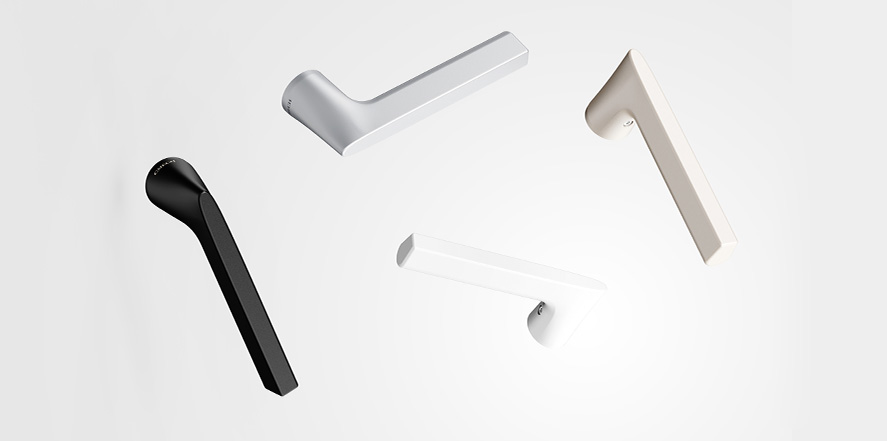


A large sash can make a simple turn feel like a negotiation with friction. The user sees a small grip, but torque travels through a spindle, internal frame, roller, and locking drive before the window responds. When those parts share stable geometry, motion feels light; when they do not, resistance accumulates at every interface during daily use and repeated weather changes.
The effort a user feels at the grip depends on the complete route from handle to spindle and locking drive. CMECH considers grip geometry, pivot support, roller action, and spindle fit together, helping fabricators identify where avoidable resistance enters the mechanism.

Torque Travels Through a Controlled Mechanical Path
Turning a handle applies torque at the grip. That rotation passes through the pivot and internal frame into a square spindle, which drives the window lock. Resistance comes from seals, keeps, and sash weight. A rigid frame preserves user input; a flexible junction absorbs it as deflection, making the handle feel loose or unexpectedly heavy during operation.
The mechanism simplifies torque by keeping rotating elements concentric. A supported pivot helps stabilize the handle, while the ROMA series uses a patented steel-ball roller mechanism as part of its internal structure. Because less energy is lost to side movement, the spindle reaches the lock case with a cleaner signal. The engineering consequence is consistent engagement, lower effort, less profile stress, and more predictable sealing.
We apply this principle across window hardware and door hardware, while recognizing that window handles operate through frequent short rotations. A casement, awning, or tilt-and-turn sash may ask for the same quarter-turn, yet seal compression and hardware geometry differ. The correct window handle transfers torque efficiently without forcing the user to overcome avoidable friction from the surrounding assembly in normal service.
Which Geometry Makes Handle Torque Feel Lighter?
The important comparison is not between a large handle and a small handle. It is between a supported mechanism and one that lets torque create play. We check pivot position, spindle alignment, fixing stability, roller resistance, and lock compatibility. If those references drift, a longer grip may mask the symptom while increasing stress at the handle base during operation and future service.
For manette de fenêtre, we evaluate the Roma series as a complete operating unit. Its base-free elongated form uses a high-hardness cast-steel one-piece inner frame, an iron-triangle structure, and a patented steel-ball roller mechanism. These features form the handle’s internal support structure and are designed to support stable operation.
Consider a 1,200 mm wide glazed awning sash in a coastal residence. Seal compression and wind pressure can raise resistance even when the lock is correctly installed. A supported window opener handle suits a broad, frequently used, salt-exposed sash; a basic light-duty grip fits smaller interior openings with lower torque demand and limited exposure.
Adjustment Converts Torque Loss Into Useful Data
We begin commissioning by checking the profile, spindle length, fixing centers, and lock case before judging handle effort. Next, we measure rotation from rest to full lock travel and note where resistance rises. This sequence matters because friction at the seal, keep, or spindle produces different symptoms. The handle should not conceal a profile error during final adjustment.
If the spindle is too long, it can introduce side loading as the handle turns. If it is too short, the drive may not complete movement. Fixing pressure also matters: an uneven screw pattern can tilt the handle frame and make the pivot drag. Each correction changes the torque path, so we record the adjustment and repeat the movement afterward under the same sash condition.
Our acceptance record includes opening effort, return action, lock position, sash gap, and seal compression. We repeat readings on casement, awning, and tilt-and-turn configurations because their load paths differ. A calibrated window opener handle should provide similar feedback after cycling, not merely pass a visual check when the sash is unloaded and stationary during inspection.
CMECH Roma Handle Series Supports Efficient Operation
For a coastal residential project, CMECH can supply the Roma handle series alongside compatible opening systems. The window opener handle combines a slender base-free profile with a high-hardness cast-steel inner frame, iron-triangle reinforcement, and patented steel-ball roller mechanism. Powder coating and M-treatment improve resistance to UV and salt spray, while the series suits casement, awning, inswing, outswing, and fly-screen applications.
The configuration gives fabricators a repeatable reference for spindle engagement, grip position, and return action across several sash types. Rounded grip edges support regular use, while the internal structure is intended to resist wobble and sagging. We still verify the selected lock case, spindle, fixing pattern, and seal condition on every profile before approving a production release for volume fabrication.
For this project, handle selection should be based on the window profile, locking system, operating frequency, and required surface treatment. A simpler handle may suit a small interior sash, but it is a weaker fit when wind pressure, seal drag, or replacement consistency could increase operating effort over time and across units.
Torque Efficiency Still Depends on the Window Assembly
At CMECH, we treat a window opener handle as one part of a larger force path. The limitation is clear: no handle can correct a distorted profile, unsuitable lock case, incorrect spindle length, excessive seal friction, or poor installation. Those conditions require profile checks and field verification before final approval.
We recommend keeping torque readings, interface drawings, finish records, and installation notes with each project. Assessing each window handle against the complete sash mechanism provides a basis for evaluating operating effort under consistent test conditions.



 English
 Arabic
 Chinese
 French
 Thai
 Vietnamese