



Concealed window hardware helps create slimline, minimalist windows by hiding hinges, drive components and fixings inside the sash or frame. This reduces visual interruptions and allows the glass and aluminium profiles to define the appearance. However, hardware alone does not make a window slim: profile width, glazing, sash construction, sealing and fabrication must work as one compatible system.
Successful minimalist window design balances clean appearance with strength, weather performance and safe operation.
Quick decision guide
Use this decision sequence:
- Choose concealed window hinges for uninterrupted sightlines across elevations
- Choose built-in hardware with compatible profiles
- Choose exposed hinges when access matters more
- Choose low-profile handles after checking grip clearance
- Choose glazing for safety, thermal and solar requirements
- Choose hardware rated for sash weight
- Choose accurate fabrication for alignment and sealing
- Verify every choice against the tested system
What are slimline windows?
Slimline aluminium windows use narrow visible profiles to maximise glass area and create cleaner views. Engineered aluminium profiles can provide strength while maintaining narrow sections.
“Slimline” is not a universal classification. It may describe frame depth, face width or the combined frame-and-sash sightline. Request drawings showing actual visible dimensions.
Narrow profiles must still accommodate glass, gaskets, drainage, locks and load-bearing hardware. The correct system is the narrowest tested configuration that meets the brief.
What are the benefits of slimline windows compared with traditional windows?
Compared with wider conventional frames, slim-sightline windows can offer:
- More visible glass and fewer visual interruptions
- Broader views and potentially more daylight
- Cleaner lines for contemporary interiors and façades
- Better coordination with large glazed openings
- A visually lighter frame across repeated window bays
A slim frame is not automatically stronger or more weather-resistant. Performance depends on the profile, thermal break, glazing, hardware, seals and installation.
How does concealed hardware support minimalist windows?
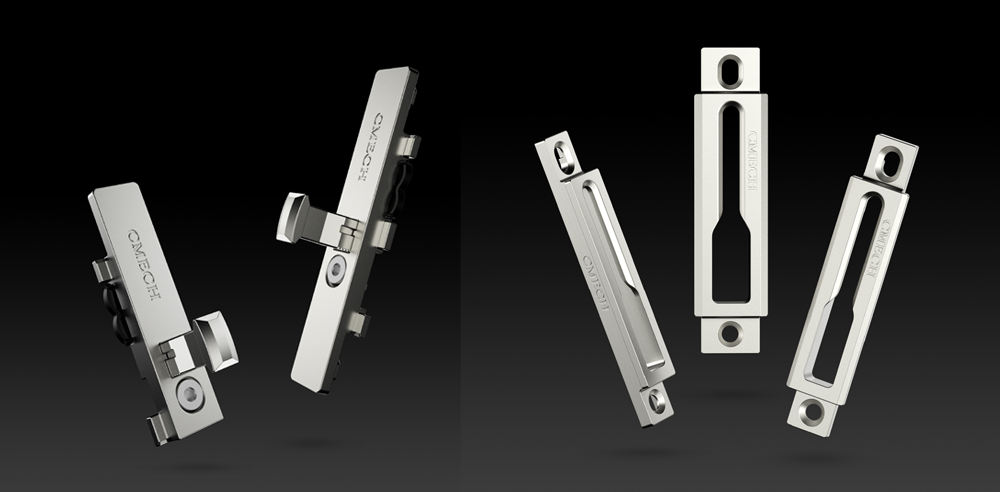
Concealed window hardware removes hinges and operating components from view when closed. This produces a more continuous surface and lets the frame, glass and handle define the design.
The effect becomes particularly noticeable across repeated openings. Visible hinges can interrupt an otherwise simple elevation, while hidden components support a more consistent minimalist window design.
Built-in components may also help system designers coordinate operating mechanisms with restricted profile space. This does not mean hardware alone makes the aluminium section narrower. It means the hardware and profile have been designed to fit together without unnecessary projection.
The main benefits of concealed window hinges are cleaner sightlines, reduced visual interruption and integration with compatible narrow profiles. Sash alignment and gasket-compression adjustment may be available with either concealed or exposed hardware, depending on the specific configuration.
Potential advantages include:
- Less visible hardware when the sash is closed
- Cleaner internal frame surfaces
- Better coordination with low-profile handles
- Protection of some components within the frame
- Configuration-specific adjustment for sash alignment and gasket compression
Concealment does not automatically prove greater load capacity, security or durability.
What hardware is best for slim-frame windows?
The best slim-frame window hardware fits the selected profile while providing sufficient load capacity, adjustment, locking and durability.
| Hardware feature | Why it matters |
| Concealed or built-in hinge | Reduces visible hardware |
| Verified load capacity | Supports the completed sash and glass |
| Multi-directional adjustment | Maintains alignment, sealing and even gaps |
| Compact drive components | Fit restricted profile spaces |
| Low-profile handle | Complements the narrow frame |
| Compatible locking points | Supports security and weather sealing |
| Durable materials | Resist wear, deformation and corrosion |
Assess appearance only after technical compatibility is established.
Concealed vs exposed hinges: which is better?
The choice between concealed vs exposed hinges depends on design priorities, profile space, access and tested capacity.
| Consideration | Concealed hinges | Exposed hinges |
| Appearance | Hidden when closed | Visible on frame or sash |
| Minimalist fit | Strong | More visually noticeable |
| Profile requirements | Needs suitable internal space | May suit conventional profiles |
| Installation | Requires precise fabrication | Often more directly accessible |
| Performance | Depends on the tested configuration | Also configuration-specific |
Concealed hinges generally suit minimalist window design better. Exposed hinges may be preferable where direct access or profile compatibility matters more. Neither option is automatically safer or more durable.
When comparing concealed vs exposed hinges, review material, adjustment, load limits, cycle testing and the complete profile-hardware relationship.
Can concealed hardware support large or heavy sashes?
Yes. Concealed systems can support heavy sashes when the hinge, profile, fixings and glass are engineered for the load.
Verify sash dimensions, weight, centre of gravity, opening angle, profile strength and wind requirements. A maximum load does not make every lighter sash compatible.
CMECH’s tilt-and-turn concealed configuration publishes sash widths of 490–1,200 mm, heights of 600–2,800 mm and load-bearing capacity up to 130 kg. These limits apply to that specific configuration.
How does glazing affect concealed window hardware selection?
The glazing forms part of the load carried by the hinges. Slim-sightline windows reduce visible framing to maximise the glass area, and larger panes, laminated constructions or multi-pane insulating units can increase the completed sash weight. This can affect the required hinge capacity, permitted sash dimensions, fixing arrangement and compatibility with the aluminium profile.
Define the glazing requirements alongside the hardware selection. Give the hardware supplier the complete glass build-up, pane dimensions and calculated sash weight, not simply the name of the glass type. A heavier configuration may require higher-capacity concealed window hinges, a smaller permitted sash or a different compatible profile system. The important question is therefore not which glass looks most minimalist, but whether the glazing and concealed window hardware can work safely within the same verified window configuration.
How CMECH supports slimline window systems
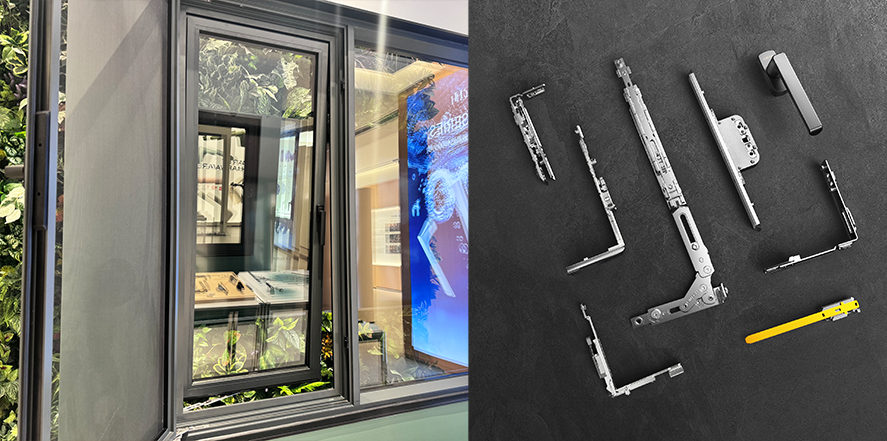
CMECH offers concealed and built-in window solutions. Its tilt-and-turn configuration uses hidden hinges, minimalist handles and adjustable sealing geometry.
Its separate Outswing Casement Window Built-In System uses a milling-free built-in hinge with a published 70 mm narrow frame. The system publishes sash widths of 400–750 mm, heights of 450–1,800 mm and capacity up to 50 kg.
These are separate configurations. Their dimensions and performance figures must not be combined. Selection of slim-frame window hardware should follow current model-level data for the proposed profile, glass and market.
What should fabricators verify?
Before specifying concealed window hinges, confirm:
- Visible frame and sash dimensions
- Opening type and direction
- Complete sash and glazing weight
- Profile groove and fixing compatibility
- Hinge and support-arm capacity
- Locking and sealing requirements
- Adjustment and maintenance access
- Applicable test evidence
This protects slim-sightline windows without treating aesthetics as a substitute for engineering.
Minimal appearance requires complete-system engineering
Le succès de slimline aluminium windows comes from coordination between profile, glass, handles, hinges, locks and seals. Choose concealed window hardware that supports the calculated load and protects the clarity of slimline aluminium windows Contact CMECH with the sash dimensions, glass weight and performance requirements.
Frequently asked questions
What hardware is best for slim-frame windows?
Use compact, compatible hardware rated for the exact sash dimensions and weight. Slim-frame window hardware should also provide the required locking, adjustment and maintenance access.
Are concealed hinges better than exposed hinges?
For appearance, usually yes. For every technical application, not necessarily. The concealed vs exposed hinges decision should consider profile space, access, load capacity and test evidence.
Can concealed hinges support heavy sashes?
Yes, within the verified dimensional and load limits of the specific system. Concealed window hinges must be selected with the glass, profile and fixings.

 English
 Arabic
 Chinese
 French
 Thai
Thai Vietnamese