



A casement window can gain a cleaner elevation when operating parts disappear into the profile, but concealment changes how force travels. The handle and drive still have to release or engage the locks, while the built-in hinge supports and guides the sash. If the hidden path is poorly coordinated, a refined facade can develop drag, uneven reveals, and difficult access during service.
Concealing a casement mechanism changes where designers and technicians can reach its moving parts. CMECH coordinates the handle, drive, hinge, lock, and drainage with the profile so the facade can retain a refined appearance while leaving a defined path for inspection and adjustment.
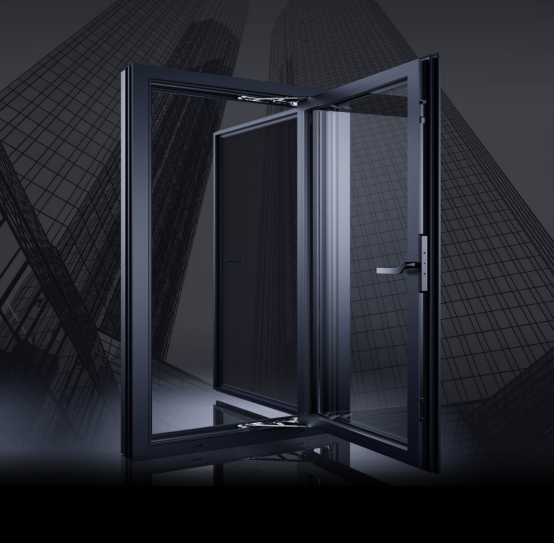
Concealment Changes the Casement Force Path
When the handle turns, torque passes through a spindle into the drive gear and locking points. After the locks release, the sash opens on its hinge; during closure, the locks draw it against the gaskets. Concealing the mechanism does not remove these forces; it relocates them inside the profile. The surrounding frame must carry load without twisting or allowing the hinge line to drift during operation.
A built-in hinge can help by placing support close to the sash edge and distributing load through the reinforcement plate. If the hinge allows the sash to sag, misalignment may increase operating resistance and make lock engagement more difficult. The symptom is familiar: a handle feels heavier even though visible hardware remains attractive and apparently undamaged during inspection.
We treat the same principle as window hardware engineering, not interior styling. The engineering consequence of a controlled hidden path is repeatable opening, stable gasket contact, and fewer exposed parts competing with the facade design. A concealed casement system can look lighter, but profile, hinge, drive, and drainage must be specified as one load-bearing assembly.
Which Details Preserve Aesthetics Without Sacrificing Access?
The useful comparison is between a genuinely integrated built-in system and a conventional handle and fitting arrangement hidden behind cosmetic covers. An integrated system coordinates spindle position, hinge geometry, lock travel, reinforcement, and drainage from the start. A cosmetic approach may look similar, yet installers can lose adjustment access or force the profile to absorb loads beyond its intended capacity.
For casement window hardware kit, we review sash dimensions, load, frame depth, spindle size, hinge capacity, and sealing configuration together. The published outswing system supports 400–750 mm sash widths, 450–1,800 mm heights, and loads up to 50 kg. A 10 mm spindle is designed to provide greater torsional rigidity than a conventional 7 mm spindle.
Consider a boutique hotel using 70 mm narrow-frame casement windows around a glazed atrium. A concealed fitting that cannot be serviced may create more disruption than a visible fitting. Our engineering verdict favors integrated concealment when inspection and adjustment remain accessible; exposed hardware fits smaller openings when visual continuity matters less and maintenance is straightforward for staff.
Sealing and Drainage Make Concealed Systems Durable
Concealed hardware works only when the sash closes against a controlled seal line. The handle and gear draw the sash into its gaskets, while the profile channels water away from the drive and hinge. Too little compression permits air or water entry; too much raises torque and accelerates gasket wear. Both conditions can make a refined facade perform poorly under weather cycles.
The published built-in system uses a real-fit profile with triple sealing, fast exterior drainage, 700Pa watertightness, Grade 8 air permeability, and 5000Pa wind-load resistance. These ratings reflect the performance of the complete window system under the specified test conditions, including the profile, sealing arrangement, and hardware. If the sash moves under pressure, seal contact changes and the operator may feel resistance before visible leakage appears during routine use and inspection.
We verify concealed performance at multiple points around the sash and cycle the sash through open, partially closed, and locked positions while checking the handle and drive. A change in effort can identify gasket drag, hinge movement, drive misalignment, or blocked drainage. This makes service data useful: the team can correct the physical cause rather than polishing trim or replacing a handle without addressing the hidden mechanism.
CMECH Built In Hardware Supports Refined Casement Facades
For a boutique hotel atrium, CMECH offers an outswing casement built-in system grouping handles, drive parts, lock parts, load-bearing parts, and accessories. The outswing casement built-in hardware configuration uses a 10 mm spindle, carbon-steel drive gear with nano-blue treatment, milling-free built-in hinge, and slim 70 mm frame application. The hinge features an anti-sag structure, a U-shaped reinforcement plate, and six solid rivets. The system has a specified maximum load of 50 kg.
The configuration protects the visual intention of a concealed facade while keeping the operating path measurable. Fast exterior drainage helps protect the drive and hinge from moisture, and the real-fit profile supports triple sealing. Before fabrication, project teams should check spindle engagement, hinge settings, gasket compression, and maintenance access. Concealed hardware still requires appropriate installation and commissioning checks.
For the hotel, buyers should assess this integrated built-in casement window hardware when narrow sightlines, weather exposure, and repeatable maintenance matter together. A simpler hidden arrangement may suit a small protected opening, but it is a weaker choice when the profile approaches its load limit or technicians need clear adjustment references during service.
Concealed Aesthetics Still Need Serviceable Engineering
At CMECH, we see a casement window hardware kit as part of the facade structure, not a decorative afterthought. Concealed hardware cannot compensate for an undersized profile, excessive sash load, inadequate anchorage, or unsuitable installation conditions. Those conditions require calculations and field verification before approval and fabrication.
We recommend recording sash mass, handle operating effort, hinge position, seal compression, and drainage checks with each project. When the concealed path is documented, visual refinement can coexist with practical maintenance instead of hiding the evidence needed for future repairs.

 English
 Arabic
 Chinese
 French
 Thai
 Vietnamese