
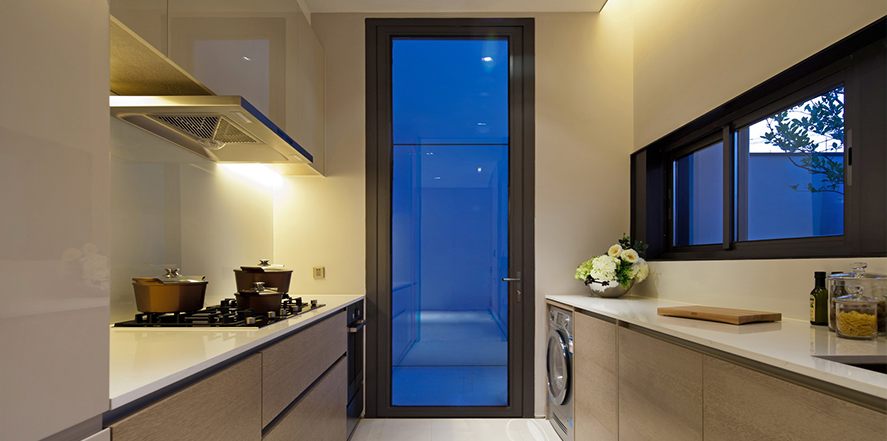


Choosing the right hardware for a hinged door affects everything from daily ease of use to long-term security and weatherproofing. Whether you are specifying for a residential project or a commercial build, understanding what each component does and what to look for in terms of quality will help you make a more informed decision. This guide breaks down the essential elements of hinged door hardware and the performance factors that matter most.
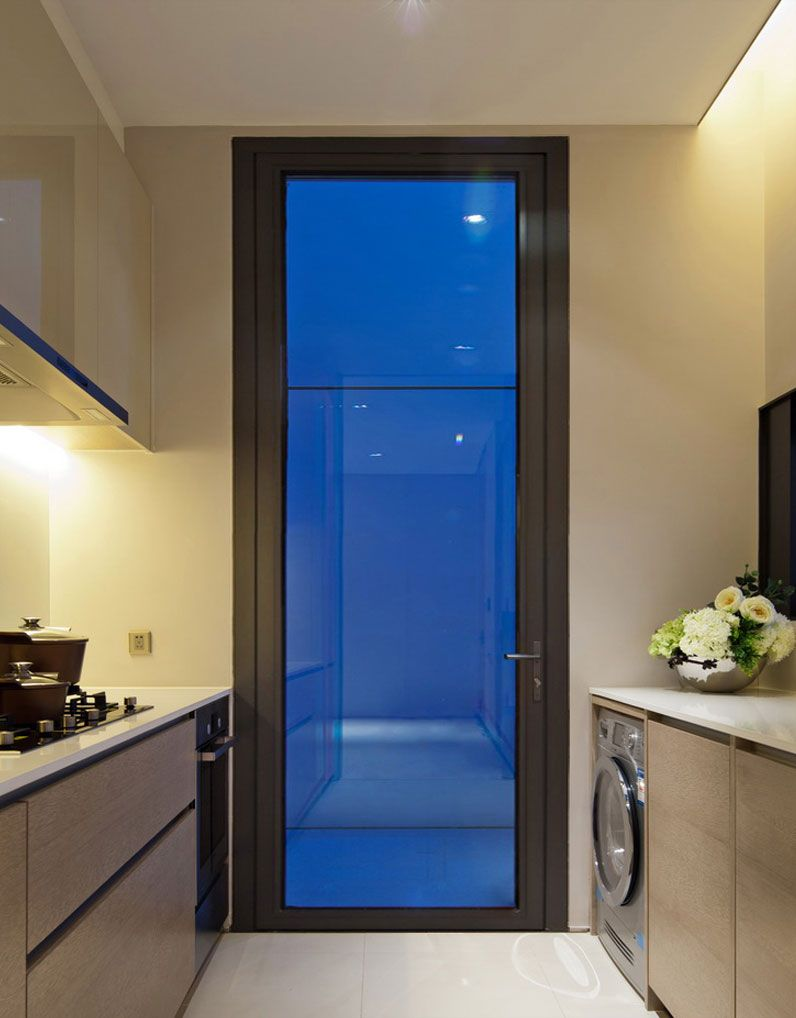
Core Components of a Hinged Door Hardware System
A complete hinged door system is made up of several interdependent components. Each one contributes to how the door feels, seals, and holds up over time.
Handle
The handle is the user’s primary point of contact with the door. On a well-engineered system, rotating the handle activates a drive mechanism that engages the lock body and shootbolts simultaneously. The internal mechanism — typically a gear or cam arrangement — converts the handle’s rotational motion into linear movement along the espagnolette. Over time, the quality of this mechanism determines whether the handle remains smooth and wobble-free or develops play and stiffness.
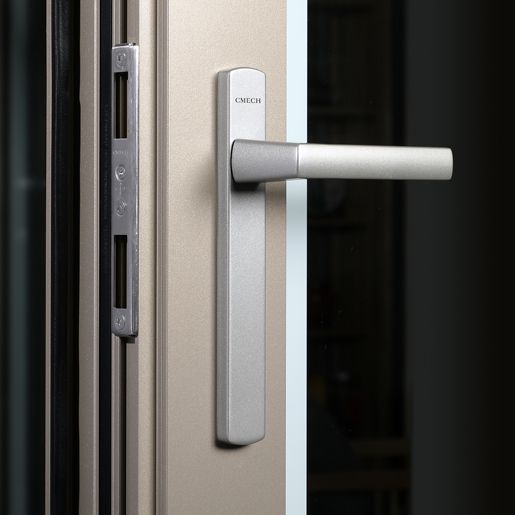
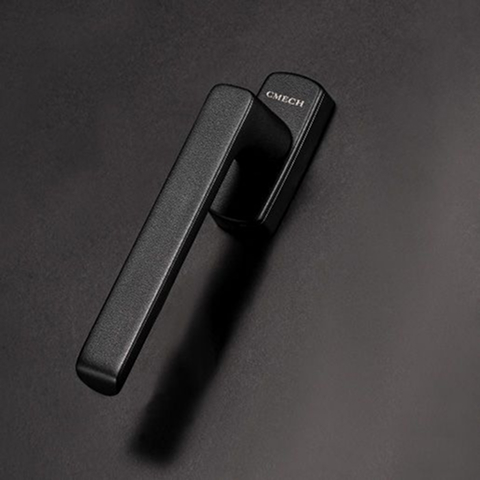
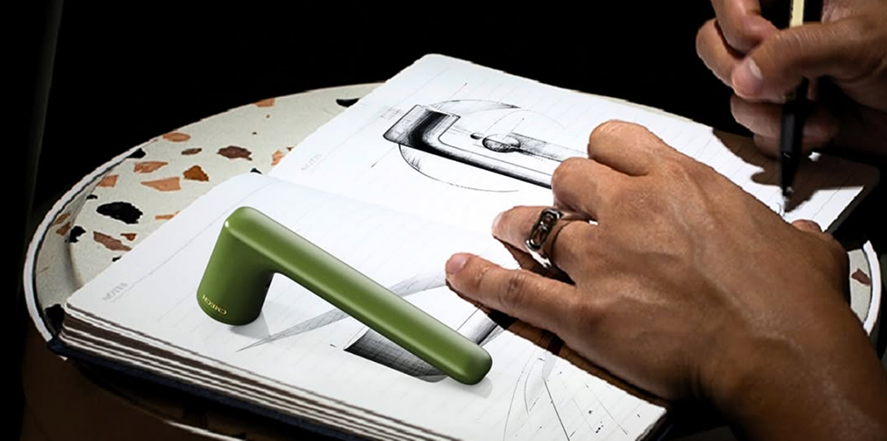
A split-handle design, where the handle and lock body are separate components rather than a single integrated unit, gives door manufacturers and architects greater design flexibility and produces a cleaner visual result on the face of the door.
Hinges
The hinge bears the full static and dynamic weight of the door leaf. For heavy aluminum or timber doors, load capacity is a primary specification. Equally important is adjustability — a hinge that allows three-axis fine-tuning after installation makes it possible to correct panel alignment and seal compression without removing the door from the frame. A built-in anti-sag safety feature prevents the leaf from dropping over time, which is a common failure mode in heavier doors.
Multi-Point Lock Body
A multi-point lock engages the frame at multiple positions along the door height, distributing the locking load evenly from top to bottom. This delivers better security and more consistent seal compression than a single-point latch. The lock body faceplate should be stainless steel for scratch resistance, and the housing should be die-cast rather than stamped, which is prone to deformation under impact.
Shootbolt Connector
The shootbolt connector links the handle’s rotational motion to the lock points above and below the main lock body. A well-engineered connector eliminates play in the linkage, resulting in smoother handle travel and a longer service life for the entire locking system.
Lock Points and Strikes
Lock points engage with strike plates in the frame when the door is closed. Adjustable strikes allow the installer to fine-tune engagement depth for a firm, rattle-free closure. Pry-resistant lock points with bearing-assisted engagement reduce friction and improve the door’s resistance to forced entry.
Key Performance Considerations
Sealing and Thermal Performance
A hinged door’s ability to seal depends on how consistently the lock points compress the perimeter gaskets. Multi-point locking distributes compression evenly, which is why it outperforms single-point systems in both thermal insulation and air infiltration ratings. For high-performance specifications, look for hardware that supports a full perimeter seal engagement when the handle is turned.
Security
Anti-burglary performance in a hinged door system is a function of three things working together: the number and position of lock points, the strength of the hook or bolt geometry, and the resistance of the hinges to removal from outside. Flush-fit concealed hinges with anti-removal pins are the correct choice for any exterior application where security is a priority.
Installation Efficiency
Hardware that is engineered for fast installation reduces labor time on site. Systems where components are pre-assembled, use common fixing patterns, and include clear adjustment mechanisms are significantly faster to install than those requiring bespoke fitting at every stage. This is a practical consideration for project managers and installers, as installation speed directly affects both schedule and labor cost.
CMECH Hinged Door Hardware Series
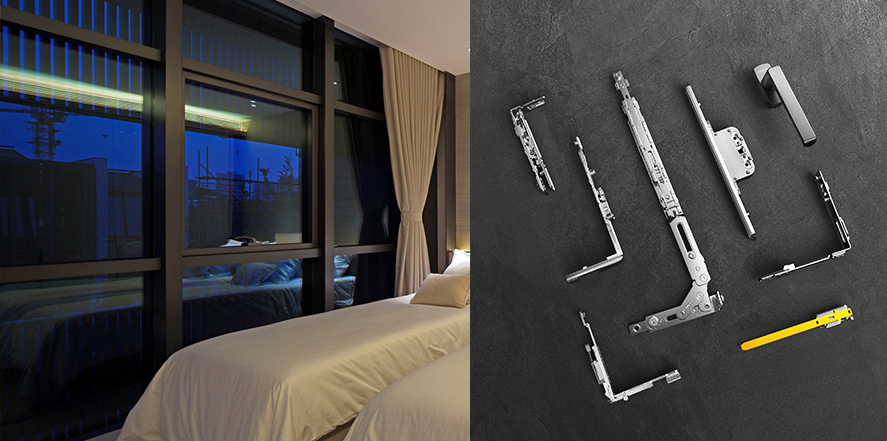
CMECH is a premium door and window hardware brand with nearly 30 years of global industry experience. The CMECH Hinged Door Hardware Series is engineered around a split-handle design philosophy and is built to deliver outstanding sealing, thermal insulation, and anti-burglary protection across a wide range of door specifications.
Key features and specifications:
- Split-handle design: The handle and lock body are separate components rather than integrated into a single unit, resulting in a cleaner, more refined aesthetic that gives door manufacturers and architects greater design flexibility
- Three-axis adjustable concealed hinges: Full three-dimensional adjustment capability makes post-installation alignment correction significantly faster and more precise compared to standard fixed hinges; An anti-sag safety feature and anti-corrosion surface treatment are built in
- Fast installation: The system is designed for efficient on-site fitting, reducing installation time and labor costs — a key advantage for project managers working to tight schedules
- Handle durability: Cam roller mechanism with four-spring auto-return eliminates handle sag; slider uses imported high-wear-resistant plastic; rated to 120,000 cycles and 2,500 N anti-forced-entry strength
- Bi-directional shootbolt connector: Groove-penetration design with precision positioning steel ball eliminates play and friction for noticeably smoother handle action and extended service life
Choosing Hardware That Matches the Application
Matching hardware specifications to the actual door weight, opening size, and performance requirements is essential. For exterior doors in exposed locations, corrosion resistance and tested anti-forced-entry ratings should be treated as minimum requirements. A complete, matched hardware system from a single supplier also simplifies specification, installation, and any future servicing.
 English
 Arabic
 Chinese
 French
 Thai
Thai Vietnamese