


Choosing top hung window hinges is not simply a matter of finding a hinge that fits the frame. The sash weight, window dimensions, opening requirements, and supporting hardware must work together. If the hardware system is not adequately specified for the sash weight, the sash may become difficult to operate or lose alignment; if the opening-control components do not suit the application, ventilation and operational safety may also be affected.
For architects, window manufacturers, fabricators, and hardware buyers, the practical approach is to evaluate the complete hardware system rather than the hinge alone.
Why Do Load Capacity and Opening Angle Matter for Top Hung Window Hinges?
Load capacity determines whether the hardware can safely support the sash, while opening control determines how far and how securely the sash can move.
A heavier sash places greater demand on the hinge and related supporting components. This becomes more important as glass area and sash dimensions increase. Therefore, the first step is to compare the actual sash weight with the hardware’s rated load-bearing capacity rather than selecting a hinge based only on appearance or frame compatibility.
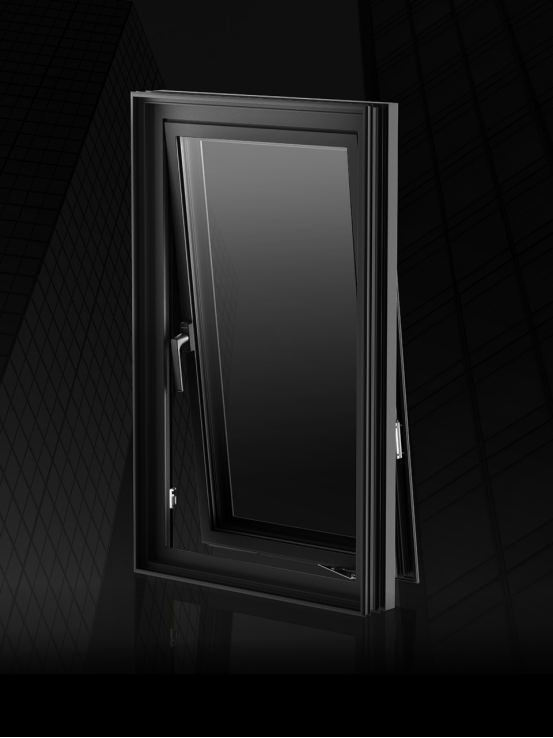
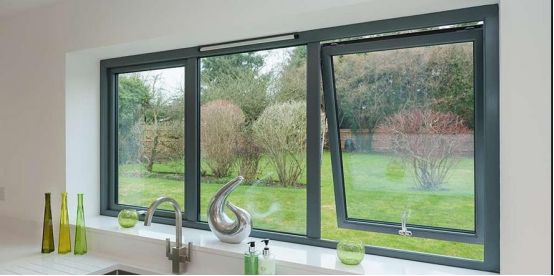
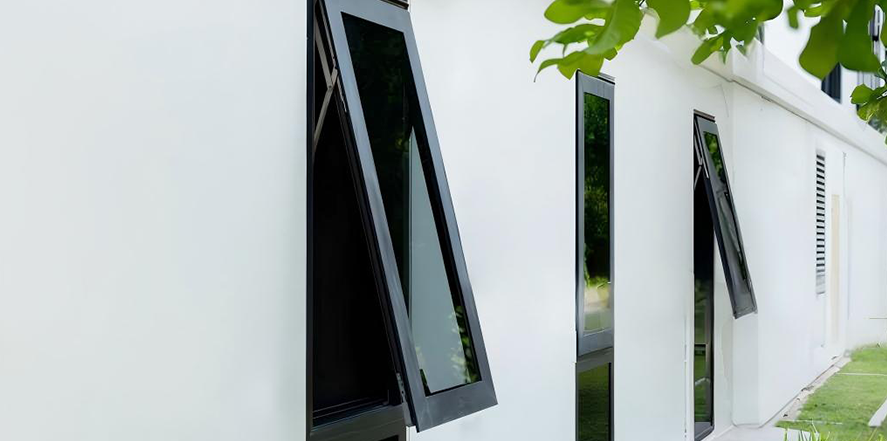
Opening requirements creates a different requirement. A top-hinged awning window needs controlled outward movement, so the hardware must hold the sash in its intended position rather than allowing uncontrolled movement in wind.
| Selection factor | What to check | Why it matters |
| Sash weight | Actual completed sash weight | Prevents overloading |
| Sash dimensions | Width and height | Confirms system compatibility |
| Opening control | Required ventilation and clearance | Controls sash movement |
| Supporting parts | Hinge, stay, anti-drop components | Keeps the system coordinated |
The two factors should therefore be considered together. A hinge with sufficient static capacity may still be unsuitable if the supporting and restricting components do not match the intended opening configuration.
How Does Sash Weight Affect Hinge Selection?
The hardware load rating should meet the actual sash requirement with an appropriate system specification.
Glass contributes significantly to the weight of a window sash, so changing the glazing configuration can change the hardware requirement. For this reason, manufacturers verify the finished sash weight before finalizing the top hung window hardware.
CMECH’s Outswing Casement & Awning Window Hardware Solution specifies a sash width of 425800 mm, a sash height of 6702,000 mm, and a system loadbearing specification of ≤ 80 kg.
How Should You Choose Top Hung Window Hinges for Different Window Sizes?
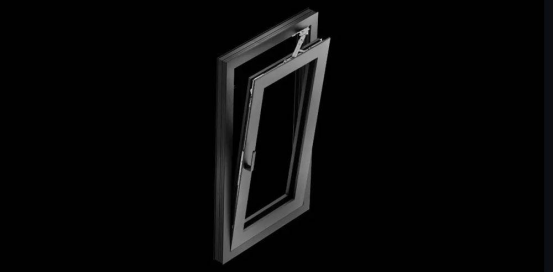
Start with the window dimensions and sash weight, then match the hinge and supporting components to those requirements.
Window size affects more than the visual proportions of a project. A larger sash can increase the mechanical load on the hardware and change how the sash behaves when opened. That is why selecting top hung window hinges based on a single specification alone can be misleading.
A practical selection process is:
- Measure the finished sash width and height.
- Calculate or verify the completed sash weight.
- Check the hinge system’s load-bearing range.
- Determine the required opening and ventilation position.
- Confirm the restricting and anti-drop components.
- Check that the complete hardware set matches the window profile.
This approach helps prevent compatibility issues during fabrication or installation by ensuring that components are selected with the overall system in mind.
When Do Larger or Heavier Sashes Require More Supporting Hardware?
Larger or heavier sashes require closer attention to supporting structures because hinge capacity alone does not represent the performance of the complete window.
CMECH’s solution uses a double-baseplate hinge structure, while the upper hinge load-bearing arm is made from stainless steel with a thickness of up to 3.5 mm. The system also incorporates a sash support assembly with dual fixation and double hanging support, together with an anti-drop mechanism designed to reduce the risk of sash drooping during outswing awning operation.
That system-level approach is useful for projects where sash stability is a priority. Instead of asking only, “How much weight can the hinge carry?”, buyers should ask how the hinge, sash support, and safety components work together.
What Should You Look for in Top Hung Window Hardware?
A suitable system should coordinate load-bearing, movement control, and safety instead of treating each component as an isolated part.
For a top-hinged awning configuration, the restricting stay is particularly relevant because it controls the sash’s outward movement. CMECH offers restricting stays in 6″, 8″, and 9″ sizes for its Outswing Casement & Awning Window Hardware Solution.
The system also includes an anti-misoperation module designed to reduce incorrect operation, while its lower hinge uses a gear mechanism secured by three screws to help prevent sudden closure during strong winds.
For buyers comparing top hung window hardware, these details matter because the operating experience depends on several components working as one system.
How Do Hinge, Restricting Stay, and Anti-Drop Components Work Together?
The hinge supports and guides the sash, the restricting stay helps control its outward movement, and anti-drop components provide an additional safety measure against sash drooping or disengagement.
This division of functions is important in an outward-opening window. The hinge must carry the sash, but it should not be expected to perform every safety function by itself.
CMECH’s counterbalance rope mechanism provides another layer of support, with a stated steel-rope static load capacity of up to 550 kg. This figure refers to the steel rope mechanism’s static load capacity, not the complete window’s 80 kg load-bearing specification, so the two figures should not be treated as interchangeable.
How Does CMECH’s Top Hung Window Solution Address These Requirements?
CMECH combines load-bearing hinges, sash support, movement control, and safety mechanisms in one Outswing Casement & Awning Window Hardware Solution.
CMECH is a global door and window hardware systems provider serving window and door companies, architects, designers, developers, and other professional customers, with products sold in more than 30 countries.
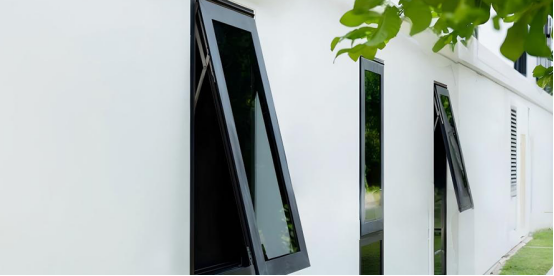
For projects requiring a top hung awning window, the company’s specified solution supports sash widths from 425 to 800 mm, sash heights from 670 to 2,000 mm, and a stated load-bearing capacity of ≤80 kg.
Its upper hinge uses a stainless-steel load-bearing arm up to 3.5 mm thick, with an anti-derailment hook mechanism and convenient 3D indoor adjustment. The system also incorporates anti-misoperation and anti-drop mechanisms to address operational safety.
For more information, buyers can review CMECH’s top hung window hardware solution and confirm whether its applicable range and supporting components match their window design.
How Can You Select the Right Top Hung Window Hinges?
The right choice comes from matching sash weight, dimensions, opening requirements, and supporting hardware before finalizing the hardware specification.
A useful purchasing checklist is:
- Confirm the finished sash weight, not just the estimated frame weight.
- Match sash width and height with the manufacturer’s applicable range.
- Determine how much opening is actually required for ventilation and use.
- Confirm that restricting stays or equivalent components suit the opening configuration.
- Check anti-drop and anti-misoperation provisions where safety is important.
- Verify profile and hardware compatibility before fabrication.
One important limitation should also be made clear: the specified CMECH product page does not publish a maximum opening-angle figure. Therefore, a specific angle should not be assumed from the product specification. Buyers who have a defined opening-angle requirement should confirm the applicable configuration directly with CMECH before finalizing the hardware selection.
Conclusion: How Can You Make a More Reliable Hinge Choice?
Selecting top hung window hinges starts with the actual window rather than the hinge catalog. Sash weight and dimensions establish the basic load requirement, while the desired opening behavior determines the need for suitable restricting and supporting components.
CMECH’s Outswing Casement & Awning Window Hardware Solution fits sashes 425–800 mm wide, 670–2,000 mm high, and weighing up to 80 kg. Its hinge, sash support, restricting stay, anti-drop, and anti-misoperation components are designed as a coordinated system.
For professional projects, the safest approach is to verify the complete hardware configuration against the finished sash weight, dimensions, profile, and required opening behavior before production.
 English
 Arabic
 Chinese
 French
 Thai
 Vietnamese