



Contemporary architecture increasingly favors clean elevations, slim sightlines, and uninterrupted surfaces. As window frames become more refined, visible operating components can disrupt the visual simplicity designers want to achieve. This is driving greater interest in concealed casement window hardware, where essential mechanical functions are integrated within the window system. For architects, designers, developers, and fabricators, the challenge is to combine discreet aesthetics with security, durability, and dependable operation.
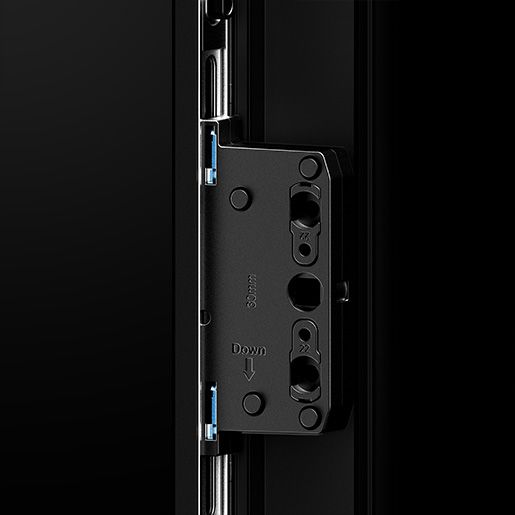
Why Concealed Hardware Is Gaining Attention
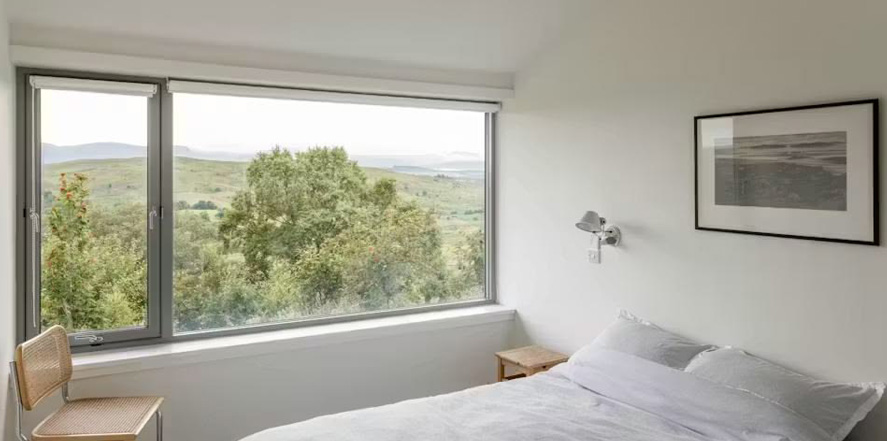
The growing preference for minimalism has changed how professionals evaluate window systems. A handle or hinge may be a small component, but its position can affect the appearance of a large glazed façade. Concealed mechanisms help reduce visual interruptions and allow the window profile, glass, and architectural materials to remain the primary focus.
This approach is particularly valuable for luxury residences, hotels, offices, and other projects where detailing is carefully controlled. When hardware is integrated into the frame, designers have greater freedom to create continuous visual lines without sacrificing the mechanical functions required for safe operation.
However, concealment should never mean compromising performance. A concealed system still needs to support the sash, maintain accurate positioning, withstand repeated use, and provide dependable locking.
Concealment Must Work With Structural Requirements
Large casement windows can place considerable loads on hinges and operating mechanisms. The larger the sash, the more important it becomes to understand how hidden components transfer weight and control movement.
For professional buyers, the specification should therefore cover more than visible dimensions. Load capacity, material, cycle testing, wind resistance, adjustment capability, and compatibility with the selected profile all need to be evaluated before hardware is approved.
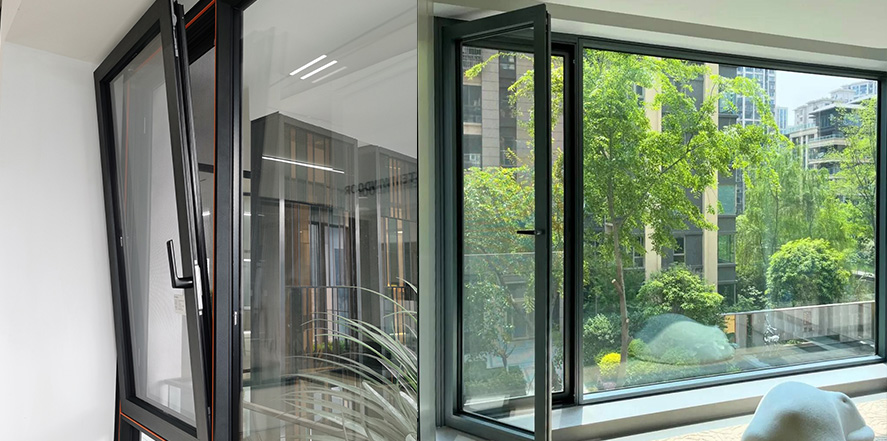
Our Outswing Casement Window Hardware Solution illustrates this approach by combining concealed mechanical functions with defined performance characteristics. The system is designed for high-end fenestration applications where appearance and engineering requirements need to work together.
A Gearbox That Supports Precise Operation
The operating mechanism is one of the most important elements within concealed casement window hardware. Although it may remain largely invisible, its performance directly affects how users experience the window.
Our bi-directional spindle drive gearbox is tested to 30,000 open-close cycles. Its core mechanism is precision-cast from high-grade zinc alloy as a single unit, providing a stronger integrated structure.
The gearbox also incorporates an anti-drift mechanism with a maximum extension of 12.5 mm. This feature helps maintain precise and stable positioning, which is important for consistent operation and reliable alignment throughout repeated use.
For architects and window manufacturers, these measurable specifications provide a more practical basis for evaluating concealed hardware than appearance alone.
Stainless Steel Supports Hidden Hinge Performance
Concealed design does not eliminate the structural demands placed on hinges. A casement sash must remain properly supported throughout its operating range, particularly when the window is large or exposed to strong wind.
The Friction Hinge-C-Groove in our system is manufactured from 304 stainless steel and uses a thickened 4 mm load-bearing arm. It supports loads of up to 60 kg and incorporates a triple safety linkage together with a wind-resistant stop design.
The hinge is capable of withstanding 1000N of destructive force, equivalent to Grade 9 strong winds, according to the product specification. It has also passed 30,000 repeated operation tests, providing a defined durability reference for project teams evaluating long-term performance.
Security Remains a Core Requirement
A concealed mechanism should not simply disappear visually; it must continue to provide effective control of the opening. This is particularly important for casement windows because the sash projects outward and may experience changing wind loads.
High-quality casement window locking hardware should work together with hinges and operating mechanisms rather than functioning as an isolated component. Accurate positioning helps the locking points engage correctly, while stable hinges help maintain the sash alignment required for reliable closure.
This system-level perspective can also help reduce operational problems. When the gearbox, hinges, locking points, and profile are properly matched, users can operate the window more consistently, while maintenance teams have a clearer understanding of the complete mechanism.
Where CMECH Supports Concealed Window Design
CMECH develops door and casement window locking hardware solutions for architects, designers, developers, and professional window companies. Our Outswing Casement Window Hardware Solution combines engineered operating mechanisms and stainless-steel hinge components for projects where clean design needs to coexist with demanding performance requirements.
CMECH also recognizes that every project has different profile and performance requirements. Casement window locking hardware selection should therefore be coordinated with the complete window system rather than treated as a final decorative decision.
Making Hidden Hardware a Smarter Specification
The rising demand for concealed casement window hardware reflects a broader architectural shift toward cleaner, more integrated building details. Yet successful concealment requires more than hiding components behind a frame. The hardware must continue to support the sash, control movement, withstand environmental forces, and maintain reliable operation.
For us, effective concealed design means combining visual restraint with measurable engineering performance. When designers evaluate gearbox durability, hinge capacity, wind resistance, locking compatibility, and cycle testing alongside appearance, they can specify systems that remain discreet without becoming an engineering compromise.
The result is a more coherent window solution: minimal from the outside, sophisticated within, and capable of supporting the performance expectations of modern architectural projects.
 English
 Arabic
 Chinese
 French
 Thai
 Vietnamese