
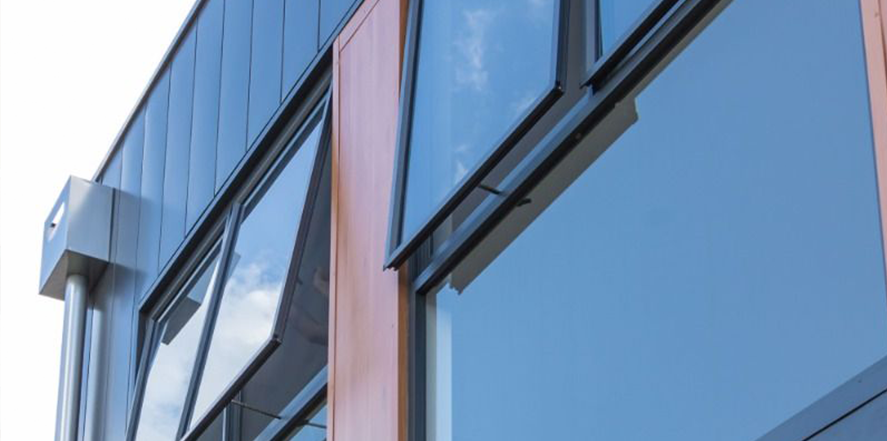


Salt air does not attack a villa window in one dramatic event; it adds small stresses to every opening cycle. A casement sash must carry its glass, resist gusts at the outer edge, and return to the same seal line after cleaning, storms, and seasonal movement across a full coastal elevation.
At CMECH, we treat coastal casement window hardware as a force and sealing system, not a decorative accessory. Our engineers connect the hinge, drive gearbox, locking elements, handle, and profile interface together, helping developers and fabricators standardize configurations across openings with compatible dimensions and installation requirements.
Coastal Exposure Changes the Sash Load Path
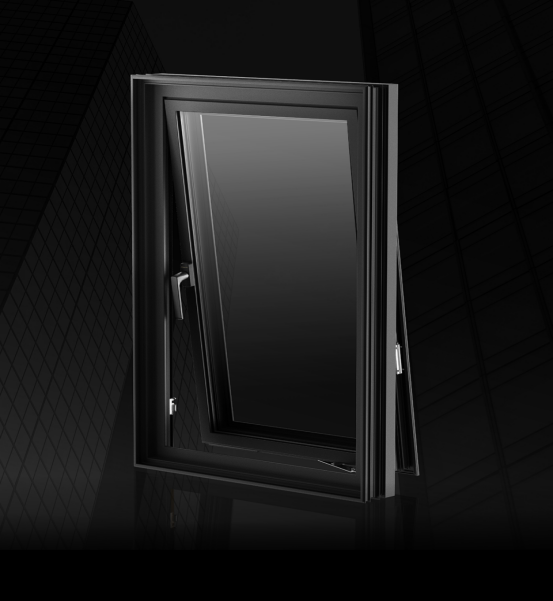
An outswing casement window hardware system behaves like a lever fixed along its hinge side. Glass weight pulls downward, wind pushes across the panel, and the outer corner magnifies that moment before force reaches the frame. The friction hinge and its load-bearing arm therefore carry the primary structural reaction, while the handle and gearbox keep the closing edge positioned.
If the hinge arm flexes or the fixing pattern shifts, the sash can sag toward the handle side. That movement changes the engagement depth of each locking element and places uneven pressure on the gasket. Coastal air then finds a weak compression zone sooner than a balanced system would, especially on wide openings facing prevailing wind and salt spray.
For villa schedules, the engineering response is to specify the complete load route. Check sash dimensions, glass weight, hinge material, fixing depth, and gearbox alignment together. This requires more than selecting hardware by appearance because the sash depends on coordinated hinge support, locking operation, and frame compatibility. The review also helps installers understand the requirements for each hardware configuration.
How Does the Locking Path Protect Weather Sealing?
When the handle rotates, its spindle turns the bidirectional gearbox. The gearbox sends motion to locking elements along the sash, pulling the closing edge toward the frame. That action compresses the gasket; the gasket pushes back against the frame, creating the contact pressure that limits air and water movement through the joint.
The casement window hardware selection must therefore match spindle center distance and T-drive length to the profile. The available spindle drive gearbox center distances are 11, 13, 22, 25, 28, 30, and 35 mm, while T-drive lengths are available in 17, 20, 24, 28, 32, 36, and 40 mm options. A near match can still rotate, yet deliver insufficient travel at the locking points and leave the weather seal uneven during wind cycles and routine cleaning.
In a coastal villa, correct compression reduces the chance that wind-driven spray reaches the reinforcement cavity or interior finish. It also limits edge contact that can wear a seal. A complete outswing system is useful because its handle, gearbox, locks, and friction hinge are reviewed as one operating chain rather than as interchangeable window hardware pieces throughout the villa season.
Dimensional Control Supports Repeated Villa Elevations
Premium villas often repeat one window module across several elevations, but exposure and opening size still vary. The listed outswing range covers sash widths of 300–750 mm and heights of 300–1,800 mm, with total load-bearing up to 70 kg. Those figures define a screening boundary before a fabricator approves glazing, profile, and hardware together for every repeated opening.
We also inspect the adjustment reserve. The gearbox anti-drift mechanism extends up to 12.5 mm, giving installers room to recover alignment after profile tolerance or minor frame movement. Adjustment cannot increase the rated load; it only restores the intended relationship between hinge position, locking travel, and gasket compression during commissioning.
Material selection then becomes part of the coastal maintenance plan. A 304 stainless-steel friction hinge resists corrosion exposure while its thickened 4 mm load-bearing arm transfers sash reaction into the frame. The gearbox uses a precision-cast zinc alloy core. Its dimensions and installation requirements should be checked against the selected window profile before assembly.
The Outswing Solution Fits Sea–Facing Villa Projects
For a sea-facing villa development, we at CMECH specify the outswing casement window hardware solution with a Milan or Venice Series stainless-steel handle, rolling spring-loaded steel-ball positioning, triangular fixation, bidirectional zinc-alloy spindle gearbox, locking elements, and a 304 stainless-steel C-groove friction hinge. Its thickened 4 mm arm supports up to 60 kg, within a system range up to 70 kg.
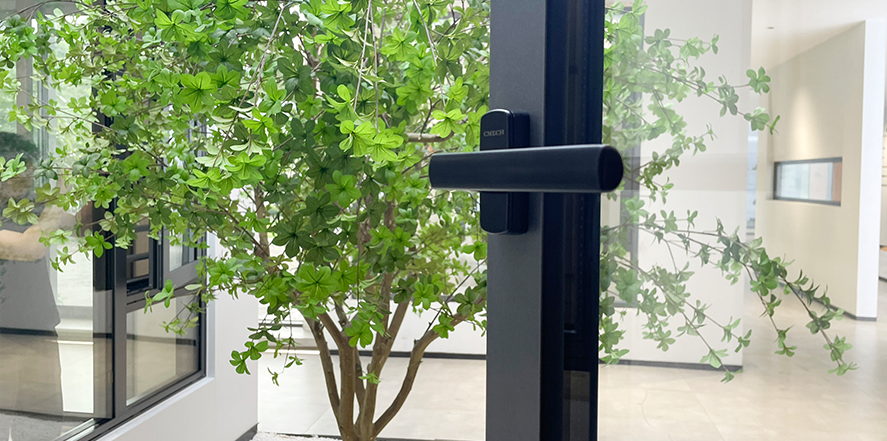
The handle structure is formed as one stainless-steel piece, while the spring-loaded ball and triangular fixing pattern help maintain position during repeated use. The gearbox has been tested to 30,000 open-close cycles and provides up to 12.5 mm of anti-drift correction. The hinge includes a wind-resistant stop designed to withstand 1000N of destructive force, a relevant reference for exposed elevations.
We would apply this configuration when the villa project repeats compatible profiles and sash sizes across multiple rooms. It gives the installer a defined relationship between hinge, drive, lock, and handle, while the architect can keep a coordinated visual language. The selection still depends on profile groove, drainage, glazing weight, fixing access, and the actual marine exposure class.
Keep the Coastal Specification Within Its Boundaries
Where the same villa development repeats compatible profiles, a coordinated outswing configuration can make settings and maintenance records easier to standardize. Start with the verified sash weight and geometry, then assess the hinge, drive, and sealing arrangement against each exposed elevation.
After installation, provide a maintenance plan that addresses cleaning access, drainage, fasteners, and seal condition. The selected materials support the coastal specification, but the actual exposure and surrounding window construction determine what inspection and upkeep the project requires.

 English
 Arabic
 Chinese
 French
 Thai
 Vietnamese