
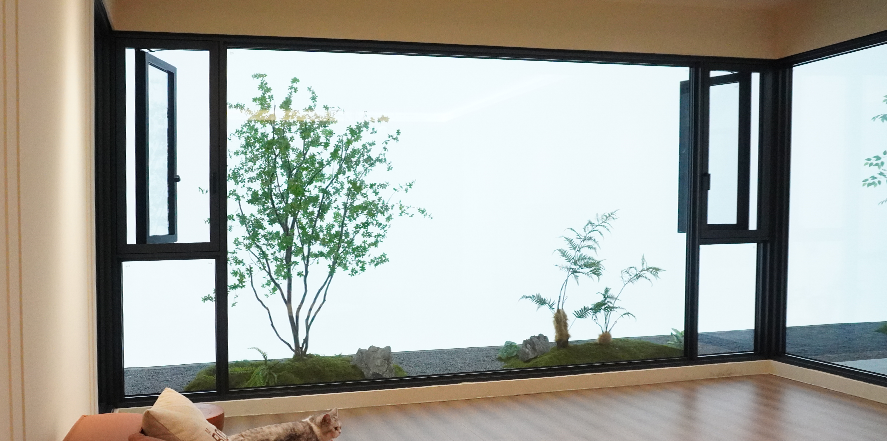


A casement window may look like a simple swinging pane, but it relies on a coordinated set of frame, sash, and hardware components to open smoothly and seal tightly. Understanding casement window parts helps buyers and specifiers compare products accurately and avoid performance issues down the line.
This guide walks through every major component, what it does, and what to look for in quality hardware, with CMECH used as a reference for current industry standards.
Understanding the Frame and Sash Components
Before looking at hardware, it helps to know the structural parts that hold a casement window together.
Frame and Surrounding Structure
- Frame: The outer structure recessed into the wall that supports the entire window assembly.
- Head: The top horizontal section of the frame.
- Sill: The bottom horizontal section, often tapered to shed water.
- Jamb: The vertical sides of the frame that connect to the sash.
- Mullion: A vertical or horizontal bar that divides multiple glass units within one frame.
The Sash and Glazing
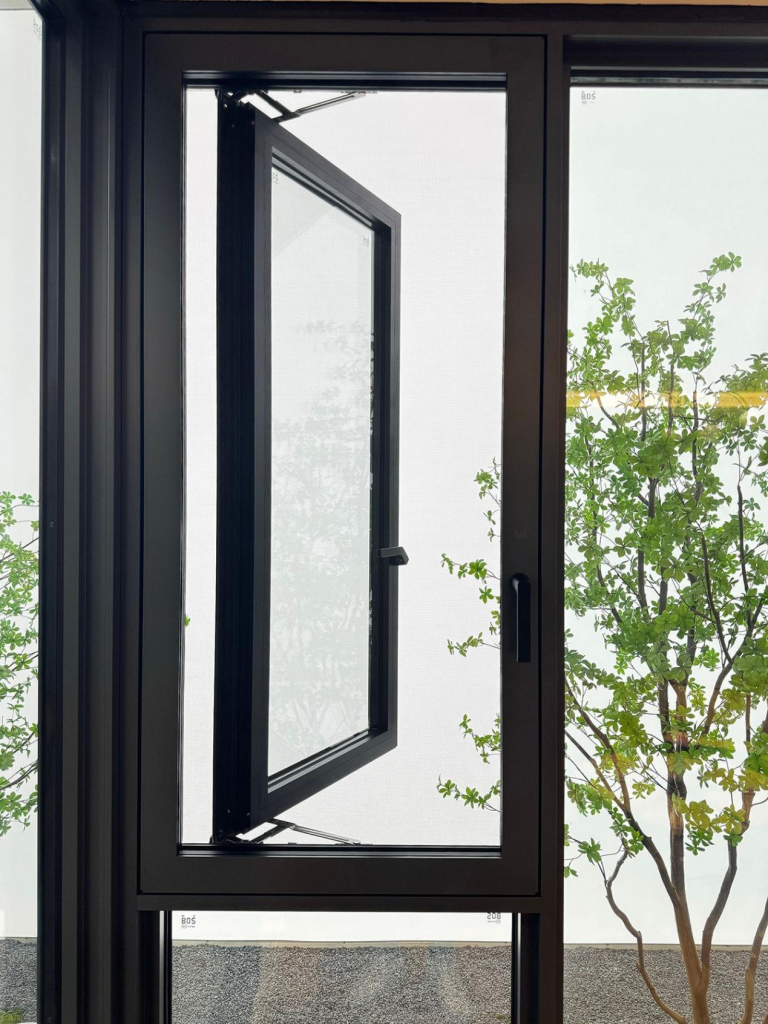
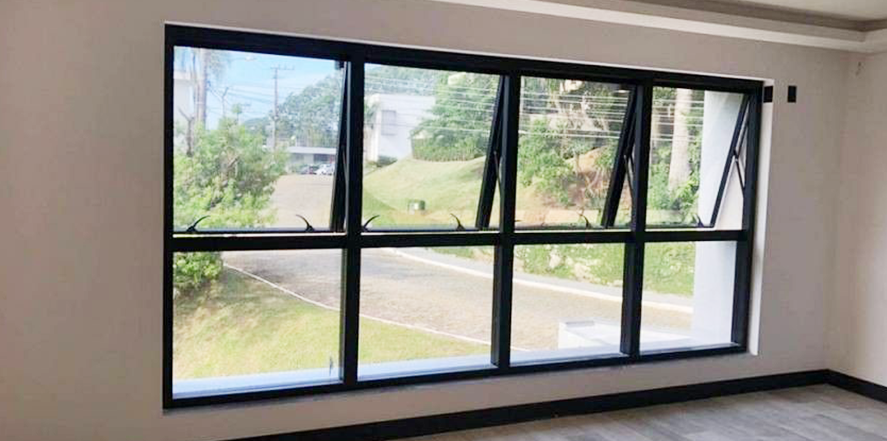
- Sash: The movable panel that holds the glass and swings outward when opened.
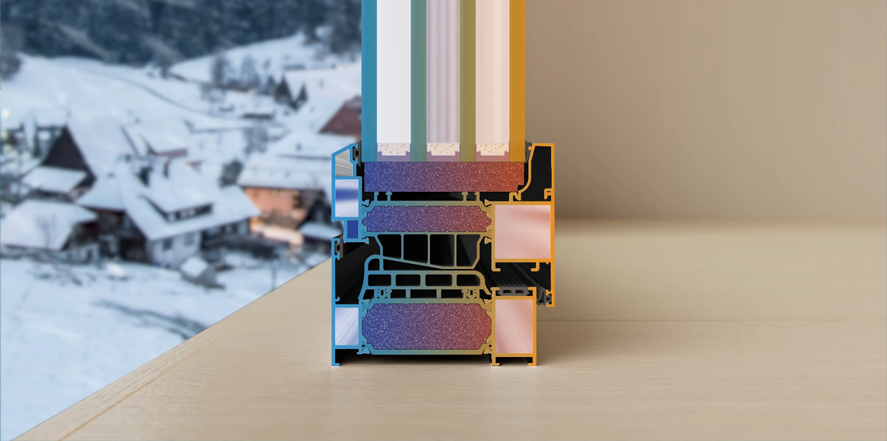
- Glazing: The glass itself, typically double or triple-glazed for insulation.
- Stiles and rails: The vertical and horizontal members of the sash frame that hold the glazing in place.
Hardware Components That Make Casement Windows Work
Once the structural parts are in place, hardware is what allows the sash to open, close, and lock. Reliable parts for casement windows typically include the following components working together.
Core Hardware Parts
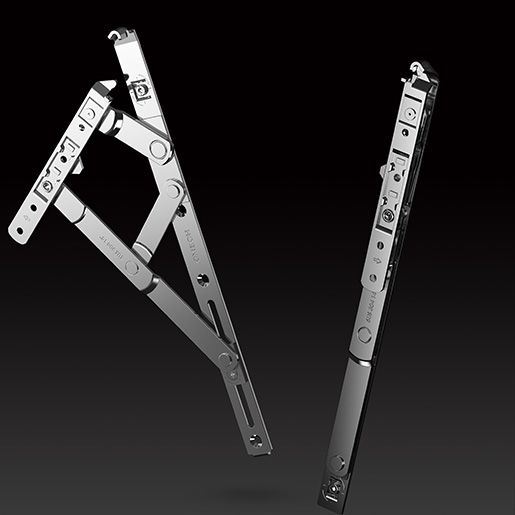
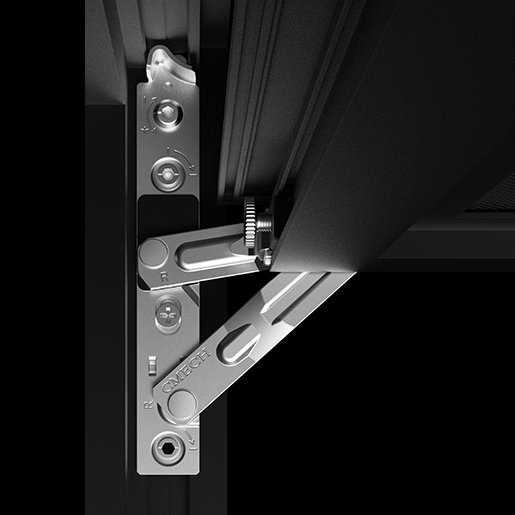
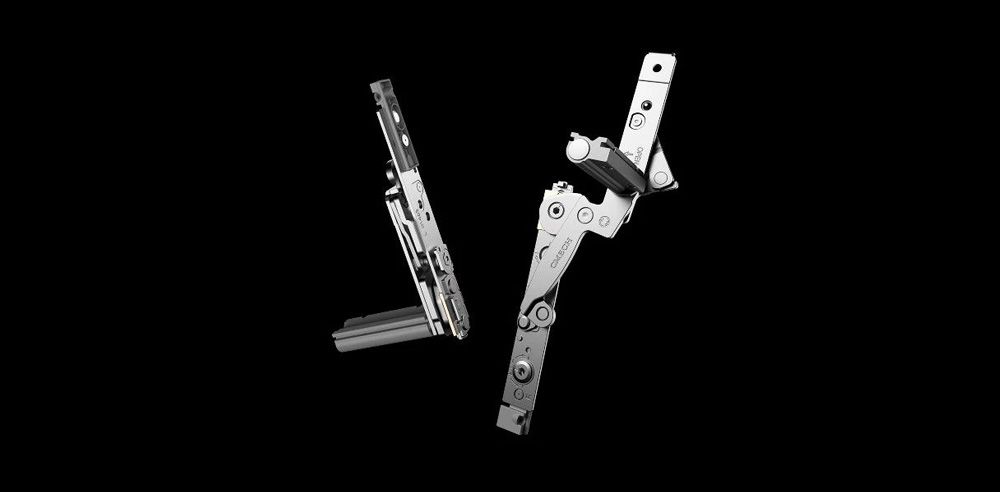
- Friction hinge: Attaches the sash to the frame and allows it to swing outward while holding it steady at any angle.
- Crank operator and handle: Converts a turning motion into linear movement that pushes the sash open or pulls it closed.
- Spindle drive gearbox: Transfers force from the handle to the operator arm with precision and minimal play.
- Multi-point lock: Secures the sash at several points along the frame rather than a single latch, improving both security and weather sealing.
- Keeper: The fixed component that the lock engages with to hold the sash closed.
- Weatherstripping: Seals the gap between sash and frame to block drafts, moisture, and noise.
Why Hardware Quality Affects Long-Term Performance
The structural design of a casement window matters, but the hardware determines how it performs day to day.
- Security: Multi-point locking systems resist forced entry far better than single-point latches.
- Energy efficiency: Tight seals and properly aligned hardware reduce air leakage and lower heating or cooling costs.
- Smooth operation: Well-engineered gearboxes and hinges keep the crank turning evenly without binding.
- Durability: Hardware tested for thousands of open-and-close cycles holds up far longer under daily use.
Introducing CMECH
CMECH offers a broad hardware portfolio that spans hinges, gearboxes, locking systems, and handles built for casement, awning, tilt and turn, and sliding window configurations. With nearly 30 years in the industry, the company maintains regional teams across the Middle East, Southeast Asia, Australia, and Greater China, giving architects and window fabricators consistent access to parts and technical support no matter where a project is located.
CMECH Master Series Casement Window Parts
For buyers comparing casement window parts, the CMECH Master Series, an outswing casement system with an integrated fly screen, illustrates how individual components can be engineered for long-term reliability.
Handle
- Available in the base-free Milan style or the Venice style, both award winners of the Red Dot and iF Design Awards
- Built with a triangular fixation system for stable, wobble-free operation
Spindle Drive Gearbox
- Tested through 30,000 open-and-close cycles, exceeding national standards
- Precision-cast as a single solid unit from high-strength zinc alloy, delivering 25 N·m of torsional resistance
- Features a 12.5 mm anti-drift nut for smooth, rattle-free bidirectional adjustment
Friction Hinge (C-Groove)
- Made from 304 stainless steel with a thickened 4 mm load-bearing arm, supporting up to 60 kg
- Equipped with a triple safety linkage and a typhoon-resistant stopper rated for Level 9 winds
- Passed more than 30,000 repeated operation tests
Fly Screen Hinge
- Offered in 90°, 165°, or full 180° opening angles to suit different ventilation needs
- Built from 304 stainless steel and tested to over 30,000 cycles for lasting stability
This series supports sash widths from 400 mm to 750 mm, sash heights from 300 mm to 1,800 mm, and a load-bearing capacity of up to 60 kg.
Tips for Choosing and Maintaining Casement Window Parts
- Match hardware load ratings to the actual sash size and weight before installation
- Choose stainless steel components for better corrosion resistance in humid or coastal climates
- Lubricate hinges and gearboxes periodically with a silicone-based spray
- Inspect keepers and locking points for wear during routine maintenance
- Replace worn operator arms promptly to avoid stress on the sash and frame
Final Thoughts
Every casement window depends on the coordination between its frame, sash, and hardware to function correctly over time. Buyers who understand these parts for casement windows are better equipped to compare products, plan maintenance, and avoid costly repairs. Working with an established supplier such as CMECH gives architects and developers access to tested, well-documented components for projects of any scale.
 English
 Arabic
 Chinese
 French
 Thai
Thai Vietnamese