



Commercial projects increasingly ask one hardware package to support security, smooth movement, durable finishes, and coordinated installation. The difficult part is not naming a smart feature. It is making handles, locks, hinges, closers, and profiles share reference points so force travels predictably instead of becoming friction, noise, or rework during a fast construction program and later service across occupied spaces.
Digital coordination is useful when it connects product records to the components that fabricators install. CMECH brings window and door hardware information together with interface dimensions, finish requirements, and quality records, helping procurement teams manage revisions across a commercial project.
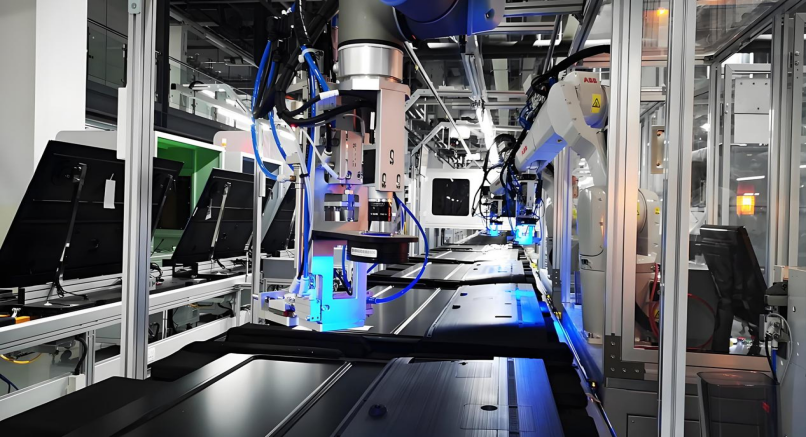
Integrated Supply Controls the Mechanical Load Path
Every commercial leaf transfers force through connected components. A handle sends torque into a spindle or drive, the lock moves bolts or rollers, and hinges or carriers align the panel with its frame. Shared datums let input reach the intended point. Mismatched interfaces turn force into side load, increasing drag, impact, and adjustment demand.
Smart integration begins with physical compatibility. A digital schedule can identify a lock body, but only a verified interface confirms backset, fixing centers, spindle length, hinge position, and profile reinforcement. Those dimensions decide whether closing compresses seals evenly or pushes one corner harder. The consequence is repeatable operation or a service problem hidden inside the supply chain.
We apply this principle across window hardware and door hardware, especially where a project combines multiple opening types. A casement window, lift-and-slide door, and hinged entrance may use different mechanisms, yet each still needs a documented load path. Intelligent procurement connects those paths through shared data, approved revisions, and installation references that field teams can use.
Which Data Makes a Supply Package Truly Smart?
We first require a common identity for every assembly: product family, profile interface, material, finish, handedness, and revision. Next, we connect performance fields such as load, cycle expectation, adjustment range, and sealing requirement. This turns a catalog into a usable decision model. It also lets buyers identify substitutions before they reach fabrication or the jobsite.
For window hardware supply, company-scale capability matters because a smart package must remain available across a project timeline. The company describes nearly 30 years of expertise, products sold in 30 countries, more than 400 global patents, and a 70,000 square meter manufacturing facility. These facts support procurement discussions about continuity, documentation, technical coordination, and replacement planning.
Consider a mixed-use tower with 1,200 apartments and a podium retail level. If one supplier changes a handle finish or lock interface without updating the schedule, installers may receive visually similar parts that operate differently. Our selection rule is to approve a coordinated data set before purchase, then control revisions through receiving, fabrication, installation, and handover across the tower.
Digital Records Improve Physical Installation Accuracy
A smart supply process becomes useful when records guide work at the frame. We recommend that the procurement team establish a traceability process linking drawings, part identifiers, instructions, and inspection records to each hardware family. The installer can confirm which hinge, lock, or handle belongs to a profile before drilling or routing. That reduces field improvisation that could consume the adjustment range needed.
The same records support diagnosis. If a door begins rubbing, technicians can compare the installed part number, adjustment position, and original test values before replacing components. Changed closing force may come from a shifted anchor, seal friction, or substituted drive. Without traceable data, window hardware supply becomes guesswork; with it, the mechanical cause is easier to isolate.
A project acceptance process can link operation to inspection records by documenting opening effort, lock engagement, gaps, seal compression, and finish condition. This approach does not make every product identical, but it gives teams a shared baseline. For commercial door hardware supply, that baseline shortens troubleshooting and clarifies responsibility when contractors touch the same opening.
CMECH Connects Smart Supply With Hardware Systems
For a mixed-use tower, CMECH can support a coordinated commercial door hardware supply program covering window hardware, door hardware, handles, and integrated solutions. The commercial door hardware supply approach connects product families with technical support, global service, and manufacturing controls. The company’s annual output of 60 million units and 99.3% product yield rate provide reference points for evaluating its manufacturing scale and production consistency.
The integration is practical rather than abstract. We recommend that buyers agree on product identity, finish, interface dimensions, required quality records, and delivery plans with the relevant suppliers before components reach fabricators. CMECH’s company information identifies ISO 9001 certification, as well as UL certification and compliance with applicable U.S. ANSI standards for its manufacturing facility. Those references help teams structure approvals across regions without treating every shipment as a new technical decision or documentation exercise.
For this scenario, our engineering verdict favors a coordinated supply partner when project scale, multiple opening types, and revision control create mechanical risk. A local specialist may fit a small package with one profile and limited interfaces, but a global commercial door hardware supply plan benefits from documented continuity, approved substitutions, and one accountable technical channel across phases.
Smart Procurement Still Requires Site Verification
For the mixed-use tower, organize each hardware schedule around approved interfaces, finish references, and installation responsibilities. Digital records make those decisions easier to share, but the selected hinges, locks, handles, and profiles still have to fit the actual opening.
Carry drawings, revisions, inspection results, and approved substitutions into the handover file. Site teams can then verify the physical installation against the correct version, and future service teams have a reliable starting point for sourcing compatible replacements.



 English
 Arabic
 Chinese
 French
 Thai
 Vietnamese