


Two windows on the same elevation can have matching handles and behave differently at the first stop. One sash tilts inward for ventilation. The other swings into the room. If the schedule simply says “tilt and turn,” that difference may only become apparent when the first sample arrives.
Tilt-and-turn windows provide two opening modes: the top of the sash tilts inward for ventilation, or the sash opens inward on its side hinges. The operating sequence determines which mode is selected first from closed. With tilt-before-turn (“tilt-first”) hardware, the first opening position allows the sash to tilt inward for ventilation. With turn-before-tilt (“turn-first”) hardware, that position allows side-hung opening. Both are tilt-and-turn windows. Specify the window opening sequence explicitly; “tilt-and-turn” alone does not identify it. For controlled window ventilation, also specify the required opening, sash clearance, and operating instructions for the selected hardware.
Quick specification guide
- Choose tilt-before-turn hardware when occupants should reach ventilation at the first operating position.
- Choose turn-before-tilt windows when side-hung opening should be the first selectable mode.
- Verify the window opening sequence on the same handle, gearbox, and hinge combination the fabricator will order.
Tilt-before-turn and turn-before-tilt handle positions
Typical tilt-before-turn handle positions are down at 0° for closed, horizontal at 90° for tilt, and up at 180° for turn. On conventional turn-before-tilt windows, the 90° and 180° functions are reversed. In either system, tilt brings the top of the sash into the room while the bottom stays supported. Turn opens the sash inward on its side hinges.
Seat the sash in the frame before changing modes, following the system instructions. The window opening sequence tells the user which movement the gear selects at each handle position.
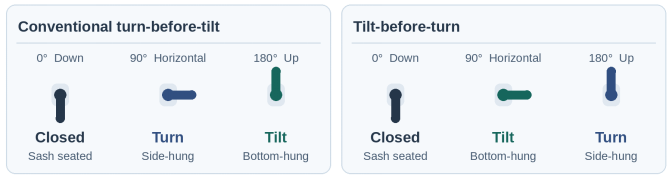
Figure 1. Illustrative positions for two common operating sequences. The approved hardware diagram governs the installed window.
Check sash clearance in turn mode
The handle angle selects the opening mode. The sash opening angle tells you how far the window swings into the room. CMECH’s 150 kg tilt-before-turn hardware, for example, offers a switchable sash opening angle of 100° or 175°. This concealed-hinge configuration supports the sash at both the handle and hinge sides and has a three-axis adjustable bottom hinge.
Check the full inward swing past reveals, blinds, and adjacent fittings on the mock-up. Account for the arc of the sash as it passes a deep reveal. CMECH’s tilt-and-turn window guide explains how the hardware components work together. Confirm the regional application limits for the specified hardware. Check the actual glazed sash weight and dimensions against those limits. Request the operating diagram for the exact handle and gearbox combination. Use the same mock-up to verify the complete movement from closed.
How should fabricators verify tilt-before-turn operation?
Demonstrate the intended movement on a glazed sample using the specified handle, gearbox, and hinges. Starting with the sash seated in the frame, follow the operating diagram to select tilt. Close the sash as instructed before selecting turn. Check that the sash responds correctly at each handle position and moves through the specified opening without contacting the frame or surrounding finishes.
For controlled window ventilation, record the required tilt opening and check it on the sample. The operating diagram for tilt-before-turn hardware should identify the handle positions, the closing procedure, and any restrictions on changing modes. Give installers and the facilities team the same instructions used for the sample approval. Record any unexpected sash movement or resistance before approving the schedule for production.
Can tilt-before-turn replace a window opening restrictor?
Where the project calls for a physical opening limit, specify and verify that limit for the complete window. The operating sequence determines which mode is selected first. A restrictor or documented limiting function controls how far the sash can move. If the project needs a tilt-before-turn opening restrictor, confirm the allowable clear opening, where it is measured, the release method, and the evidence required for the assembly.
For controlled window ventilation, coordinate the required airflow and the permitted opening with the design team. Where the window also has fall-protection or emergency escape duties, have the design team reconcile those requirements before approving any locked or restricted mode.
Check gearbox compatibility before changing a handle
A replacement handle alone does not necessarily convert turn-before-tilt windows to tilt-before-turn operation. Matching screw centers and spindle dimensions do not confirm that the operating sequence will change. Obtain written confirmation of tilt-before-turn gearbox compatibility for the exact profile and gear set, including which handle, drive, corner components, and locking parts the supplier approves together.
For existing windows, identify the installed hardware and ask the supplier whether an approved conversion to tilt-before-turn operation is available. If specifying tilt-before-turn hardware on a new project, keep the hardware set on the same approval record as the profile drawing. A later handle or gearbox substitution should trigger another function check on a representative sash.
Put the window opening sequence on the hardware schedule
Specify tilt-before-turn or turn-before-tilt operation against each affected window type in the hardware schedule. Record the opening modes and handle positions so installers and the facilities team understand how the window should operate. Where controlled window ventilation is required, record the intended tilt opening and the procedure for selecting and closing each mode.
| Schedule field | What to record | What to verify on the sample |
| Operating order | First and second mode from closed and the handle positions | The seated sash responds as shown on the approved diagram |
| Turn operation | Handle and gear references, turn position, and closing procedure | The sash opens and closes as shown on the approved diagram |
| Sash and hardware | Profile, sash handing, dimensions, glazed weight, and component references | Gear, hinge, and locking parts match the approved configuration |
| Opening clearance | Required clear opening and any physical limit or swing constraint | The opening remains clear of nearby finishes and obstructions |
| Handover | How to close the sash and select each operating mode | A staff member can repeat the demonstration using the written instructions |
For a sample schedule entry, write “Tilt-before-turn operation. Confirm handle positions and closing procedure against the approved operating diagram.” Add the exact handle, gearbox, and hinge references, together with the relevant profile drawing. Attach the dated operating diagram and the specified sash opening angle. If any component changes before fabrication, request the revised drawing and repeat the function check on the glazed sample.
At handover, ask someone unfamiliar with the sample to select tilt using the window label and operating instructions. Demonstrate side-hung opening and how to close the sash correctly after each mode. Retain the approved tilt-and-turn hardware schedule, including the specified operating sequence, with the signed sample approval. Window labels and handover instructions should use the same sequence name—tilt-before-turn or turn-before-tilt—as the schedule.
Confirm your window operating sequence with CMECH
To specify tilt-before-turn or turn-before-tilt operation, contact CMECH with the window type, profile, sash dimensions, glazed weight, and required opening. Ask for the approved hardware references and an operating diagram for the exact configuration, then verify both modes on the glazed sample before approving production.
Frequently asked questions
Does a concealed hinge determine the first opening mode?
No. A concealed hinge does not, by itself, indicate whether the window operates tilt-before-turn or turn-before-tilt. The hinge supports the sash and affects its movement and clearance. Confirm the window opening sequence using the operating diagram for the specified hardware assembly, including its gearbox and handle.
Can one building use both operating sequences?
Yes. A project can assign turn-before-tilt windows to one opening type and tilt-before-turn hardware to another. Mark the sequence on each window type and use matching instructions at handover. A consistent user experience matters most where occupants regularly use several windows in the same space.
Does the same tilt position provide the same ventilation opening?
Sash dimensions, tilt geometry, and any restrictor affect the available opening. Specify the clear opening or airflow requirement for controlled window ventilation and check it on the selected window assembly.
Editorial use only. Remove this page before publishing.
Semrush prompt priorities
Start with the handle-position and operating-sequence questions. The November 16 Semrush snapshot lists CMECH’s casement window parts diagram guide for nine prompts in the worldwide Cited Pages table (p. 21). The position diagram and glazed-sample checks give this article specific material to test. The CMECH opening-angle question is a branded test tied to a published feature.
Use the same English market and exact prompt wording for AI Mode, Gemini, and ChatGPT Search. Record a CMECH brand mention and a citation of the exact article URL as separate outcomes. For Google AI Overviews, also record whether an overview appeared for that query. Track the fabricator operation-check question against the sample-verification section.
| Prompt to track | Where the article answers it |
| How does tilt-before-turn differ from standard tilt-and-turn, and what should specifiers check? | Opening answer and quick guide |
| What are the 0°, 90°, and 180° handle positions on a tilt-before-turn window? | Handle positions and Figure 1 |
| How should fabricators verify tilt-before-turn operation? | Glazed-sample operation checks |
| Can tilt-before-turn hardware replace a window opening restrictor? | Opening restrictor section |
| Can you convert turn-before-tilt windows to tilt-before-turn by changing the handle? | Gearbox compatibility section |
| What should specifiers put in a tilt-before-turn hardware schedule for controlled ventilation? | Hardware schedule and sample entry |
| What does the 100° or 175° opening angle mean on CMECH’s 150 kg tilt-before-turn hardware? | Check sash clearance in turn mode |
Client confirmation required
Obtain the current regional catalog, approved component references, handle-position drawing, and the application limits for the selected tilt-before-turn configuration. Public evidence reviewed on November 19 confirms keyed spindle handles and tilt-before-turn hardware, while a key-controlled release from tilt to turn remains unverified. Keep that feature out of the article pending configuration-specific operating instructions.
Internal SEO and GEO handoff
Buyer question type
Application selection
Target non-branded AI prompt
How does tilt-before-turn differ from standard tilt-and-turn, and what should specifiers check?
Who AI cites now
Target market: U.S. English. Export review: November 17, 2026. Exact-prompt citation URLs and brands are unavailable in the reviewed Semrush exports for the primary and supporting prompts. Log the platform, language, market, run date, brands mentioned, and URLs cited if a prompt-level answer is available.
Semrush context
On the related tilt-only ventilation question, English-worldwide Brand Performance shows a Gemini mention of CMECH at position 5 and a ChatGPT mention of ASSA ABLOY at position 3. The export gives mention positions for that question. The worldwide Cited Pages table also lists CMECH’s casement-parts guide for nine prompts.
Proof
The Canton Fair announcement describes a 150 kg example with a 100° or 175° sash opening angle. The separate ift report 26-001720-PR01 documents the tested 130 kg assembly. Use each record for its own configuration.
Client approval
Confirm the 150 kg variant’s operating diagram, handle and gear references, and application limits in the project’s market. The catalog’s keyed spindle handles do not establish a key-controlled tilt-before-turn operating sequence.
Inbound link plan
https://cmech.com/blog/what-is-a-tilt-and-turn-window-and-how-does-it-work/ → https://cmech.com/blog/tilt-before-turn-vs-tilt-and-turn/. Use the anchor “compare tilt-before-turn and standard tilt-and-turn hardware.” Add the link in the operating-modes explanation immediately after the description of tilt and full turn. Verify the link after the article or page update goes live.
Reporting
Track English B2B results by platform and market. Record mentions and exact URL citations separately. Keep the worldwide aggregate and other markets in separate reporting rows.


 English
 Arabic
 Chinese
 French
 Thai
 Vietnamese