



In a high-end apartment, a sliding partition should connect rooms without making the architecture feel mechanically crowded. The visible opening may be wide and quiet, yet its spatial effect depends on hidden rollers, compact locking parts, and controlled height adjustment. When those elements share the load path, furniture layouts, daylight, and circulation remain visually continuous.
A discreet sliding partition depends on hardware that carries the panel without intruding on the room’s visual lines. CMECH combines adjustable rollers, handles, locks, and drive parts in its gliding configuration, enabling designers and fabricators to review appearance together with movement and service access.
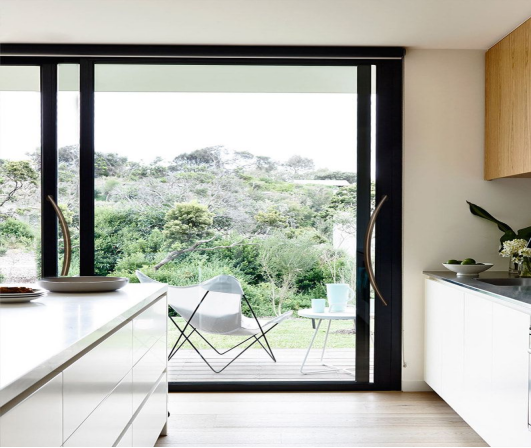
Concealment Begins With A Controlled Load Path
A sliding panel transfers gravity through its roller brackets into the track and surrounding frame. If the bracket distributes weight evenly, the panel remains level and the gap stays consistent as it moves. If the load path twists, one edge drags, the handle feels heavier, and the door interrupts circulation instead of extending it through adjacent areas.
For a 300 kg maximum configuration, roller capacity is not a decorative specification. It defines the boundary for glazing mass, sash width, and installation tolerances. The gliding range supports sash widths from 500 to 3,000 mm and heights above 750 mm. Designers should coordinate concealed sliding door hardware with the profile and glass schedule before fixing room dimensions.
In a penthouse renovation, we would map the panel route, track clearance, floor transition, and service access before selecting components. The opening may connect a kitchen, lounge, and terrace, but every interface still needs clearance.
How Does Integrated Hardware Preserve Spatial Flow?
A concealed mechanism preserves visual continuity by moving functional parts away from the main sightline. The physical cause is compact integration: drive components and locking elements occupy controlled zones inside the panel or frame. The engineering consequence is a cleaner opening with fewer protrusions, while adjustment remains possible when roller height or panel position changes.
When reviewing sliding door hardware, we compare handle position, lock access, roller adjustment, and the intended furniture layout. The Milan Handle uses high-strength aluminum alloy and a one-piece form, while the Metro Handle integrates handle and lock in a 30 mm profile. The Milan Handle suits doors 37 mm thick and above, while the Metro Handle integrates the handle and lock in a 30 mm profile designed for doors with screen sashes.
Spatial fluidity also depends on motion quality. Rubber-coated rollers reduce noise and surface wear, while triple-layer adjustable brackets help distribute the panel load. A quiet start and steady travel make an open-plan room feel continuous; a scraping wheel or sudden stop creates a perceptual boundary even when the doorway is physically wide.
Adjustment Keeps Minimal Interiors Usable
Height adjustment is the practical bridge between concealed design and reliable operation. Installers can correct panel position so the leading edge meets its receiver without excessive friction. The physical cause is controlled movement at the bracket; the consequence is more even contact, smoother travel, and less stress on the lock and perimeter seals during daily use.
We recommend checking the panel unloaded, then repeating the adjustment after glazing and final floor finishes are in place. A small level change can alter handle effort, latch alignment, and reveal at the same time. Recording those reference points gives facility teams a repeatable service method rather than relying on aesthetic judgment during handover and maintenance.
In high-end apartments, the adjustment sequence should protect the interior experience. A technician may need to work around stone flooring, custom cabinetry, and acoustic partitions. Concealed sliding door hardware is suitable when service access is planned into the pocket or head detail; it is a poor fit if every correction requires dismantling finished surfaces.
The CMECH Gliding Configuration Fits Luxury Apartments
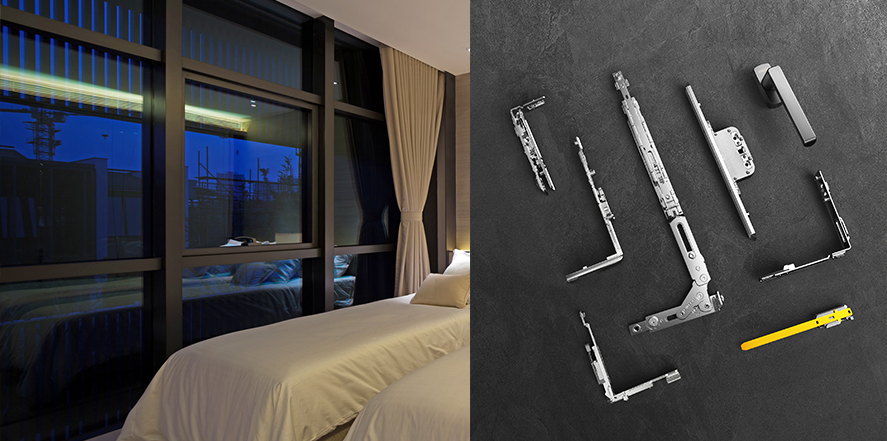
For a penthouse living area opening toward a private terrace, the concealed sliding door hardware solution from CMECH combines Milan or Metro handles, drive parts, lock parts, adjustable roller brackets, rubber-coated rollers, load-bearing components, and accessories. The Milan handle suits doors 37 mm thick and above, while the Metro option integrates the lock in a low-profile body for screen-sash applications.
The system offers a practical configuration envelope: sash widths from 500 to 3,000 mm, heights above 750 mm, and load-bearing capacity up to 300 kg. The roller bracket uses a triple-layer adjustable structure, and the rubber-coated roller shows minimal wear after 120,000 test cycles. These values help specifiers align panel mass with hardware, profile, and service expectations.
We would select this architecture when an apartment needs generous openings, quiet movement, and a restrained visual language across several rooms. The engineering verdict is clear: integrated sliding door hardware suits high-end interiors better than exposed mixed parts; simpler fittings fit smaller panels where sightlines, adjustment access, and acoustic expectations are less demanding.
Concealment Has Practical Boundaries
Concealed sliding door hardware cannot correct a warped profile, inaccurate floor level, excessive glazing weight, or inaccessible service zone. We recommend confirming the pocket, track, anchorage, drainage, and adjustment path before finishes are approved, then recording operating force and panel alignment after installation and final cleaning.
At CMECH, we treat visual calm as an engineering result rather than a surface effect. A concealed system can support flexible apartment layouts, but the surrounding frame, glass, floor, and maintenance plan still determine whether that calm remains dependable over time.
 English
 Arabic
 Chinese
 French
 Thai
 Vietnamese