
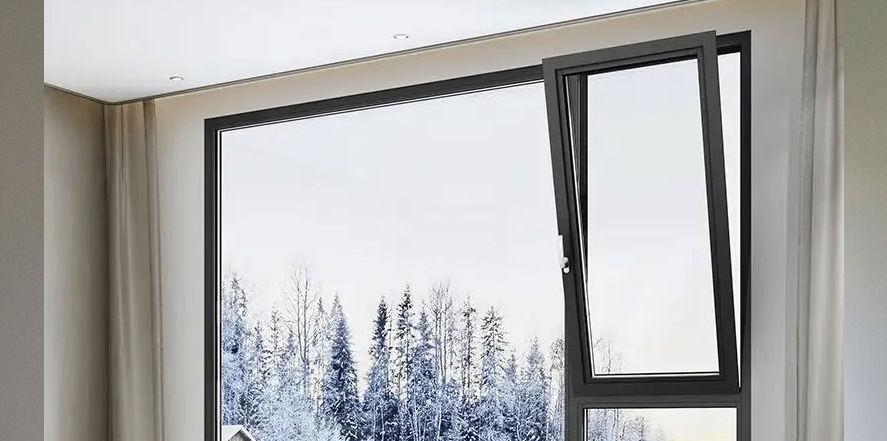


Large residential windows increasingly combine two demands: quiet manual control for occupants and automated ventilation for building systems. A tilt and turn window must carry glass, guide two opening positions, and compress its perimeter seal when an actuator is absent or disconnected. The control choice changes the mechanical load path, not only the user interface.
Manual and automated openings can share a concealed tilt-and-turn architecture, but their inputs and service needs differ. CMECH evaluates hinges, drives, locking points, and sealing geometry first, then helps project teams consider actuator access, travel, and force where powered control is proposed.
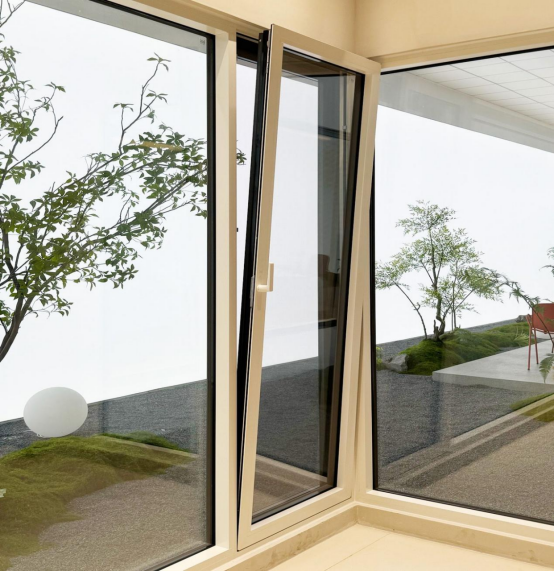
Manual and Automated Control Start With Different Force Paths
A manual tilt-and-turn system begins with a hand turning the handle. The spindle enters the drive gearbox, the gearbox distributes movement around the sash, and locking elements pull the frame into a compressed perimeter seal. The operator feels resistance directly, so a binding hinge, misplaced sash, or excessive gasket pressure appears during commissioning and later seasonal checks.
An automated actuator inserts a motor, chain, or linear drive into that sequence. Instead of hand torque, the actuator applies force at its connection point, while sensors decide when movement starts and stops. Poor bracket alignment can push the sash sideways, increase hinge reaction, and leave the operator unable to diagnose the source from the control panel alone during routine maintenance visits.
For reachable rooms, manual window hardware usually provides clearer feedback and fewer powered components. Automation becomes useful where ventilation schedules, inaccessible windows, or centralized building control justify added mechanism. The selection should follow opening duty and service model, not an assumption that every project using modern tilt and turn windows needs a motor or remote command.
Which Control Method Protects the Closing Sequence?
The closing sequence matters because a seal compresses only after the sash reaches its intended position. In a manual system, the handle rotates the drive and the user can pause if the lock meets resistance. In an automated arrangement, the actuator continues according to its signal; a misaligned sash can convert motor force into bracket stress or incomplete locking.
Our Cửa sổ xoay và lật hardware uses patented dual-gear technology to keep drive elements meshed with limited play and backlash. The stainless steel faceplate resists wear and deformation, while concealed hinges and locking parts maintain the sash reference. This chain suits manual operation because handle movement remains directly connected to gear travel and perimeter compression.
An actuator should be added only when its stroke, mounting position, force limit, and control logic match that chain. If it stops before locking elements reach full travel, the window may look closed while the gasket is lightly compressed. If it pushes beyond the designed stop, hinge and profile reactions rise. Automation is a coordination problem, not a substitute for geometry.
Sealing Performance Depends on Adjustment Before Automation
Before comparing controls, installers should square the sash and establish the hinge reference. Concealed support arms carry glass reaction into the frame, while adjustable sealing geometry sets gasket compression. This creates the mechanical baseline for either a hand-operated tilt-and-turn system or a powered opening sequence connected to a building management system before occupancy and seasonal use.
The configuration covers sash widths from 490 to 1,200 mm and heights from 600 to 2,800 mm, with load ratings from 80 kg up to 130 kg. These figures screen the opening but do not replace glazing calculations. A large pane increases the moment around the hinge side, so actuator selection must consider the same load path carried by manual hardware and profile fixings.
We recommend checking operation in order: free movement, locking travel, gasket contact, then control response. Excess compression can make an actuator appear underpowered, while insufficient compression creates air paths that controls cannot correct. European tilt-and-turn fittings should therefore be commissioned mechanically first; software settings come after the sash closes correctly by hand and lock engagement is confirmed around the perimeter.
The Concealed Configuration Supports Mixed Control Projects
For a luxury wellness resort, we specify the concealed configuration with Milan or Venice Series handles, patented dual-gear drive technology, concealed hinges, locking elements, a stainless steel faceplate, reinforced 304 stainless steel support arms, and adjustable sealing geometry. The modern tilt and turn windows configuration supports 80–130 kg load ratings for substantial glazed sashes.
The concealed hinge keeps hardware out of the primary sightline, while support arms transfer sash reaction into the frame. The handle remains available for rooms operated manually; selected high-level openings can be coordinated with actuators after bracket, stroke, and force checks. This creates one architectural language without pretending every opening has the same control duty or maintenance interval.
We would choose this arrangement when the resort needs occupant comfort and scheduled ventilation, but not automate every window by default. Manual units suit reachable guest-room openings and emergency access. Powered units fit inaccessible or routinely scheduled openings.
Choose Automation Only Where the Building Needs It
Our engineering verdict is to keep manual control for reachable openings where direct feedback, simple service, and occupant choice matter. Use actuators where access, ventilation scheduling, or centralized operation creates a clear functional requirement. In both cases, the tilt and turn window should first pass the same load, hinge, gearbox, locking, and seal checks.
At CMECH, we treat automation as an added control layer, not a replacement for profile matching, glazing assessment, fastener engagement, drainage review, or skilled adjustment. A modern tilt and turn window specification remains sound only when the hardware and control method share the same mechanical reference.


 English
 Arabic
 Chinese
 French
 Thai
 Vietnamese