


Choosing suitable window hardware involves more than matching a handle to the frame finish. For residential, commercial, and multi-unit developments, the handle must meet the project’s operating requirements, locking needs, and window configuration.
Lockable casement window handles may be considered when a project requires greater control over window operation. However, the term “lockable” can describe different functions. A handle with an integrated key lock is not the same as a handle connected to a multipoint locking system. Understanding this difference helps architects, fabricators, contractors, and procurement teams avoid compatibility issues and specify the right hardware.
This guide explains when lockable casement window handles may be needed and what buyers should check before making a selection.
What Are Lockable Casement Window Handles?
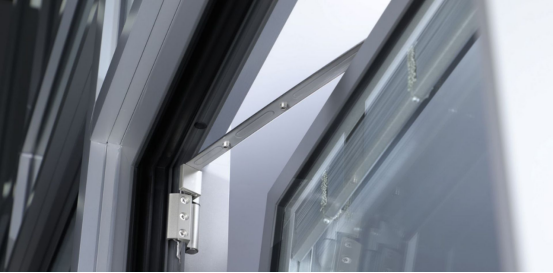
Lockable casement window handles are operating components designed for casement windows, with a function that restricts or controls handle operation. Their exact features depend on the selected model and connected locking hardware.
Key-Lockable Handles vs. Multipoint Locking Systems
A standard casement handle operates the window hardware when turned. In many systems, the handle connects to a spindle and gearbox, transferring movement to the locking components.
A key-lockable handle may include an additional mechanism that prevents the handle from being operated without a key. A multipoint locking system uses connected hardware to engage multiple locking points around the sash, helping secure the window at several positions when closed.
These functions are different and should be clearly identified in a project specification.
| Hardware type | Main function | What buyers should confirm |
| Standard casement handle | Operates the window hardware | Spindle and gearbox compatibility |
| Key-lockable handle | Restricts handle operation using a key | Whether the selected model has an integrated key lock |
| Multipoint locking system | Engages multiple locking points | Number, position, and compatibility of locking points |
A multipoint locking system does not automatically mean the handle has a key lock. If a project requires both functions, buyers should confirm that the selected components work together.
When Does a Project Need Lockable Casement Window Handles?
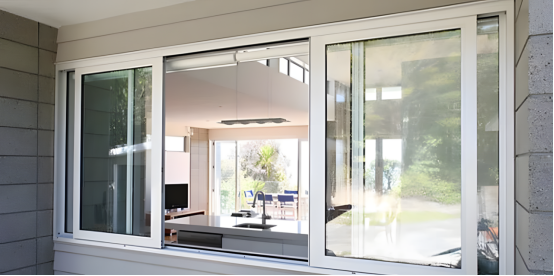
Lockable casement window handles may be suitable when a building requires controlled access to window operation. The decision should reflect how each space will be used and who needs access to the windows.
Residential and Multi-Unit Developments
In apartments and multi-unit developments, project teams should identify which windows require resident access and which need restricted operation. This helps determine whether key-lockable handles are necessary for specific openings.
For example, property managers may require certain windows to remain under controlled operation, while other windows may be intended for regular resident use. The hardware schedule should reflect these differences instead of applying one handle type throughout the development.
Hotels, Offices, and Public Buildings
Hotels, offices, schools, and other shared-use buildings may also require controlled window operation. In these environments, buyers should consider who will operate the windows, how keys will be managed, and whether maintenance teams need access to the locking mechanism.
A key lock alone does not establish that a window meets a particular safety or building-code requirement. Any project-specific safety, security, or compliance requirements should be checked separately against the applicable local standards.
Projects in Different Climate Conditions
Climate and exposure conditions can also influence hardware selection. In areas with strong winds, heavy rain, or high humidity, the complete window system needs suitable operating and sealing performance.
Multipoint locking engages the sash at several positions when the window is closed. The resulting sealing performance depends on the complete window assembly, including the frame, gaskets, hinges, fabrication accuracy, and installation. A lockable handle should therefore be evaluated as part of the complete window assembly.

What Should Buyers Check Before Specifying Casement Window Handles?
Before ordering casement window handles, buyers should confirm the locking function, mechanical dimensions, window configuration, finish, and available technical documentation.
Confirm the Required Locking Function
Start by defining what “lockable” means for the project. Does the specification require an integrated key lock, a multipoint locking mechanism, or both?
This distinction should be resolved before product selection. Otherwise, a supplier may provide a handle that operates a multipoint system but does not include the key-control function expected by the project team.
Check Spindle and Gearbox Compatibility
The spindle connects the handle to the gearbox. Its dimensions and engagement method must match the receiving hardware.
Buyers should confirm:
- Spindle length and profile
- Spindle position and fixing method
- Gearbox compatibility
- Handle fixing dimensions
- Required operating direction
Handles with similar external designs may have different internal dimensions. Confirm the specifications with the hardware supplier or window system fabricator before ordering.
Match the Handle to the Window Configuration
Inward-opening and outward-opening casement windows can have different operating and installation requirements. The handle should be selected for the intended window system, not simply because it is described as a casement handle.
For projects with several window types, a hardware schedule can help identify the compatible handle, gearbox, and locking components for each configuration.
Consider Material, Finish, and Documentation
Because handles are frequently operated and directly exposed to users, buyers should compare their base materials, surface treatments, and maintenance requirements. For coastal or humid projects, request relevant corrosion-test information for the specific finish.
Before approval, buyers should also request appropriate technical documents, such as dimensional drawings, installation instructions, material details, and available operating-cycle test results. These documents help the design, fabrication, and installation teams work from consistent specifications.
How Do Handle Design and Locking Systems Work Together?
Handle design influences how a window is operated, while the connected hardware determines how movement is transferred to the sash. Both should be considered during specification.
Casement Handles vs. Window Pull Handles
Casement window handles and window pull handles may appear in the same hardware category, but they usually serve different purposes.
Casement handles generally operate a window through a spindle or connected gearbox. Window pull handles are commonly used to provide a grip for pulling or sliding a window or door panel. Their operating mechanisms and fixing requirements are therefore different.
Buyers should check the product’s intended application rather than relying on its name or appearance. A pull handle should not be treated as a replacement for a spindle-operated casement handle unless the window system is designed for that arrangement.
Installation and Maintenance
Correct installation is essential to the operation of the complete hardware system. The handle should be fitted using the specified fixing method, with the spindle properly engaged in the gearbox.
After installation, the team should check that the handle moves smoothly and that the sash opens, closes, and locks as intended. Periodic inspections can also help identify loose fixings, abnormal operating resistance, or wear in connected components.
How Does CMECH Support Casement Window Hardware Projects?
For projects requiring coordinated casement window hardware, CMECH offers handle options and complete hardware solutions for different opening configurations. However, buyers seeking an integrated key-lock function should verify the exact handle model and its compatibility with the required locking components.
Handle Design and Product Options
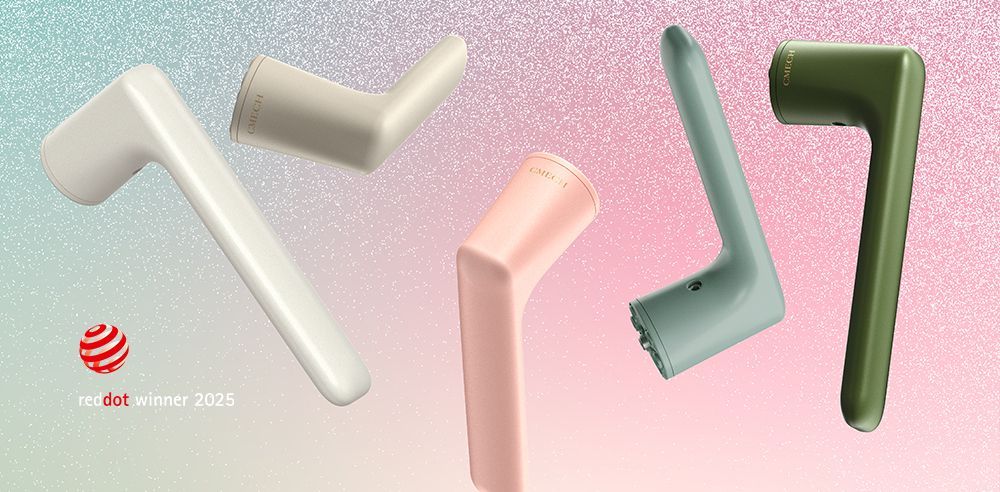
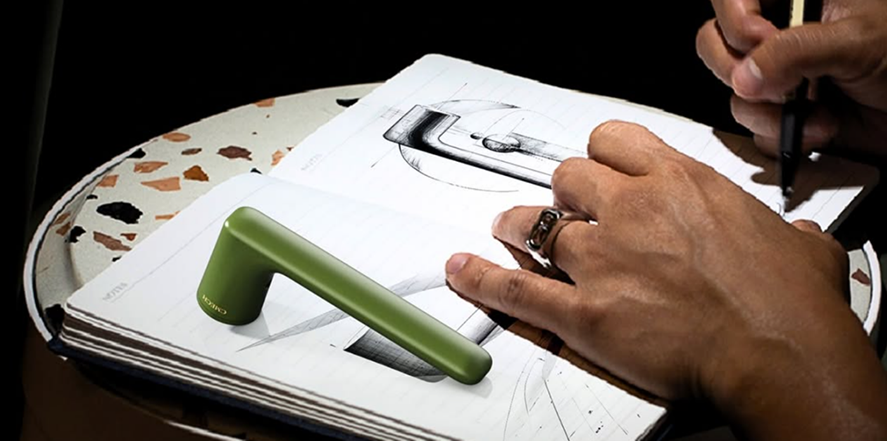
Việc tay cầm cửa sổ collection includes designs for different window and door applications. One example is the ROMA handle, which features a base-free design, a cast-steel inner frame, and an iron-triangle structure. Its patented steel-ball roller mechanism is part of the handle’s operating design. The published product information also lists powder-coated and M-treatment surface finishes with UV and salt-spray resistance.
These features may be relevant when a project considers handle construction, appearance, and surface treatment together. However, the published information does not establish that every handle in the collection includes an integrated key lock. Buyers who specifically require lockable casement window handles should confirm the exact model and locking function with the supplier before approval.
Coordinating Handles with Casement Hardware
CMECH’s Inswing Casement Window Hardware Solution includes a handle, a hexagon spindle drive gearbox, and hinges. The system supports concealed, exposed, and integrated fly-screen configurations.
The gearbox uses a spring-loaded positioning design that secures it into the C-groove and allows adjustment without secondary profile machining. CMECH states that the gearbox has been tested for more than 30,000 opening-and-closing cycles. The published application range for the Inswing Casement Window Hardware Solution includes sash widths of 300–1,600 mm, sash heights of 400–2,400 mm, and a maximum load-bearing capacity of 100 kg.
These specifications help fabricators assess the system against a proposed window configuration. They should not be interpreted as universal specifications for every handle or casement window. The selected handle, gearbox, hinges, locking components, and profile still need to be checked as a compatible combination.
Final Considerations for Project Specification
Lockable casement window handles can be useful when a project requires controlled window operation. However, buyers must distinguish between an integrated key lock and a multipoint locking system, as the two functions are not interchangeable.
Before specifying casement window handles, check the required locking function, window configuration, spindle and gearbox compatibility, dimensions, finish, and technical documentation. It is also important to distinguish casement operating handles from window pull handles, which are designed for different applications.
By reviewing the handle as part of the complete window hardware system, architects, fabricators, contractors, and procurement teams can make more informed decisions and reduce compatibility issues during production and installation.
 English
 Arabic
 Chinese
 French
 Thai
 Vietnamese