


Child safety is an important consideration when designing windows for homes, hotels, schools, and other buildings where young occupants may be present. A fenêtre à guillotine can provide controlled ventilation and natural light, but its operating hardware must also help reduce the possibility of misuse. For architects, designers, developers, and window manufacturers, the challenge is to combine safety with clean aesthetics. We believe carefully engineered top hung window lock controls can provide protection without adding unnecessary visual complexity.
Why Child Safety Begins With Window Hardware
Windows are frequently operated by occupants without technical knowledge of how the mechanism works. Children, in particular, may pull handles, change operating positions, or apply force without understanding the consequences. Hardware design therefore needs to account for potential misuse rather than assuming perfect operation.
A properly engineered system can help control how the sash moves and how different operating functions interact. This is particularly relevant to top-hinged awning configurations, where limited ventilation may be desirable while unrestricted opening should be avoided in certain situations.
For professional project teams, child-safe engineering should consequently be considered as part of the complete window specification. Handle position, locking logic, sash support, and anti-misoperation features can all contribute to a safer opening.
How a Top Hung Window Lock Can Reduce Misuse
A conventional locking mechanism may secure a window, but a sophisticated top hung window lock can do more by helping prevent incorrect operating sequences. This distinction matters because misuse does not always involve deliberate tampering. A user may simply move the handle while the sash is not correctly positioned.
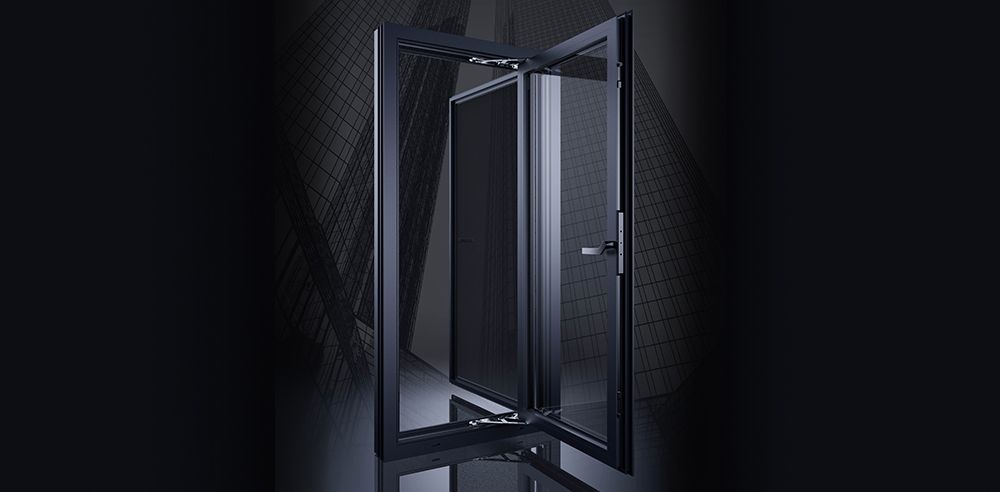
Our Outswing Casement & Awning Window Hardware Solution incorporates an anti-misoperation mechanism designed to address this type of situation. The system uses dual corner drives together with a dedicated keeper featuring a double-bump structure.
The corner drives contain a built-in U-shaped flat spring that provides strong rebound force. This construction helps prevent lever jamming while supporting smoother operation. By incorporating these functions into the hardware itself, the system can reduce dependence on users remembering every correct operating step.
Hidden Safety Features Preserve Modern Aesthetics
Contemporary architecture often favors clean surfaces and minimal visible components. Safety features that require bulky external fittings can therefore create a conflict between functional requirements and architectural intent.
Hidden mechanisms offer another approach. Instead of adding prominent safety devices to the finished window, engineers can incorporate protective functions within the hardware system. This can help designers maintain cleaner window elevations while still addressing operational risks.
For luxury residences, hospitality projects, and modern developments, this balance can be particularly valuable. Designers can pursue large glazed openings and refined detailing without treating child safety as a separate visual element added at the end of the project.
Sash Control Is Equally Important
Locking is only one part of window safety. A large sash can generate significant forces during opening and closing, especially when the window is installed at height or used frequently. Without appropriate support, movement can become difficult to control.
Our system includes a counterbalance rope mechanism designed to increase load capacity and help prevent secondary sagging of the sash. The spring inside the adjustment mechanism uses a specially shaped design to improve load support.
The steel rope has a static load capacity of up to 550 kg. This specification provides an important engineering reference when evaluating the supporting mechanism for demanding window applications. It also illustrates why safety cannot be assessed by looking at the lock alone.
Preventing Sudden or Uncontrolled Movement
A child-safe window should ideally minimize opportunities for sudden movement. Even when a locking mechanism operates correctly, uncontrolled sash movement can create another safety concern.
This is why load management, hinge design, counterbalance mechanisms, and locking components need to work as a coordinated system. The objective is not simply to make the window difficult to open. Instead, the system should provide predictable operation while reducing the likelihood of unintended movement.
For architects and developers, this approach also supports usability. A window that is technically secure but difficult for adults to operate may create other practical problems. Effective engineering should therefore balance protection, accessibility, and everyday convenience.
What Designers Should Consider When Specifying Hardware
When selecting a top hung window, we recommend evaluating more than the visible handle or lock. Project teams should consider sash dimensions, weight, opening configuration, ventilation requirements, operating frequency, user environment, and the relationship between locking and support mechanisms.
Child-safety requirements may also vary according to the building type. Residential projects, hotels, serviced apartments, and educational environments can have different user profiles and risk considerations. Hardware should therefore be matched to the actual application rather than selected solely for appearance.
Creating Safer Openings Through Better Engineering
Child-safe window design is not achieved through one component alone. A reliable solution depends on how locking, anti-misoperation, counterbalance, hinges, and sash control work together.
For a modern top hung window, concealed safety functions can provide an effective balance between protection and architectural appearance. Our anti-misoperation module helps reduce incorrect operation, while the counterbalance rope mechanism provides substantial load support for demanding sash applications.
CMECH believes that safety should be engineered into the window from the beginning rather than added as an afterthought. When designers evaluate hardware as an integrated system, they can create openings that are safer for children, intuitive for adults, visually refined, and dependable throughout everyday use.
 English
 Arabic
 Chinese
 French
 Thai
 Vietnamese