



Material selection can significantly influence the performance and service life of a window system. For architects, developers, fabricators, and door and window companies, choosing between stainless steel and zinc alloy hardware requires more than comparing material weight or initial cost. The right decision depends on load, operating frequency, environmental exposure, and required durability. We believe ferrure de fenêtre à battant should be specified according to the complete application rather than the material label alone.
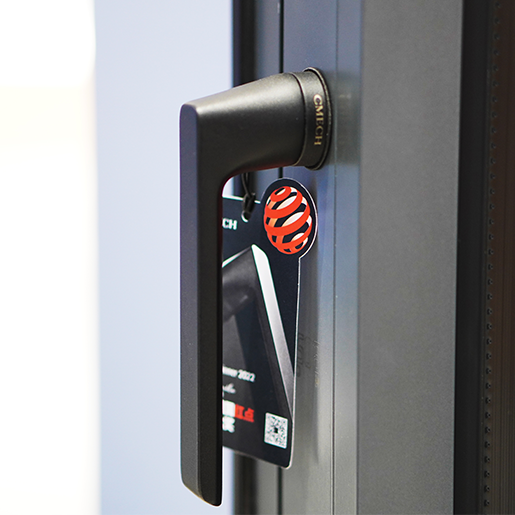
Why Material Choice Matters for Casement Windows
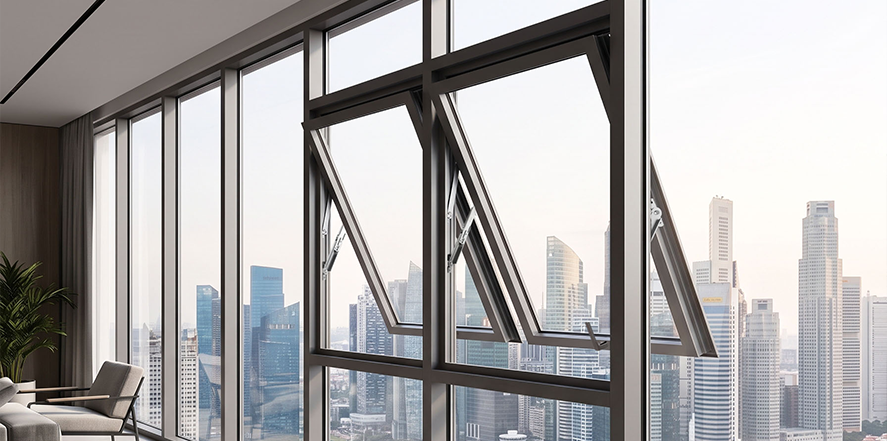
Casement windows depend on several interconnected components to support, position, and operate the sash. Hinges carry loads, gearboxes transmit movement, and handles provide the user’s interface with the mechanism. Each component may face different mechanical demands.
Zinc alloy can be useful where complex shapes, precision casting, and controlled weight are important. Stainless steel, meanwhile, can be particularly valuable for components exposed to repeated loads, movement, or demanding environmental conditions.
For professional buyers, the question is therefore not whether one material is universally better. Instead, it is which material is appropriate for each component and operating requirement within the complete window system.
Where Stainless Steel Has an Advantage
Stainless steel is widely valued in hardware applications for its strength, durability, and corrosion resistance. These characteristics can become particularly relevant when hinges must support heavy sashes or remain reliable through repeated operation.
Our approach is to use stainless steel where its mechanical properties provide a meaningful performance benefit. The Friction Hinge-C-Groove in our Outswing Casement Window Hardware Solution is manufactured from 304 stainless steel and features a thickened 4 mm load-bearing arm.
The hinge supports up to 60 kg and incorporates a triple safety linkage and wind-resistant stop design. It can withstand 1000N of destructive force, equivalent to Grade 9 strong winds, and has passed 30,000 repeated operation tests. These specifications provide measurable evidence for professional project evaluation.
Why Lightweight Zinc Alloy Still Has a Role
A comparison between stainless steel and zinc alloy should not imply that lightweight zinc alloy is unsuitable for premium window systems. Zinc alloy can offer advantages in precision casting, component complexity, and weight management.
The important consideration is where the material is used. A gearbox that transmits rotational movement may have different requirements from a hinge that directly supports sash weight. Using the same material throughout a system may not always be the most technically efficient approach.
Our bi-directional spindle drive gearbox demonstrates this principle. Its core mechanism is precision-cast from high-grade zinc alloy as a single unit for enhanced strength. The design also includes an anti-drift mechanism with a maximum extension of 12.5 mm for precise and stable positioning.
Heavy-Duty Hardware Should Be Evaluated by Load
For larger casement windows, load capacity becomes one of the most important selection criteria. Hardware needs to support the sash without excessive deformation while maintaining correct alignment during operation.
This is where stainless steel casement window hardware can offer a practical advantage when stainless-steel components are engineered for load-bearing applications. However, material alone does not determine capacity. Geometry, thickness, fixation, linkage design, and the interaction between components are equally important.
Our 4 mm stainless-steel hinge arm illustrates this point. Rather than simply specifying stainless steel as a material choice, we combine it with a reinforced structural design and safety linkage to address the demands placed on the hinge.
Durability Depends on More Than Material
A premium hardware system must withstand repeated opening and closing over its service life. Cycle testing can therefore provide more useful information than material descriptions alone.
The gearbox in our system has been tested to 30,000 open-close cycles. The Friction Hinge-C-Groove has also passed 30,000 repeated operation tests. These figures give project teams a defined benchmark when comparing hardware options for frequently used windows.
CMECH focuses on combining appropriate materials with structural engineering and testing. Our product portfolio includes window hardware systems designed for different configurations, while our broader solutions serve architects, designers, developers, and professional window companies worldwide.
Environmental Conditions Also Influence Selection
Material selection becomes even more important when windows operate in challenging environments. Coastal buildings, humid regions, and exposed façades can subject hardware to moisture and other environmental stresses.
Stainless steel can be advantageous for exposed or load-bearing components where corrosion resistance is an important consideration. At the same time, internal components may have different exposure levels and mechanical requirements, allowing zinc alloy or other engineered materials to remain appropriate.
Look at the Complete Hardware System
Choosing casement window hardware should never be reduced to a simple stainless-steel-versus-zinc-alloy comparison. Professional specification requires consideration of the entire mechanism.
Designers and fabricators should examine load capacity, component geometry, material, fixation method, cycle testing, wind resistance, adjustment capability, and compatibility with the selected window profile. A system that uses different materials strategically can provide a better balance of strength, weight, manufacturability, and performance.
Choosing Materials With Performance in Mind
The comparison between heavy-duty stainless steel and lightweight zinc alloy is ultimately about engineering priorities. Stainless steel can be highly suitable for demanding load-bearing components, while zinc alloy can provide valuable benefits in precision-machined or cast mechanisms where weight and component complexity matter.
Our Outswing Casement Window Hardware Solution demonstrates how these materials can work together. The 304 stainless-steel friction hinge provides defined load and wind-resistance performance, while the high-grade zinc-alloy gearbox provides a precision-cast drive mechanism with tested operating durability.
CMECH believes the strongest specification is not necessarily the one using the heaviest material everywhere. It is the one that assigns the right material and construction to each mechanical task, creating stainless steel casement window hardware that delivers dependable performance without unnecessary compromises in weight, operation, or design.

 English
 Arabic
 Chinese
 French
 Thai
 Vietnamese