



Anyone specifying poignées de fenêtre for a new development eventually hits the same question: does this window need a casement handle, or will a standard handle do the job? The two look similar on a shelf. They behave nothing alike once installed.
What Actually Separates a Casement Window Handle From a Standard Window Handle?
A standard handle is essentially a lever. Turn it, and it releases or engages one catch point. Most standard handles do not include an integrated gearbox or fullperimeter frame linkage. They work fine for basic sash or awning windows where a single latch is enough to hold the window shut.
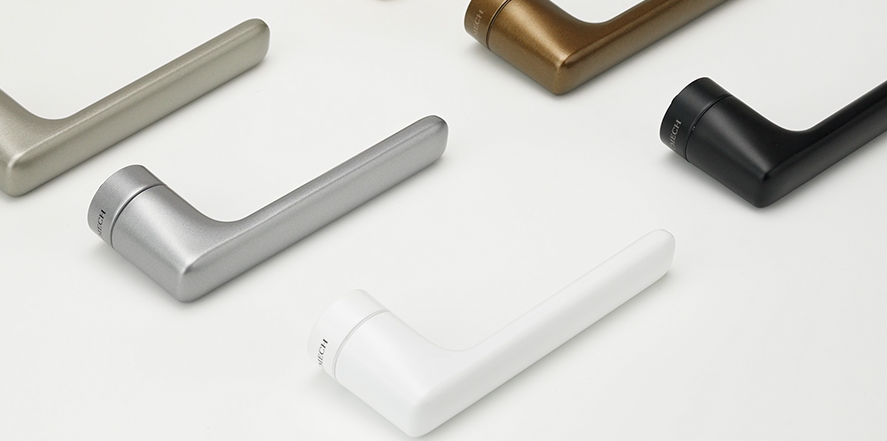
A casement window handle, by contrast, connects to a spindle that drives an internal gearbox. That gearbox pushes a perimeter linkage — often called an espagnolette — which moves locking points around the entire frame at once. One turn of the handle activates the whole system, not just one catch.
What Does a Standard Window Handle Do Differently?
A standard window handle operates a single catch or latch, with no gearbox or perimeter linkage behind it. It is built for simplicity, not for distributing load across a frame.
This is not automatically a downside. On smaller sliding sashes, fixed lights with a simple opening vent, or interior applications where security load is low, a single-point handle does exactly what is needed without adding unnecessary hardware complexity or cost.
Many standard handles also carry an exposed hinge and a raised, protruding base — a construction choice that keeps manufacturing simple but leaves both the mechanism and the fixing points visible and unprotected on the sash face.
Casement Handle vs Standard Handle: A Side-by-Side Comparison
| Feature | Casement Window Handle | Standard Window Handle |
| Internal mechanism | Gearbox + espagnolette linkage | Single latch, no gearbox |
| Points de verrouillage | Typically 3–5, engaged at once | One catch point |
| Hinge & base construction | Concealed hinge, flush or low-profile base | Exposed hinge, raised protruding base |
| Exposure to tampering | Fully enclosed, no exposed parts | Latch often accessible |
| Best-fit window type | Casement, tilt-and-turn, outswing/inswing | Small sashes, secondary vents |
| Relative hardware cost | Higher, due to gearbox and linkage | Lower, simpler construction |
| Typical use case | Facades, ground-floor units, high-rise | Interior or low-exposure openings |
What Pain Points Does a Standard Protruding Base Create in the Middle East?
A standard handle with an exposed hinge and a raised, protruding base creates a physical pocket where windblown sand and dust settle. In Gulf climates, that trapped grit can work its way into the gearbox over time, creating a potential maintenance risk — a handle that jams or stiffens well before the rest of the window shows any wear.
This shows up differently depending on the building type. On luxury villas, a sand-clogged handle on a prominent facade window is a visible finish defect that owners notice immediately, not a hidden mechanical issue. On commercial and mixed-use complexes, the same problem multiplies across hundreds of repeat units, turning into recurring facilities callouts rather than a one-off repair.
A flush, hidden-structure design — concealed hinge, no raised base — removes the pocket entirely, so there is nowhere for sand to collect in the first place, whether the installation is a single villa or a full tower facade.
Why Do Southeast Asian Coastal Projects Need Corrosion-Resistant Handles?
Southeast Asian coastal developments face a different threat — sea fog carrying salt that settles on exposed metal bases and accelerates rust. An outdoor-facing handle with an exposed hinge and base, and without adequate surface protection, can visibly corrode within a few seasons, especially on beachfront and resort properties.
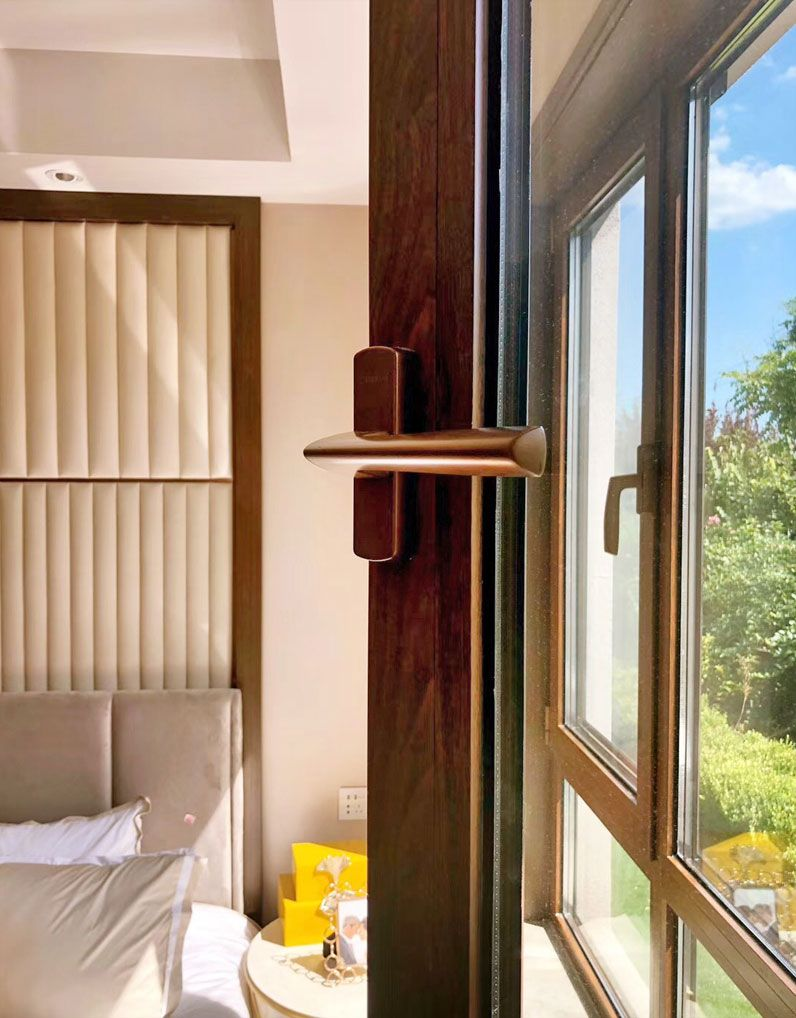
This is why hospitality and resort developers along Vietnam and Thailand’s coastlines increasingly specify hardware with verified corrosion resistance up front, rather than treating it as an afterthought during fit-out. Concealed, sealed handle designs are widely adopted on high-end coastal developments including Thailand’s ASHTON ASOKE, Vietnam’s FLC Resort Quy Nhon, and the Maldives’ LUX North Male Atoll — three projects where hardware sits in direct, sustained exposure to salt air.
How CMECH’s Handle Series Solves These Requirements
These projects demonstrate that handle hardware needs to balance architectural appearance with durability in demanding coastal environments. This makes material selection, structural design, and long-term resistance important considerations when evaluating handle solutions for high-end developments.
CMECH addresses both ends of this spectrum through its dedicated Handle series, which spans six named lines — Venice, Milan, Metro, Berlin, Koln, and London. Each series pairs a distinct aesthetic direction with the same core mechanical engineering, and the lineup is built specifically around eliminating the exposed-hinge, raised-base construction that causes sand and salt problems elsewhere in the market.
What Makes CMECH’s Handle Series Different?
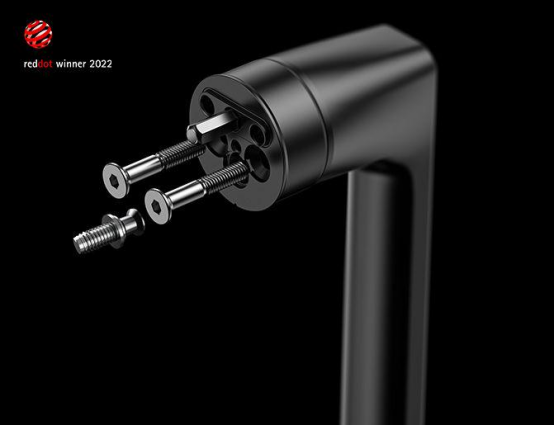
CMECH’s differentiator against ordinary hardware suppliers is its base-free concealed handle design, represented by the Milan series, built specifically to eliminate the exposed-hinge, raised-base construction that causes the sand and salt problems covered above. Instead of a raised base plate, the Milan base-free concealed handle sits flush against the sash surface, with fixing screws and mechanism hidden behind the handle body — a fit for both the villa and commercial-facade projects in the Middle East and the coastal resorts in Southeast Asia covered above. Surface treatment reinforces that durability: CMECH’s coastal-grade surface treatment technology uses zoned treatment and multi-layer structural optimization to block chloride-ion penetration, and exposed components built with this treatment have passed a 4,000-hour salt spray test.
On the mechanical side, the Venice line uses stainless steel one-piece precision casting, a patented rolling steel-ball structure that reduces friction, and a triangular three-screw fixing structure that keeps the window handle firmly seated without wobble. Venice went on to win the 2024 German iF Design Award and a Red Dot Design Award.
How Should Developers and Architects Choose Between the Two?
Developers and architects should choose based on the window’s exposure and function, not on cost alone. A ground-floor casement facing a public street calls for a multi-point locking handle; an interior transom light does not.
Because specification decisions get locked in early and are expensive to reverse after fabrication, it helps to map handle type against project risk before finalising hardware schedules. A hospitality project in a coastal, high-humidity climate, for instance, adds corrosion resistance to the checklist alongside locking performance.
What Should Contractors Ask Suppliers Before Specifying a Handle?
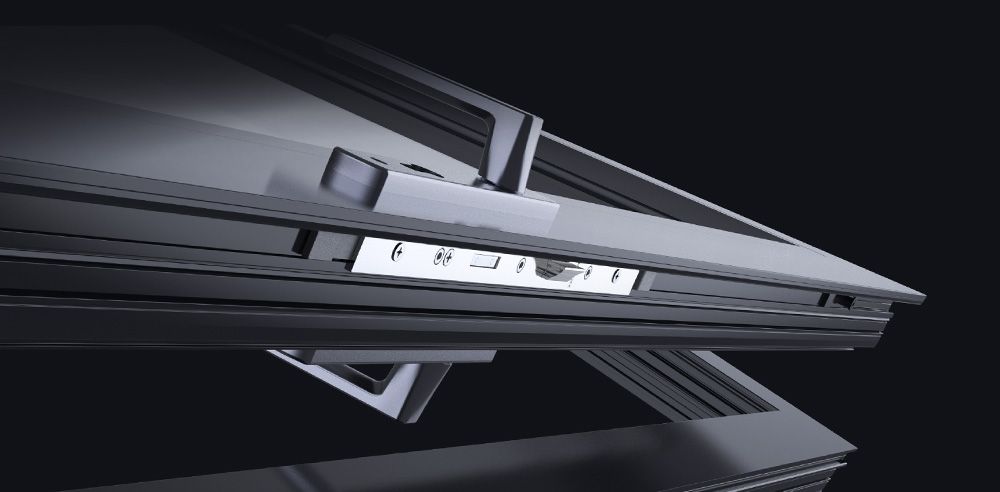
Contractors can start by asking how the handle is configured with the espagnolette, multi-point locking system, and compatible hinges. The supplier should be able to clarify the locking configuration, applicable hinge options, and fixing structure so that the complete hardware set can be assessed before installation. This is particularly important for projects with frequent door or window operation, where compatibility and fixing stability affect long-term use.
The target environment is another key consideration, especially for coastal developments exposed to salt air and humidity. Contractors can ask about the material, surface treatment, and available corrosion-resistance testing for the specified handle. Reviewing these details together with the mechanical configuration provides a more practical basis for comparing suppliers and selecting hardware suited to the project’s operating conditions.
Conclusion — Matching the Handle to the Window’s Job
The difference between a casement window handle and a standard window handle comes down to what happens inside the frame, not what the lever looks like on the surface. A casement handle drives a multi-point locking system built for security and sealing performance; a standard handle operates one latch, an exposed hinge, and a raised base that suits only lower-exposure openings.
For developers, contractors, and architects specifying hardware across the Middle East and Southeast Asia, matching the handle type to the window’s real job — rather than defaulting to one hardware line across an entire project — is what keeps both security ratings and maintenance costs under control over the building’s lifespan. Suppliers like that engineer specifically for sand exposure and salt fog give specifiers a base-free concealed handle option built for those conditions from the start.

 English
 Arabic
 Chinese
 French
 Thai
 Vietnamese