
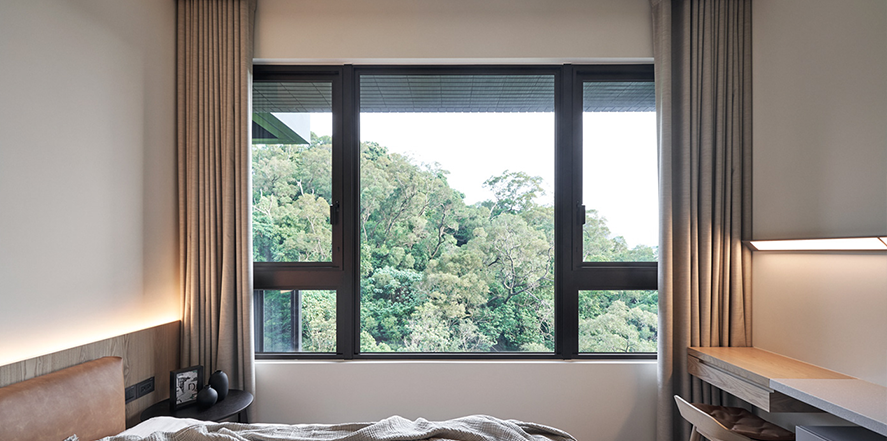


Why Doesn’t a Standard Fly Screen Work on an Awning Window?
An awning window’s opening mechanism and hardware affect how a fly screen can be fitted and used. When choosing a screen, consider its position, clearance around the operating hardware, and access to the window handle. A suitable screen arrangement should allow the window to operate while maintaining a close fit around the frame.
For outward-opening awning windows, an interior-mounted fly screen can help keep the sash’s opening path clear. However, compatibility depends on the specific window design: the screen must accommodate the operating hardware and allow convenient access for opening and closing the window.
What Happens When the Hardware and Screen Aren’t Matched?
When selecting hardware for an awning window with a fly screen, check that the screen allows unobstructed handle access and that the hardware suits the sash dimensions, weight, and frame profile. Hardware designed for an inswing casement window should not be assumed compatible with an outward-opening awning window; compatibility must be confirmed for the specific configuration.
For developers specifying at volume, this isn’t a cosmetic issue. It’s a callback issue. A screen that interferes with handle operation at handover may lead to subsequent maintenance requests or warranty claims.
What Hardware Components Should You Consider for an Outward-Opening Window With a Fly Screen?
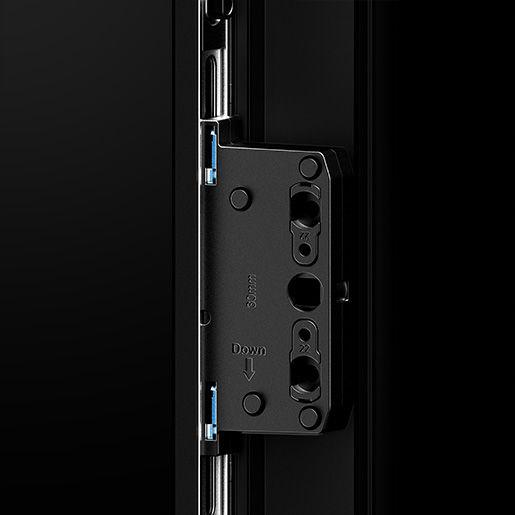
The hardware that matters most is the fly screen hinge itself, because it determines how far the screen swings, how it holds position, and how long it lasts under repeated use. Three components do the real work: the fly screen hinge, the friction hinge holding the sash, and the spindle drive gearbox that transmits handle motion to the locking points.
Fly screen hinge. CMECH’s Master Series fly screen hinge is offered in 90°, 165°, or full 180° opening angles, so the screen can be matched to how much clearance a given room actually has. The 90° and 165° versions pair with quick-release screw packs, which means the screen can be lifted off entirely for cleaning without tools. The hinge is built from 304 stainless steel and is rated for more than 30,000 open-close cycles.
Friction hinge. The sash itself hangs on a friction hinge with a thickened 4mm load-bearing arm, also 304 stainless steel, rated to hold up to 60kg. It includes a triple safety linkage and a stopper rated for Level 12 wind conditions — the top of the standard wind-force scale, associated with typhoon-strength gusts.
Spindle drive gearbox. This is the part that connects the handle to the locking points around the sash perimeter. CMECH’s version is precision-cast as a single zinc-alloy unit, tested to 30,000 cycles, and delivers 25 N·m (newton-meters, a measure of torque) of torsional resistance. A 12.5mm anti-drift nut allows bidirectional adjustment, helping maintain stable, rattle-free alignment.
| Component | Material | Rating | Cycle Test |
| Fly screen hinge | 304 stainless steel | 90° / 165° / 180° opening | 30,000+ cycles |
| Friction hinge | 304 stainless steel, 4mm arm | ≤60kg load, Level 12 wind stopper | 30,000+ cycles |
| Spindle drive gearbox | Zinc alloy, single-cast | 25 N·m torsional resistance, 12.5mm adjustment | 30,000+ cycles |
Introducing CMECH — Engineering Screens for Windows That Open Outward
CMECH is a global window and door hardware manufacturer whose origins can be traced back to the 1990s, offering hardware solutions for a range of window and door applications. The company offers window and door hardware, handles, and screen solutions within a single product range.
That matters directly for this buying decision. A fly screen solution bought separately from the sash hardware is a compatibility gamble. CMECH’s Master Series combines the fly screen hinge, friction hinge, and spindle drive gearbox into an integrated window hardware solution.
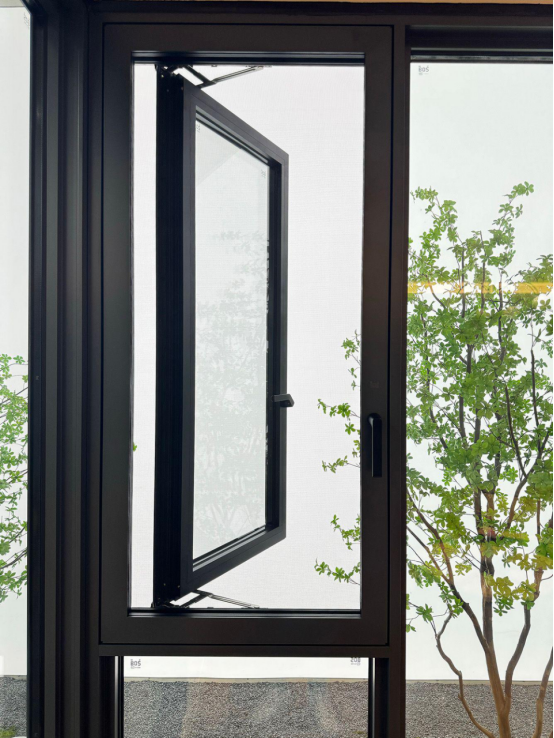
What Does the Master Series Actually Include?
The Master Series is CMECH’s outswing casement hardware line built specifically around an integrated fly screen solution. Beyond the three components above, it includes a choice of two handle designs: the base-free Milan handle and the Venice handle, both of which have won the Red Dot Design Award and the iF Design Award. Both use a triangular fixation system intended to eliminate wobble over the handle’s operating life.
The full solution is rated for sash widths of 400–750mm and sash heights of 300–1,800mm, with a maximum sash weight of 60kg. CMECH’s product documentation also reports wind-resistance testing of its casement window parts at a load of 1,000 N. If you’re specifying these components for a large project, request the formal test reports to verify the test conditions and results.
How Does Climate Affect Hardware Selection for Outward-Opening Windows?
The right hardware configuration changes by climate because heat, sand, humidity, and storm exposure each stress different parts of the solution. Hardware that performs well in hot, dry conditions may be prone to corrosion in humid coastal environments.
Middle East projects typically prioritize wind load resistance and sand/dust tolerance over corrosion resistance, since the climate is dry. A friction hinge rated for Level 12 wind conditions, paired with a fly screen mesh that resists dust clogging, addresses the two most common complaints in this region: screens that bow under gusts and screens that need constant cleaning.
Southeast Asia projects typically prioritize humidity and coastal corrosion resistance, plus fast retrofit installation for renovation work. Because 304 stainless steel resists rust better than standard carbon steel or many aluminum alloys, it’s the more relevant spec for this climate band. Quick-release screen removal also matters more here, since screens need cleaning more often in humid, insect-heavy environments.
| Priority | Middle East | Southeast Asia |
| Primary stress factor | Wind, sand, heat | Humidity, salt air, monsoon rain |
| Key hardware spec | High wind-load hinge rating | Corrosion-resistant stainless steel |
| Screen priority | Dust-resistant mesh | Frequent, quick-release cleaning access |
| Common use case | New-build developer projects | Renovation and resort/hospitality retrofits |
Awning vs. Casement: Which Hardware Configuration Fits Your Project?
An awning window and an outswing casement window solve the same fly-screen problem differently because they open on different axes — an awning window hinges along the top and swings out from the bottom, while a casement window hinges along the side. This changes where wind load is concentrated and how far the sash needs to clear the screen.
If the project also includes inward-opening casement windows, inswing casement window parts should be assessed separately. Hinges and operating components need to suit the inward opening direction, with sufficient interior clearance for sash movement and handle access.
When Does an Awning Window Make More Sense Than a Casement?
Awning windows tend to suit rooms where rain protection matters even with the window open, because the top-hinged sash acts as a small overhang. Bathrooms, kitchens, and coastal-facing rooms in Southeast Asia are common applications. Casement windows tend to suit rooms prioritizing maximum unobstructed airflow, since a full side-hinged sash opens the entire frame area.
What Should Developers vs. Designers Prioritize Differently?
Developers specifying hundreds of units across a project generally prioritize cycle-tested durability and standardized sizing, since replacement costs scale quickly across a large building. Designers working on individual renovation or hospitality projects generally prioritize handle aesthetics and opening-angle flexibility, since each room’s clearance and sightlines differ.
How Do You Verify Hardware Quality Before Specifying at Scale?
Verify hardware quality by requesting the underlying test data — cycle counts, load ratings, and material certifications — rather than relying on marketing copy alone. Any spec sheet can list numbers; a manufacturer that can produce the test reports behind them is the one worth building a specification around.
CMECH‘s product development includes in-house testing to assess hardware performance and durability. For project specifications, warranty coverage and relevant test documentation should be reviewed for the selected products.
Architects and contractors working on projects in Thailand, Vietnam, and the Maldives should review these details during procurement. Request copies of relevant certificates and references from comparable coastal or high-rise projects.
Getting the Fit Right the First Time
An awning window with a fly screen only performs as well as the hinge solution holding both pieces together. Because the sash and screen move independently but share the same frame, mismatched hardware creates the exact gaps and clashes that undermine the reason for installing a screen in the first place.
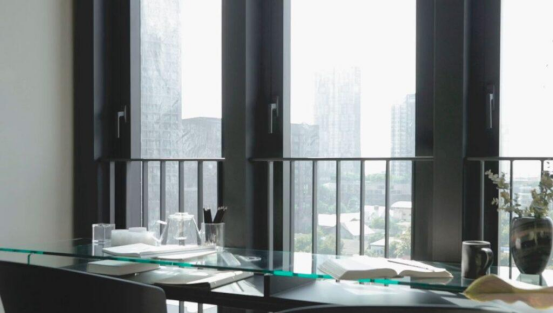
Before specifying casement window hardware parts for your next project, confirm three things: the fly screen hinge angle suits your room clearance, the friction hinge’s wind rating suits your climate, and the manufacturer can produce test documentation behind its published specs. Getting those three details right at the specification stage is far less costly than correcting them after installation.
 English
 Arabic
 Chinese
 French
 Thai
 Vietnamese