


Modern architectural projects increasingly treat window operation as part of the user experience rather than a hidden technical function. For us, ergonomic design means more than making a handle comfortable. It means coordinating the operator, hinge, locking, and support components so that a sash moves predictably, remains stable, and closes with consistent sealing pressure. As project requirements become more demanding, awning window hardware has evolved from basic fittings into integrated performance systems.
From Basic Fittings to Integrated Systems
Earlier generations of window hardware largely focused on enabling opening and closing. Today, commercial and residential projects demand a broader combination of security, weather resistance, durability, and ease of operation. This shift has pushed manufacturers toward system-level engineering, where individual components work together instead of functioning as isolated parts.
For architects, developers, and window manufacturers, this evolution matters because hardware influences both daily usability and long-term maintenance. A well-coordinated system can support larger sashes while helping reduce operational friction, premature wear, and inconsistent locking. Ergonomics therefore becomes closely connected with mechanical reliability.
Why Ergonomics Matters in Awning Window Operator Hardware
An awning window is frequently operated by hand, so the hardware must translate user input into smooth and controlled sash movement. The operator needs to work effectively with hinges, stays, drives, and locks. If one component creates excessive resistance or poor alignment, the user experience can deteriorate even when the window frame itself is well designed.
Modern awning window operator hardware systems therefore emphasize coordinated movement. Precision transmission components can help deliver smoother operation, while multi-point locking distributes engagement around the sash. For project buyers, this approach can provide a more predictable product specification across multiple openings and building areas.
Engineering Stability for Larger Sashes
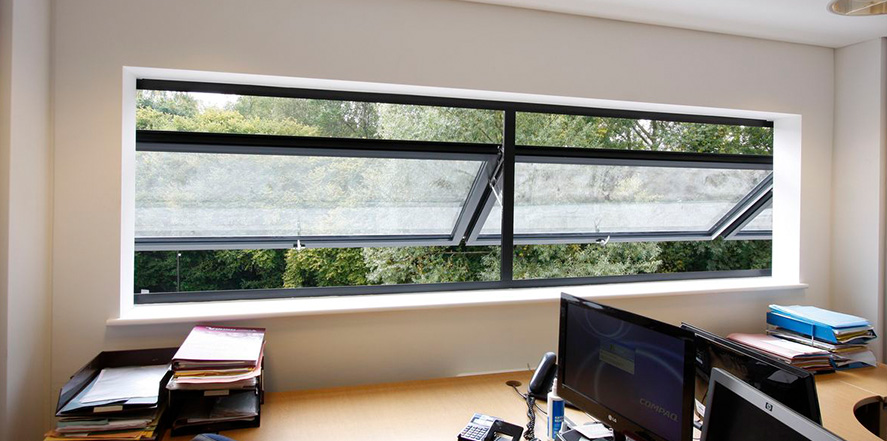
As architectural glazing becomes more ambitious, hardware must accommodate demanding sash dimensions and loads. Our outswing awning solution supports sash widths from 400 to 2,000 mm and sash heights from 400 to 2,000 mm, with a load-bearing capacity of up to 130 kg. These specifications give window manufacturers defined parameters when matching hardware to project requirements.
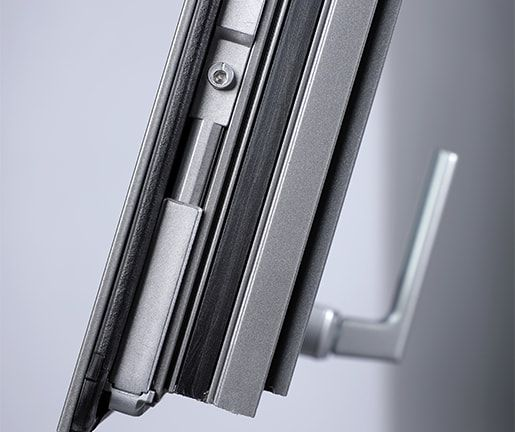
The friction hinge is particularly important for controlled movement. CMECH’s solution uses 304 stainless steel in both C-groove and K-groove versions. Its reinforced support arm is 3.5 mm thick, while multiple 8 mm solid rivets strengthen the connection. A three-arm structure further improves stability, and the hinge has been tested through more than 35,000 opening-and-closing cycles.
Improving Security and Weather Performance
Ergonomics cannot be separated from secure closure. Users expect a window to operate smoothly while remaining firmly secured when closed. That is why integrated locking has become an important stage in the evolution of awning window hardware.
Our outswing awning system uses a coordinated multi-point locking structure designed to improve water tightness, air tightness, and wind pressure resistance. Precision-engineered transmission components support smooth operation, helping the user achieve consistent locking without relying on excessive force. The solution is available in both standard and curtain wall configurations, supporting different project approaches.
Designing for Real Project Requirements
For business buyers, ergonomic hardware is not simply about comfort. It must also fit the manufacturing process, window profile, sash dimensions, and installation requirements. Standardized component options can make specification easier, while defined dimensions help engineers evaluate compatibility before production.
The system also includes a limiting stay available from 8 to 20 inches. It automatically locks when opened and is made from 304 stainless steel, helping resist sudden closure in strong winds. Together with the friction hinge and multi-point lock, these components form a coordinated operating system rather than a collection of unrelated parts.
A More Complete Approach to Window Hardware
We see the evolution of awning hardware as a move toward integrated performance. Buyers increasingly need solutions that balance user comfort with security, durability, weather resistance, and compatibility. This requires careful attention to the interaction between every component, from the handle and drive parts to the load-bearing and locking elements.
CMECH approaches this requirement through complete door and window hardware systems, serving architects, designers, real estate developers, and window and door companies with integrated solutions and technical support. Our product portfolio includes window hardware, door hardware, handles, and system solutions, allowing project teams to consider hardware as part of the overall building specification.
Moving Toward Smarter, More Usable Windows
The future of awning window hardware will continue to connect mechanical performance with human-centered operation. As buildings pursue larger openings, better weather performance, and higher expectations for everyday comfort, hardware must become more precise and dependable without making operation complicated.
For us, the goal is to make that complexity work behind the scenes. CMECH’s outswing awning window solution combines defined load capacity, durable friction hinge construction, multi-point locking, and configurable hardware dimensions into one coordinated system. By treating ergonomics and engineering as complementary priorities, we can help project partners develop windows that perform reliably while remaining intuitive to use.

 English
 Arabic
 Chinese
 French
 Thai
 Vietnamese