



Global window projects involve climate conditions, building codes, installation practices, and design expectations. A certificate can confirm that a product passed a defined assessment, but it does not show whether the tested configuration fits a specific project. A practical evaluation needs a common structure connecting certification evidence with technical requirements, production control, and design goals.
For this reason, we recommend using a standard performance matrix before supplier selection. For a Cửa sổ xoay và lật, the matrix helps technical, procurement, and design teams compare the same evidence. It also shows which items are verified and which need further confirmation.

Certification Scope Comes First
Certification should be checked by scope. We look at the product family, tested configuration, referenced standard, validity, and issuing body. A certificate for one hardware arrangement should not automatically be applied to another with different hinges, handles, load ranges, or operating structures.
This matters when projects span several regions. When comparing tilt and turn window manufacturers, buyers should also consider whether certification evidence matches the requirements of the target market. Requirements in Europe, the Middle East, and Southeast Asia may differ in testing, documentation, and local acceptance. We therefore advise buyers to separate international certification evidence from project-specific compliance requirements instead of assuming that one document covers every market.
The matrix can include certification type, report number, tested sample, standard reference, and project relevance. For European-oriented projects, ift certification can serve as a useful third-party reference when its scope matches the proposed hardware configuration.
Mechanical Performance Needs Comparable Data
The next section should focus on mechanical performance. We suggest recording load-bearing options, opening logic, locking coordination, adjustment range, cycle-test evidence, and the relationship between hardware and sash conditions. These fields support comparison through application data.
A tilt and turn window depends on coordinated movement between the handle, gearbox, corner transmission, locking points, and hinges. Reviewing one component in isolation may miss how the system behaves during repeated opening, tilting, closing, and locking. System-level evidence is more useful.
Load capacity also needs context. A heavier sash may require another hinge specification or hardware combination. In the matrix, we recommend recording proposed sash conditions, selected hardware range, supporting test evidence, and engineering review status. This allows technical gaps to be found before sample approval or volume procurement.
Durability and Finish Should Be Separated
Durability is not one item. Repeated operation, corrosion resistance, finish consistency, and component wear should be reviewed separately. A useful matrix can list the test method, tested configuration, acceptance criteria, result, and report reference for each category.
Surface treatment deserves its own section because environments vary. Coastal areas, humid regions, and heavily air-conditioned buildings may create different exposure conditions. We suggest comparing the base material, treatment process, finish requirement, corrosion-related testing, and batch-control method instead of comparing color names alone.
For tilt and turn window manufacturers, finish consistency across repeated deliveries is also important. Buyers can ask how incoming materials are controlled, treatment processes are monitored, and final inspection is recorded. These checks matter when a project requires several production batches.
Production Capacity Must Match Project Rhythm
Certification and testing provide technical evidence, but project delivery also depends on production consistency. We therefore include production capacity, inspection systems, testing resources, delivery planning, traceability, and service coverage in the matrix. These items help teams judge whether later batches can follow the approved sample and specification.
At CMECH, our 70,000 m² R&D and production base supports design, manufacturing, testing, and quality control. Our experience in design and manufacturing can be traced back to the 1990s, and we hold more than 400 patents, maintain an annual capacity of 20 million hardware sets, and use 15 categories of specialized testing We also provide a 10-year hardware warranty and operate more than 100 sales and service points globally.
We recommend defining sample approval, inspection stages, packaging, production scheduling, and response procedures before volume orders begin. Stable delivery should be treated as a measurable project item rather than a general supplier promise.
Design Configuration Belongs in the Matrix
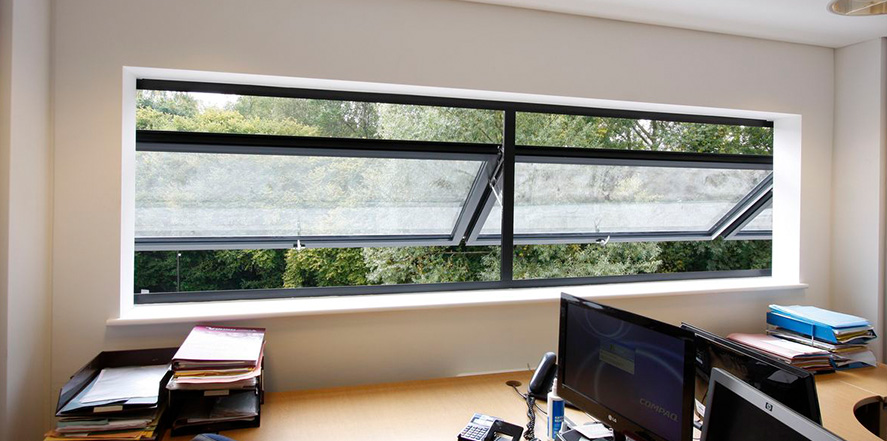
Visual integration should also be evaluated in a structured way when a tilt and turn window is specified. For residential, hospitality, and commercial projects, visible hinges and handle bases can affect the finished appearance. The matrix can include hinge visibility, handle structure, finish coordination, load range, installation requirements, and maintenance access.
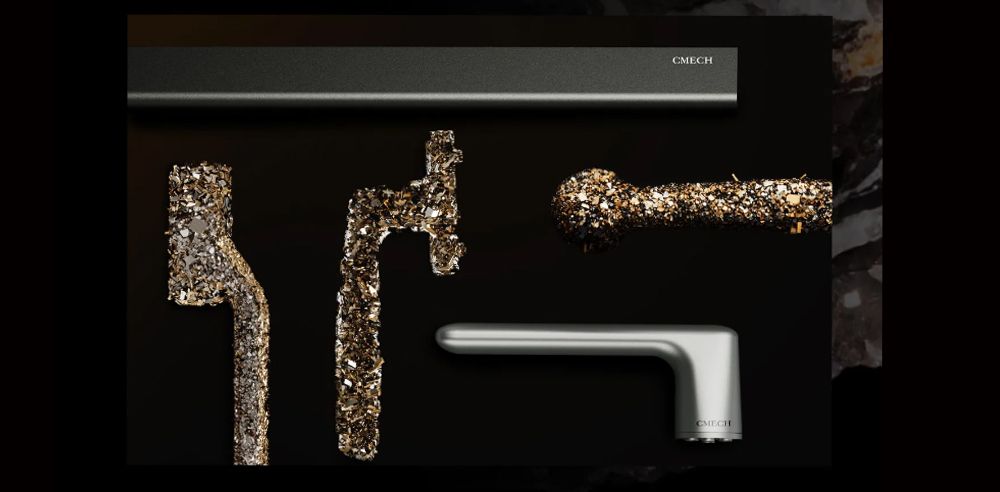
Our concealed configuration uses a concealed hinge structure and offers multiple load-bearing specifications for different application needs. It can be paired with minimalist handle options to reduce visible hardware and create a cleaner window appearance. This approach should still be reviewed with structural suitability, operating performance, testing evidence, installation, and maintenance.
At CMECH, we place particular focus on concealed hardware and baseless handle concepts. Compared with conventional exposed-hinge and based-handle arrangements, these configurations provide another design option for projects that prioritize visual simplicity. Their value should still be judged through the same technical and delivery matrix.
A Matrix Makes Supplier Review More Traceable
A useful matrix turns scattered supplier information into comparable project evidence. Certification scope, mechanical performance, durability, surface treatment, production control, delivery planning, service coverage, and design integration can all be recorded under clear fields. This helps project teams work from the same information instead of relying on separate impressions.
When comparing nhà sản xuất cửa sổ lật xoay, we recommend linking each matrix item to the proposed configuration and project requirement. This makes gaps easier to identify, supports clearer technical discussions, and gives procurement teams a traceable basis for evaluating certified global hardware partners before final selection.

 English
 Arabic
 Chinese
 French
 Thai
 Vietnamese