



Commercial sliding windows are increasingly used across offices, hotels, mixed-use buildings, healthcare facilities, and other large-scale projects. As window sizes and sash weights increase, hardware must do more than provide convenient operation. It must support structural performance, secure closure, durability, and predictable movement under repeated use. For project teams working in 2026, we believe specifying commercial sliding window hardware requires a clear understanding of applicable building codes, project loads, hardware capacity, and complete-system performance.
What “2026 Guidelines” Mean for Commercial Projects
There is not one universal “2026 sliding window hardware code” that governs every commercial project. Requirements depend on the jurisdiction, adopted building code, building type, location, and project-specific structural conditions. In the United States, the 2024 International Building Code (IBC) is an important model-code reference for commercial buildings, and it includes updated wind, earthquake, snow, and rain-load provisions. Local authorities determine which code edition and amendments apply to a particular project.
For designers and developers, this means hardware selection should follow the project’s engineering requirements rather than relying on a generic load rating. Structural calculations, window-system testing, manufacturer specifications, and local code requirements should be considered together.
Start With Sash Weight and Design Loads
The first hardware question should be how much weight the sliding system must safely support. Larger commercial glazing can create substantially greater demands on rollers and other load-bearing components. Hardware that is suitable for a lightweight residential sash may not be appropriate for a large commercial opening.
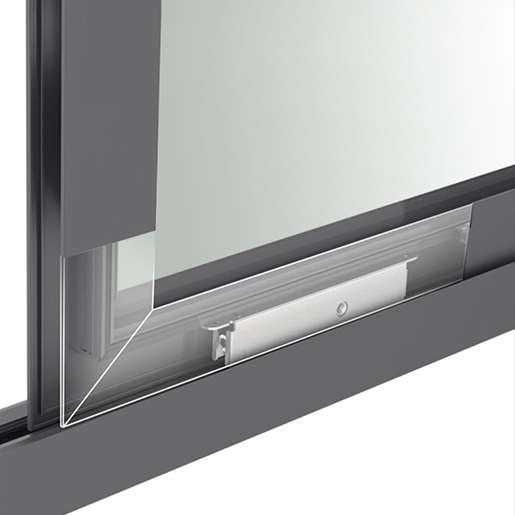
Our Sliding Window Hardware Solution has an applicable sash width of 500–1,600 mm, height of 300–1,800 mm, and maximum load-bearing capacity of 300 kg. The roller options range from 120 kg to 300 kg, allowing project teams to select a configuration according to sash requirements.
These figures should be treated as product specifications, not substitutes for project-specific structural assessment. Designers still need to verify the actual sash weight, load distribution, profile compatibility, and installation conditions.
Wind Resistance Requires More Than a Strong Lock
Commercial windows can be exposed to significant wind pressure, particularly on high-rise façades, corner zones, and buildings in demanding climatic regions. The 2024 IBC incorporates updated wind-load provisions, while structural design resources reference ASCE/SEI 7-22 for wind and other environmental forces.
For sliding windows, wind-related performance involves more than the lock itself. Rollers, tracks, sash alignment, locking points, and frame connections must work together. If the sash shifts or becomes misaligned under repeated loading, smooth operation and reliable closure can be affected.
Load Distribution Is Critical at Larger Scales
Increasing sash size does not simply increase the total weight; it can also change how forces are transferred through the hardware. Roller design and bracket geometry become increasingly important as commercial windows become larger.
Our rollers use a multi-layer bracket designed to distribute sash weight. The rubber-coated wheels have passed 120,000 cycles, supporting quiet and smooth movement during repeated operation.
Security and Structural Performance Should Work Together
A commercial window must remain securely closed while still being practical for occupants and facility teams to operate. A lock that is difficult to use can encourage improper operation, while an insufficient locking system may compromise security.
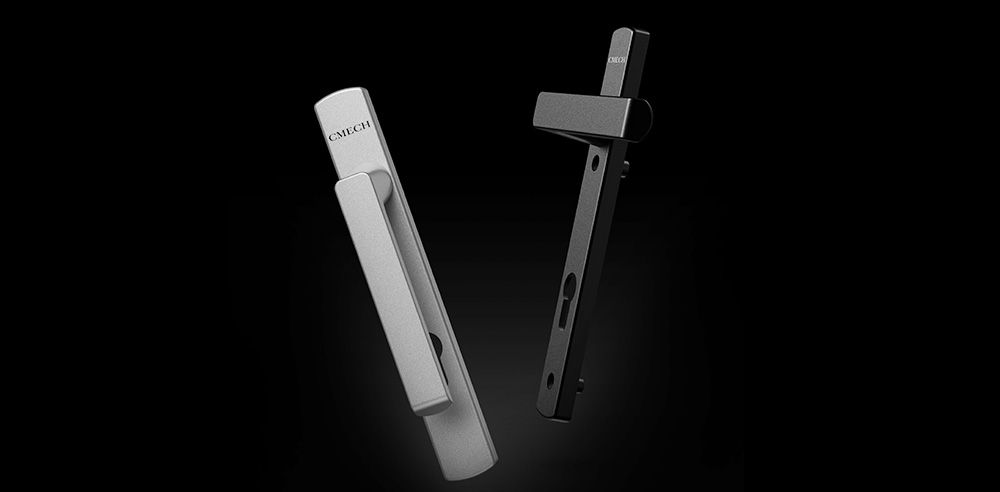
Our Bump Lock Recessed Pull Handle combines one-touch locking with a recessed configuration designed to save space and provide anti-theft protection. The S Metro Handle adds a built-in child safety lock, a ±3 mm self-adjusting hook, and automatic or manual locking options. It has been tested to 25,000 cycles.
These functions illustrate why phần cứng cửa sổ trượt should be considered as a coordinated system. Handles, locks, rollers, and profiles need to support both structural and operational requirements.
Durability Matters at Commercial Scale
A commercial development may contain hundreds or thousands of windows. Even a small hardware weakness can become a significant maintenance issue when multiplied across a large building. Repeated operation, cleaning, tenant use, and maintenance activities can all contribute to wear.
Cycle testing can provide useful evidence when comparing products, although it should not be interpreted as a guarantee of a specific service life in every installation. Our S Metro Handle has passed 25,000 cycles, while the rubber-coated rollers have passed 120,000 cycles. We focus on integrating load-bearing components, locking functions, operating mechanisms, and practical installation requirements into complete solutions.
What Project Teams Should Verify Before Approval
Before approving commercial sliding window hardware, we recommend creating a project-specific verification checklist. The team should confirm sash dimensions and weight, applicable wind and environmental loads, hardware load ratings, profile compatibility, locking requirements, cycle-test data, installation tolerances, and maintenance access.
The specification should also clearly distinguish between hardware capacity and the structural capacity of the complete window assembly. A 300 kg hardware rating, for example, does not automatically mean that every frame, fastener, track, or surrounding structure is designed for a 300 kg sash.
Building a Safer Specification for 2026
As commercial glazing continues to become larger and more sophisticated, hardware specification needs to become equally disciplined. Current model-code requirements, local amendments, project-specific engineering, and tested product data should all inform the final selection.
For CMECH, effective hardware specification is not simply about choosing the highest available load rating. It is about matching capacity, durability, security, installation requirements, and structural design to the actual building. When these factors are coordinated from the beginning, commercial sliding windows can deliver reliable performance while meeting the demanding expectations of modern large-scale architecture.


 English
 Arabic
 Chinese
 French
 Thai
 Vietnamese