
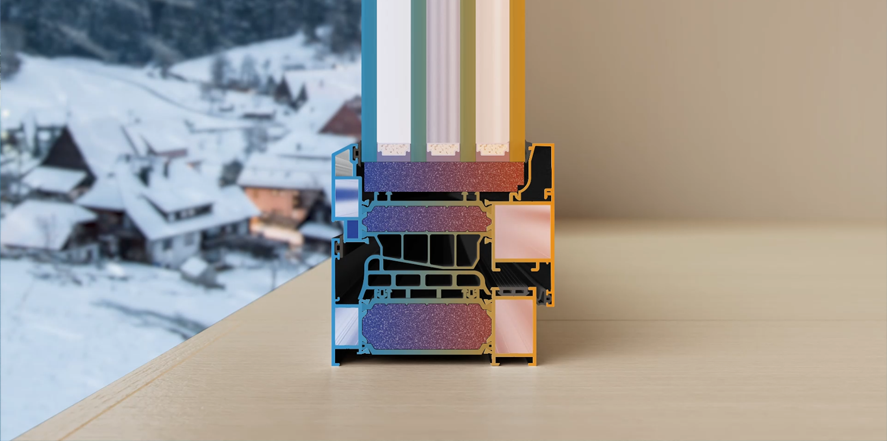


A hinge can sit neatly in a profile groove and still be wrong for the window. The fixing may lack the required support, the moving arm may clash with the sash, or the finished glazing may take the assembly outside its permitted application.
To establish window hardware profile compatibility, fabricators should compare the exact frame and sash sections with the proposed hardware drawings, then check fixing details, operating clearances, sash size and weight, locking geometry and the evidence required for the finished window. A representative assembly trial helps verify the fit and operation before production release.
That sequence makes fabricator hardware selection more useful to procurement: it turns “this looks suitable” into a configuration that can be identified, reviewed and ordered.
Quick decision guide
- Choose a documented configuration when its installation details match the exact profile and the finished sash falls within its stated size and weight limits.
- Choose a further engineering review when the profile revision, glazing, fixing arrangement or opening mode changes.
- Xác minh the complete assembly and relevant performance evidence before releasing a production order.
Match the opening mode to the exact profiles
The required opening mode determines which hardware arrangement is relevant. A side-hung outswing sash, a top-hung awning sash and a dual-function window use different hinge, drive and locking arrangements. Define the opening mode and handing before reviewing a proposed window hardware configuration.
Next, obtain the exact frame and sash profile codes, drawing revisions and assembled cross-sections. “Thermally broken aluminium window” is too broad to show where components attach, how the sash meets the frame or whether a fly screen or trim will obstruct movement. These drawings give the fabricator a specific assembly against which to assess the selected hardware.
Check each hardware-to-profile interface
With the opening mode and profiles identified, compare the hardware installation drawings with the assembled window sections. The aluminium profile groove is one interface, but a component fitting into it does not establish compatibility. Its fixing must be supported, its moving parts must have clearance, and its locking points must meet the keepers on the opposite section.
Use common reference surfaces when comparing window hardware dimensions with profile drawings. For example, a measurement from the external face cannot be compared directly with one taken from the groove centreline.
| Interface | Compare on the drawings | What the check establishes |
| Groove and component | Groove shape, component envelope and retention surfaces | Whether the component seats as designed |
| Fixing area | Wall thickness, screw or clamp positions and support | Whether the specified fixing can be installed |
| Frame and sash | Rebates, overlap, clearances and gasket position | Whether the sections meet correctly when closed |
| Handle and drive | Mounting plane, drive interface and gearbox position | Whether the mechanism can be operated |
| Lock and keeper | Locations, engagement and adjustment range | Whether the locking points engage correctly |
| Opening path | Hinge movement, stays, screens and nearby trims | Whether the sash can complete its intended movement |
This is a drawing review, not a substitute for the selected system’s installation limits and tolerances. Those must come from its technical documentation.
Check the fixing arrangement before relying on a load figure
The hardware’s connection to the profile forms part of the load path. A component rating cannot answer whether the proposed screw, clamp or local profile section is suitable for that installation.
For fabricator hardware selection, obtain the supplier’s fixing drawing and identify any required mounting accessories. Compare the screw or clamp positions with the supporting material in the actual profile section, including nearby cavities and thermal-break features. Read a published load figure alongside the configuration in which it was established. If the specified fixing cannot be installed, return the detail for review rather than moving the drilling position to a more convenient location.
A sample fitting can reveal an inaccessible screw, a clash or an assembly problem before production. Smooth operation alone does not demonstrate that a changed or improvised fixing has the required strength.
Read sash size and weight as one application
Review the finished sash width, height and weight together, including the glazing and all other moving components. A published load limit alone does not establish compatibility: the sash dimensions and opening mode must also fall within the selected hardware configuration’s application range.
CMECH offers distinct solutions with different published envelopes:
| CMECH solution | Published sash width | Published sash height | Published load-bearing limit |
| Outswing Casement & Awning Window Hardware Solution | 425–800 mm | 670–2,000 mm | Up to 80 kg |
| Outswing Awning Window Hardware Solution | 400–2,000 mm | 400–2,000 mm | Up to 130 kg |
These are separate product-level ranges, not a menu of interchangeable limits. Do not apply the dedicated awning system’s capacity to the combined opening system. Nor should the table be read as approval of every combination of maximum width, height and weight: the project needs a configuration-specific check.
For example, a hypothetical 850 mm-wide, 60 kg sash exceeds the combined system’s published width range even though its mass is below 80 kg. Selecting by weight alone would miss that issue.
Follow the moving parts through the full opening cycle
Window hardware profile compatibility depends on movement as well as static fit. Use the assembled sections to trace the hinge, stay and drive from the closed position through the intended opening modes and back to locking. Compare the relevant window hardware dimensions along that path, including adjustment access. A part may fit the aluminium profile groove when closed yet clash with the sash as it moves.
CMECH’s Outswing Casement & Awning Window Hardware Solution offers 6-, 8- and 9-inch restricting stays with a barbed connecting clamp. Its anti-misoperation module uses dual corner drives and a dedicated keeper with a double-bump structure. For the proposed profile, check where the clamp grips, whether the moving parts have clearance and whether the keeper aligns with its mating components. These checks require the selected parts and assembly drawings; the published sash limits alone cannot establish the fit of an individual profile.
Separate hardware evidence from finished-window performance
For fabricator hardware selection, distinguish component evidence from finished-window evidence. A handle or hinge cycle test covers that component under defined conditions; it does not establish the assembly’s air, water or structural performance. If the project specifies those results, request applicable assembly evidence identifying the tested configuration and result. Use the hardware installation drawing and a representative trial to assess window hardware profile compatibility, then check separately whether the performance evidence covers the proposed profile, sash dimensions, glazing and fixings.
Release a coordinated drawing package
A productive enquiry allows the supplier to review the assembly without reconstructing it from separate emails. Include dimensioned frame and sash sections, an elevation showing opening and handing, and the proposed hardware arrangement.
Add the finished sash weight and glazing make-up, profile codes and revisions, required opening limits, project location and specified performance criteria. Mark unknown information clearly so a preliminary discussion cannot be mistaken for final approval.
Dimension the aluminium profile groove on the assembled sections and label the proposed window hardware dimensions against their part codes. Record the selected hinges, stays, drives, locking parts, keepers and mounting accessories as one coordinated hardware schedule.
Once a representative sample has been reviewed, preserve its references in the production record. Changes to a gasket, profile, gearbox or glazing specification should trigger a review of the affected interfaces. That gives fabricator hardware selection a practical handover into manufacturing and repeat purchasing.
Frequently asked questions
How do fabricators confirm hardware compatibility with an aluminium profile?
They compare the exact profile sections and proposed hardware drawings, review fixings, movement, locking engagement and finished sash limits, then trial a representative assembly. Window hardware profile compatibility also requires the proposed configuration to be considered against the project’s performance evidence requirements.
Does matching the groove guarantee compatibility?
No. An aluminium profile groove can accept a component while the fixing support, sash-to-frame relationship or operating clearance remains unsuitable. The complete assembly must be reviewed, including any adaptors and mounting accessories.
What drawings should fabricators send?
Send dimensioned frame and sash sections, an assembled section, and an elevation showing opening mode and handing. Include the profile revision, proposed part codes, relevant window hardware dimensions, finished sash weight and glazing specification.
Can hardware be transferred between similar profile systems?
Only after the proposed hardware has been checked against the new frame and sash sections. A similar appearance or shared groove description does not establish interchangeability. For the window hardware configuration, check the fixings, movement clearances, and alignment of locks and keepers against the supplier’s installation requirements.
Bring CMECH your profile before committing the hardware order
Resolve window hardware profile compatibility while drawings and components can still be coordinated. Contact CMECH with the profile sections, opening requirements, sash dimensions, finished weight and project performance criteria to discuss the appropriate configuration. These inputs make fabricator hardware selection more precise and give procurement a clearer basis for the next order.


 English
 Arabic
 Chinese
 French
 Thai
 Vietnamese