



A bulk sliding-door assembly can pass visual inspection while hiding excessive lift force, uneven roller loading, or incomplete locking travel. Those defects emerge after glazing, transport, and repeated operation, when rework affects an entire shipment. A disciplined protocol therefore measures the mechanical sequence, not merely the finish, packaging, or apparent smoothness before release.
ที่ ซีเมค, we treat lift and slide door hardware as a connected load path. Our inspection approach links handle rotation, sash lifting, gear-and-roller travel, locking engagement, and seal compression. That sequence gives quality teams a repeatable basis for accepting assemblies, isolating variation, and documenting corrections before bulk units leave the factory.
Inspection Starts With The Complete Load Path
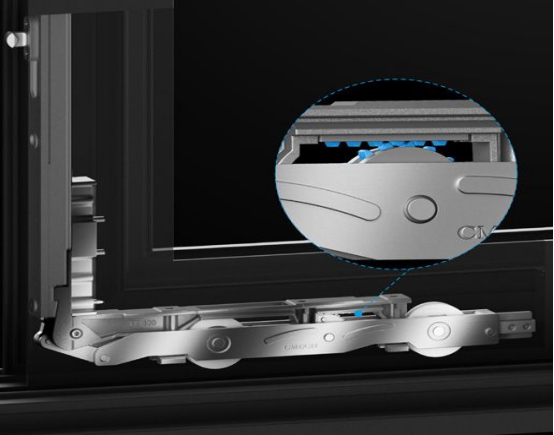
A lift-and-slide sash first transfers weight through the handle and lifting mechanism, then into the espagnolette, roller carriage, track, and frame. If one link flexes or carries insufficient capacity, the panel can lower unevenly. The physical result is increased drag; the engineering consequence is damaged seals, difficult operation, and inconsistent locking across repeated assemblies at scale.
For a bulk order, inspectors should record sash width, height, glazing mass, and selected load class before testing movement. The convention configuration supports widths from 720 to 3,300 mm, heights from 1,800 to 2,700 mm, and load-bearing options from 200 to 450 kg. These limits define whether a test result belongs inside the intended design envelope in production.
We recommend testing a first article unloaded, then repeating the sequence at specified panel weight. Measure initial lift effort, travel resistance, handle return, and final seating. Lift and slide door hardware can appear acceptable on a bench yet fail under load because the profile, rollers, anchors, and glazing distribute reactions differently during actual movement and closure in finished doors.
How Does Handle And Roller Action Reveal Defects?
Handle rotation should create a deliberate sequence: the sash lifts, rollers carry it across the track, and reverse rotation lowers it into the sealing position. The product uses a 180° handle rotation for lifting and lowering control. If movement feels abrupt or incomplete, inspectors should suspect timing, rebound, friction, or misalignment before adjusting the lock carefully across the full stroke.
When reviewing อุปกรณ์บานเลื่อนยก, we compare handle effort with roller travel and gasket contact. The handle centerline is positioned 955 mm from the roller carriage attachment surface and 37.5 mm from the espagnolette surface. These references help verify assembly geometry and prevent a dimensional mismatch from becoming a field complaint for every approved profile.
Rubber-coated rollers should travel quietly without pulsing, scraping, or visible track marking. We record start force, running force, stopping behavior, and the effort needed to return the handle. A trend across samples is more useful than one smooth demonstration, because repeated drift can reveal tooling wear, inconsistent carriage seating, or a component lot outside tolerance at once.
Locking And Sealing Checks Confirm Final Performance
After travel testing, inspectors should close the sash and confirm that locking parts engage without forcing the handle. The espagnolette uses a gas spring to absorb rebound and assist opening and closing. If rebound remains uncontrolled, the lock may approach its receiver inconsistently, increasing local gasket pressure and creating an unreliable final seating condition during release at each corner.
The seal check should cover the full perimeter, especially corners near roller carriages and lifting points. Uneven compression can indicate a bent profile, incorrect sash height, or a carriage that is not sharing load correctly. Window hardware may use related inspection logic, but large doors need wider measurement intervals because heavier glass magnifies small alignment errors during final QA.
For production release, we record lock engagement, visible seal contact, handle return, and any noise during final closure. Door hardware should also be inspected after transport testing and packaging removal, since impacts may affect component alignment. Units that fail post-transport checks should be contained and investigated before release.
The CMECH Convention Configuration Supports QA
For a factory producing large terrace doors, the heavy duty sliding door hardware solution from CMECH combines a precision-cast industrial aluminum-alloy handle, gas-spring-assisted espagnolette, gear-and-roller lifting mechanism, rubber-coated lifting rollers, drive parts, lock parts, and load-bearing accessories. Flexible roller configurations align capacity with sash weight and support controlled lifting, travel, and lowering for oversized glazed hospitality door panels.
The configuration gives inspectors reference points for a 200–450 kg load class and sash dimensions from 720 to 3,300 mm wide by 1,800 to 2,700 mm high. We would connect those values to the approved profile drawing, glazing schedule, and anchor plan, then preserve the same settings across the batch so replacement components remain traceable and installation records stay consistent.
Our engineering verdict is direct: use system-matched heavy duty sliding door hardware for bulk assemblies that require repeatable movement, locking, and sealing. Mixed generic parts may suit isolated repairs where every opening is checked individually, but they are a poor fit for standardized production because small interface differences can multiply into widespread adjustment and warranty work during final release inspections.
QA Protocols Need Clear Limits
Define the approved load, travel measurements, lock engagement, and seal observations for a representative assembled door. Inspectors can then compare the same stages across the batch and record which adjustment corrected any departure from the agreed reference.
Preserve results after glazing, transport, and site installation, since each stage can affect the assembled opening. A damaged track, poor anchorage, or distorted profile needs its own correction; a passing hardware check does not resolve a defect elsewhere in the door.



 English
 Arabic
 Chinese
 French
 Thai
 Vietnamese