



Sliding patio doors provide natural light and convenient access, but dirt, misalignment, worn rollers, and damaged seals can gradually affect their operation. A reliable sliding door fix begins with identifying the symptom and checking the related components. The following sliding door troubleshooting guide covers 7 common problems, their likely causes, and practical ways to address them.
1. Sliding Door Is Stuck or Hard to Open
Symptoms: The door feels heavy, stops at certain positions, or requires increasing force to move.
Root causes: Dirt, sand, and hair may be blocking the bottom track. The rollers may also be worn or set at the wrong height.
How to fix it: Vacuum the upper and lower tracks, then clean them with mild detergent and water. Dry the tracks before testing the door. Use a dry lubricant only where the manufacturer permits it because oil based products attract dirt.
If cleaning does not reduce the resistance, inspect the roller adjustment and track condition. Resistance at one position may indicate a dented track, while resistance across the full opening often points to the rollers.
2. Sliding Door Is Misaligned or Off Track
Symptoms: The panel drags at one corner, leaves an uneven gap, or does not meet the jamb correctly.
Root causes: The rollers may be unevenly adjusted. Impact, loose hardware, incorrect installation, or structural movement can also affect alignment.
How to fix it: Open the door slightly and compare the gap between the panel and jamb from top to bottom. Use the adjustment screws near the lower corners to raise or lower each side in small increments.
Adjustment directions vary between systems, so check the product instructions. If the panel has left the track, use at least 2 people to handle it or contact an installer. Do not force a heavy glass panel back into position.
3. Sliding Door Squeaks or Grinds
Symptoms: The door produces squeaking, scraping, or metallic grinding sounds while moving.
Root causes: Debris may be trapped in the track. The rollers may have damaged bearings, cracked wheels, corrosion, or loose axles.
How to fix it: Clean the track and inspect it for stones, raised screws, and deep scratches. If the noise continues, inspect the roller assemblies.
Replace rollers that do not rotate freely or show visible damage. Use only the lubricant specified by the hardware manufacturer. Lubrication cannot repair a damaged bearing or wheel.
4. Sliding Door Latch Does Not Lock
Symptoms: The handle moves, but the latch does not engage. The door may also require force to lock or remain loose after locking.
Root causes: The panel may be too high or too low. Other causes include a loose strike plate, worn latch hook, or damaged lock mechanism.
How to fix it: Close the panel slowly and check where the latch meets the strike. Correct the roller height before adjusting the strike plate.
Tighten loose screws and clean the exposed lock components. Move the strike plate in small increments until the latch engages smoothly. Replace the lock if the hook is bent or the panel can still be opened when locked.
5. Sliding Door Allows Drafts or Water Inside
Symptoms: Air enters around the closed door, wind causes a whistling sound, or water collects on the interior sill.
Root causes: Weatherstripping may be damaged, compressed, or missing. Blocked drainage openings and poor panel alignment can also cause leakage.
How to fix it: Inspect the weatherstripping and replace sections that are torn, brittle, or detached. Use a profile that matches the original pile height and channel width.
Remove debris from the sill drainage openings, but do not fill them with sealant. If water enters from the frame corners or wall connection, ask a professional to inspect the installation and perimeter sealing.
6. Sliding Door Glass Rattles
Symptoms: The glass vibrates as the door moves or rattles when the panel closes.
Root causes: Glazing beads may be loose, gaskets may have shrunk, or the glass support blocks may have shifted.
How to fix it: Check the visible gasket for gaps, hardening, and displacement. Confirm that the glazing beads remain fully seated.
Do not remove the beads or apply general purpose sealant without identifying the glazing system. Contact a glazing technician if the glass moves under light pressure, separates from the gasket, or has any cracks.
7. Sliding Door Bumps While Moving
Symptoms: The panel repeatedly bumps, hops, or rises and falls as it moves.
Root causes: A roller may have a flat spot, cracked wheel, damaged bearing, or bent bracket. A dented track can produce a similar result.
How to fix it: Move the panel slowly and note where the bump occurs. A bump at the same track position suggests track damage. A regular repeating bump usually points to a roller problem.
Replace damaged rollers as a matched pair. Before ordering parts, confirm the housing dimensions, wheel diameter, mounting pattern, and required load capacity.
Preventive Maintenance Checklist
- Vacuum the tracks whenever dirt becomes visible.
- Clean tracks with mild detergent and dry them fully.
- Check the panel gap and roller adjustment once a year.
- Inspect weatherstripping and sill drainage openings.
- Tighten loose handle, lock, and strike plate screws.
- Use only the lubricant recommended for the hardware.
- Inspect more frequently in coastal or high dust environments.

สรุป
Cleaning and adjustment can resolve minor sliding door problems. When resistance, noise, or misalignment repeatedly returns, the roller system may no longer distribute the panel load evenly.
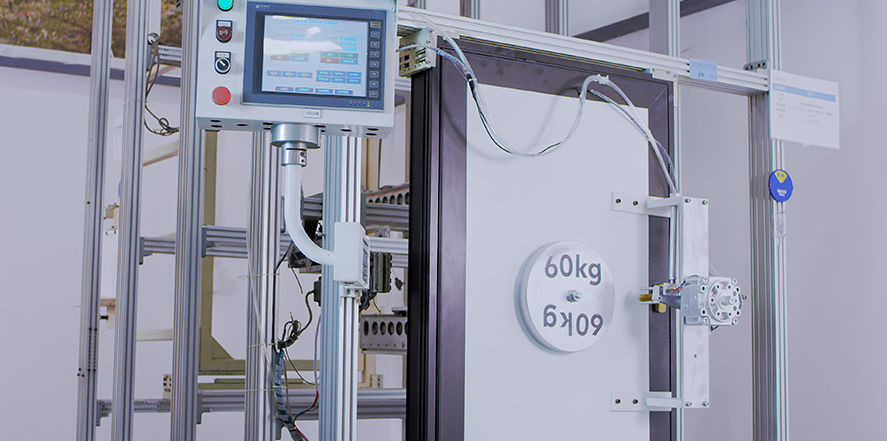
The CMECH Panoramic Sliding Door System addresses this issue with self adaptive load bearing rollers. Unlike fixed roller structures, the rollers compensate for track deviation and floor height differences, distribute the load more evenly, and keep oversized panels stable while moving.
The system also incorporates CMECH’s industry first graphite self lubricating mechanism. Graphite provides continuous lubrication at the roller contact points without relying on frequent grease application, reducing friction, dust adhesion, and maintenance requirements under heavy loads.
Planning a sliding door system for large or heavy panels? Share your panel dimensions and weight, profile and track details, opening layout, installation conditions, and performance requirements with CMECH. Our technical team can work with door and window manufacturers, architects, developers, and distribution partners to evaluate hardware compatibility and develop a suitable system configuration. Contact CMECH to discuss your project or partnership requirements.

 English
 Arabic
 Chinese
 French
 Thai
 Vietnamese