
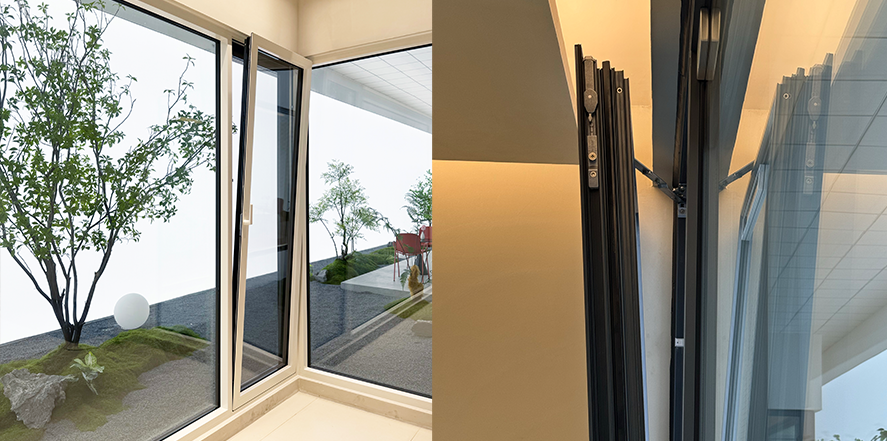


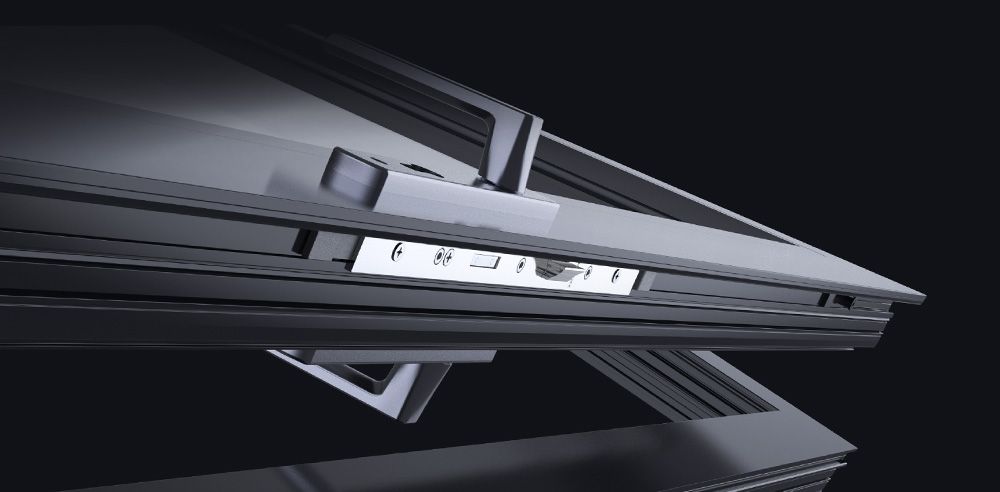
Concealed hinges sit inside the door, sash, or frame, so the hardware is largely hidden when the unit is closed. This supports clean sightlines, but appearance is only one part of the decision. A concealed hinge must also carry the specified load, maintain alignment, support sealing, and remain compatible with the selected profile.
This guide explains how concealed hinges work, how they compare with exposed hinges, and what to check before specifying them for a door or window system.
What Are Concealed Hinges?
Concealed hinges, also called invisible hinges or hidden hinges, connect a door leaf or window sash to its frame without leaving the main hinge body visible when closed. The hinge may sit within a routed pocket, a hardware groove, or the space between the sash and frame.
This arrangement differs from an exposed hinge, whose knuckle, leaf, or support components remain visible. The concealed layout reduces visual interruption across the frame and can support flush surfaces, narrow sightlines, and coordinated finishes.
Concealed door hinges are used on entrance and interior doors. Concealed window hinges appear in casement and tilt and turn windows, where the hardware may guide more than one movement while supporting the sash.
Why Are Concealed Hinges Used in Modern Doors and Windows?
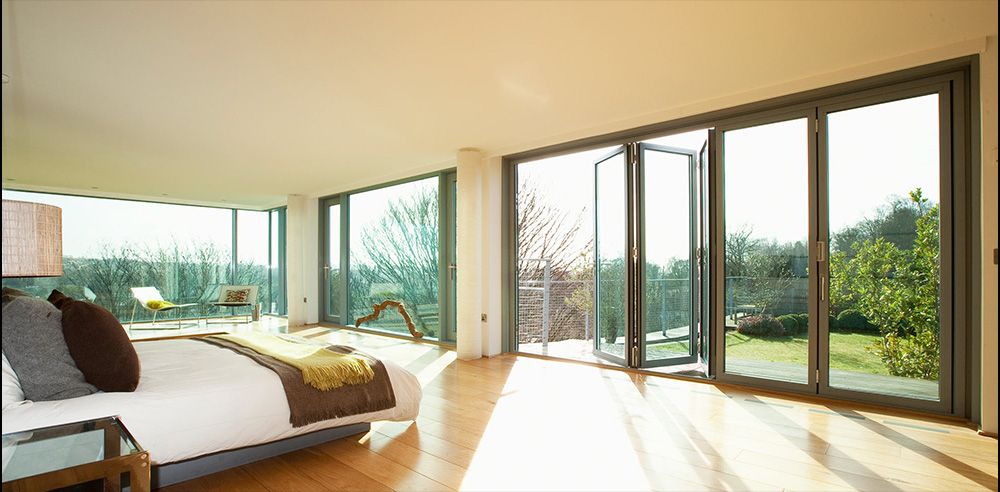
The most direct reason is appearance. Doors with hidden hinges present fewer visible components, while concealed window hardware allows the frame, glazing, and handle to define the design. This suits residential and commercial projects that use flush doors or repeated window openings.
However, concealment does not automatically indicate higher strength, longer service life, or improved security. Those outcomes depend on the complete system, including the hinge structure, fixing method, profile, glass or panel weight, locking points, seals, and installation quality.
Therefore, appearance and mechanical performance should be considered together. A hinge is unsuitable if the completed door or sash exceeds its rated load or the profile lacks the required fixing space.
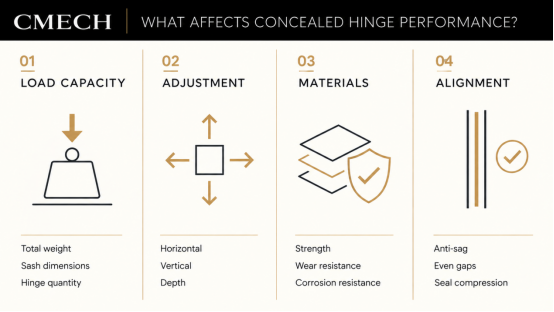
What Affects Concealed Hinge Performance?
Load Capacity and Load Distribution
The hinge must support the total operating weight. For a window, this includes the sash, glass, reinforcement, seals, and attached hardware. For a door, it includes the complete leaf and fitted components.
Height and width change the leverage applied to the hinge. A tall or wide unit may stress the fixing points even within the stated weight limit. Hinge quantity, position, and the approved size range should be checked together.
Adjustment and Alignment
Horizontal, vertical, and depth adjustment allow installers to correct clearance around the leaf or sash. Depth adjustment can also influence gasket compression in a window system. These settings help maintain even gaps, consistent contact with seals, and smooth engagement with locks.
Adjustment helps during installation and servicing, but it cannot compensate for an unsuitable profile or underspecified hinge. Confirm the range before fabrication so the frame, sash, and hardware remain within permitted tolerances.
Materials and Structure
Hinge arms, pins, bearings, housings, and fasteners transfer static and repeated loads. Their materials and dimensions influence resistance to bending, wear, and corrosion. Stainless steel is often selected for load bearing parts exposed to moisture.
Corrosion resistance should match the installation site. Interior doors, sheltered windows, and coastal openings face different conditions. Surface treatment, stainless steel grade, drainage, and maintenance access all affect performance.
Sagging and Seal Compression
Sagging occurs when a door leaf or window sash gradually moves out of position. The result may be uneven gaps, contact with the frame, increased operating force, or incomplete lock engagement. Heavy and wide units create a higher risk because their weight acts farther from the hinge line.
An anti sag structure can help control this movement, while adjustment can restore alignment within the specified range. Correct fixing remains essential. For windows, alignment also affects perimeter gasket compression.
Concealed Hinges vs. Exposed Hinges
| Consideration | Charnières invisibles | Exposed Hinges |
| Appearance | Hidden when the door or window is closed, supporting flush surfaces and uninterrupted sightlines | Visible on the frame or sash and more prominent within the overall design |
| Load requirements | Capacity depends on the hinge structure, fixing method, profile, and complete unit weight | Capacity also depends on the specific configuration and should not be assumed from appearance |
| Installation | Requires accurate routing, profile preparation, or a compatible internal hardware groove | Often requires less internal profile space and may be more directly accessible |
| Adjustment | May provide horizontal, vertical, and depth adjustment, depending on the system | Adjustment functions vary by model and are often easier to reach |
| Maintenance | Internal positioning can protect some components but may limit service access | Visible components are generally easier to inspect, lubricate, or replace |
| Profile compatibility | Requires sufficient internal space and verified compatibility with seals, glazing, and drive components | May suit conventional profiles with limited internal space |
| Cost | May involve additional fabrication and profile preparation | May reduce preparation requirements, although total cost depends on the complete system |
How to Choose Concealed Hinges for Doors and Windows
Start with completed weight and overall dimensions. Compare them with the hinge load rating and approved width and height range. Use the actual glass build up, reinforcement, and accessories rather than an early estimate.
Next, confirm profile compatibility, fixing locations, opening direction, and internal space. Identify which adjustments remain accessible after installation. For windows, check gasket compression, drainage, locking, and opening modes.
For heavy doors, review anti sag provisions and hinge quantity. For exterior applications, examine materials and corrosion protection. Follow the tested system configuration instead of combining ratings from unrelated products.
CMECH Concealed Hinge Solutions
CMECH provides concealed hinge solutions for hinged doors, tilt and turn windows, and inswing casement windows. Its 120 kg concealed door hinge combines three axis adjustment with an anti sag safety feature and an anti corrosion surface treatment. These features support accurate installation and help maintain door alignment under sustained loads.
Are you developing a door or window system that requires concealed hinges? Share your profile drawings, opening type, sash or door dimensions, completed weight, and project performance requirements with CMECH. Our technical team can help door and window manufacturers, architects, developers, and distribution partners evaluate hardware compatibility and identify an appropriate system configuration. Contact CMECH to discuss your project or partnership requirements.

 English
 Arabic
 Chinese
 French
 Thai
 Vietnamese