



Sliding windows offer wide views, natural light, and space-efficient operation, but their security depends heavily on the quality of the locking mechanism. Unlike hinged windows, sliding sashes move along tracks, creating different opportunities for forced entry if the locking system is poorly engineered. For architects, developers, window manufacturers, and security-conscious project teams, advanced sliding window lock hardware can help reduce these vulnerabilities while maintaining convenient everyday operation.
Why Sliding Windows Need Specialized Security
The operating principle of a sliding window creates specific security considerations. A sash must move smoothly along its track but become securely fixed when closed. If the locking point does not engage correctly, excessive movement or gaps may create opportunities for tampering.
A robust security system therefore needs to control the sash at its closing point rather than relying solely on the physical resistance of the frame. The lock, hook, handle, profile, and rollers should work together so that security does not come at the expense of smooth operation.
For professional projects, this makes 滑动窗口硬件 a system-level specification. Evaluating only the visible handle may overlook critical mechanical details that determine how effectively the window resists unwanted opening.
How Anti-Pry Mechanisms Improve Protection
Forced intrusion often targets the weakest point of an opening. With sliding windows, an attacker may attempt to manipulate the sash or create movement around the locking area. An effective locking mechanism should therefore minimize unintended movement and make manipulation more difficult.
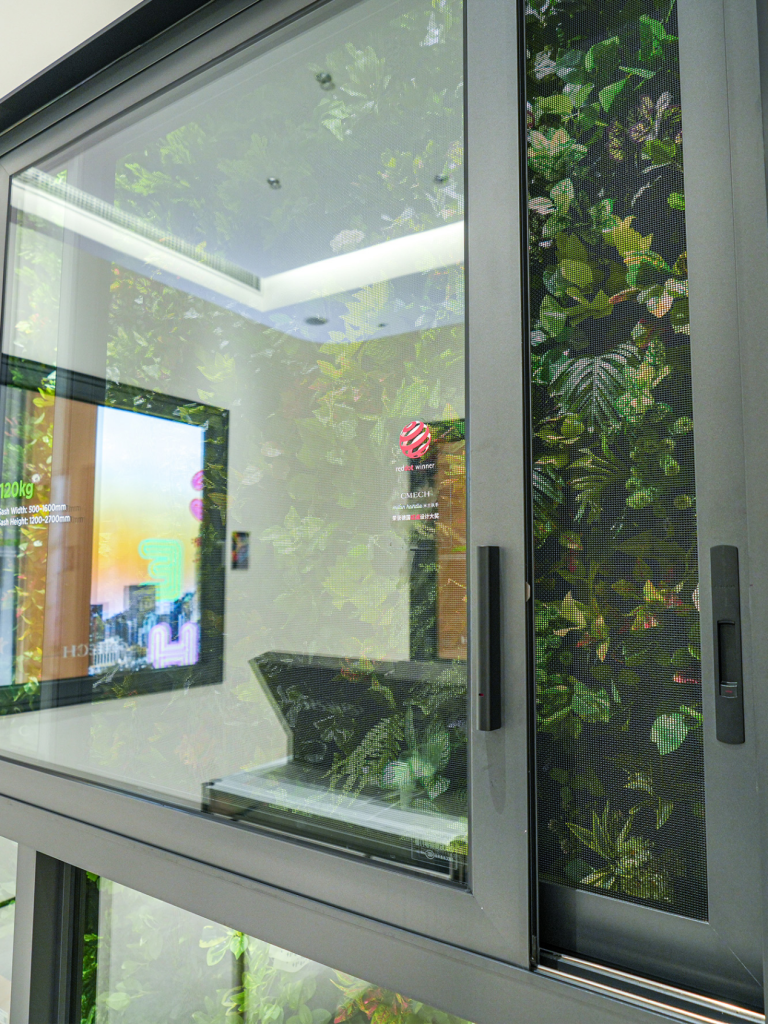
Our Bump Lock Recessed Pull Handle combines one-touch locking with an anti-theft design. The recessed configuration occupies less space while integrating the locking function directly into the handle assembly.
The flush design also supports straightforward operation. Users can lock the sash with a simple press of a finger, reducing the complexity of daily use. For developers and fabricators, combining installation efficiency with security functionality can make the system easier to incorporate into different project requirements.
A Hook Mechanism Can Help Prevent Accidental Opening
The locking point itself plays a critical role in maintaining the closed position. A hook that engages securely with the corresponding keeper can provide a more positive mechanical connection than relying on friction alone.
Our S Metro Handle incorporates a smart ±3 mm self-adjusting hook. This mechanism is designed to compensate for profile tolerances while helping prevent accidental opening. The handle also includes a built-in child safety lock, providing an additional layer of protection for residential environments.
The S Metro Handle has received the German Red Dot Design Award and has been tested to 25,000 cycles. Project teams can select either automatic or manual locking versions according to the desired operating configuration.
Profile Tolerances Should Not Undermine Security
Even a well-designed lock can experience performance issues if the sash and frame are not aligned accurately. Manufacturing and installation tolerances can affect the position of the locking components, potentially reducing engagement or making the handle difficult to operate.
Self-adjusting mechanisms can provide useful compensation for these variations. The ±3 mm adjustment range of our S Metro Handle is designed to accommodate profile tolerances while maintaining the intended locking relationship.
For window manufacturers, this type of adjustment can make the hardware more forgiving during fabrication and installation. For developers, it can support greater consistency across multiple openings.
Security Must Work With Smooth Sliding
A window that is secure but difficult to operate can create problems for occupants. Residents may apply excessive force, avoid locking the window correctly, or leave the opening unused because of poor usability.
This is why sliding window lock hardware should be evaluated alongside the sliding mechanism itself. The rollers need to support the sash accurately, allowing the locking system to engage without excessive resistance.
Our roller system uses a multi-layer bracket designed to distribute weight. Depending on the configuration, the rollers support loads from 120 kg to 300 kg. The rubber-coated wheels have passed 120,000 cycles, helping provide quiet and smooth movement through prolonged use.
One-Touch Operation Supports Everyday Security
Security features are most effective when occupants can use them correctly every day. Complex locking procedures can discourage consistent use, particularly in residential properties with frequent window operation.
A flush pull handle with one-touch locking provides a simple interaction: the occupant closes the sash and presses the locking mechanism into position. This can reduce unnecessary operating steps while keeping the locking function integrated into the window design.
What Professional Buyers Should Evaluate
When selecting sliding window hardware, we recommend evaluating the entire mechanism rather than focusing on one security feature. Important considerations include locking engagement, anti-pry or anti-theft mechanisms, profile tolerance compensation, child safety, roller capacity, cycle testing, installation requirements, and operating ergonomics.
Project teams should also consider the window’s size, weight, location, usage frequency, and security requirements. A system suitable for a lightweight residential window may not be appropriate for a large sliding opening with substantial sash weight.
Building Security Into the Sliding System
CMECH approaches window security as a coordinated mechanical challenge rather than a single locking point. Anti-theft recessed handles, self-adjusting hooks, child safety functions, and high-capacity rollers can work together to create a more dependable sliding window system.
We at CMECH believe advanced sliding window lock hardware should integrate security with everyday usability. When the lock, handle, profile, and rollers are engineered as one system, sliding windows can provide the openness and convenience architects want while offering stronger resistance to unwanted access and accidental opening.

 English
 Arabic
 Chinese
 French
 Thai
 Vietnamese