
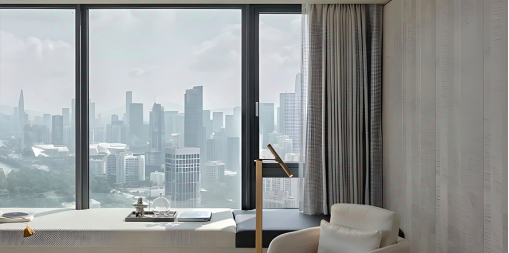


Window frames rarely fail first in the Gulf or Southeast Asia. The hardware inside them does. Sand, heat, and humidity attack hinges, gearboxes, and seals long before the aluminum shows wear.
This not only compromises indoor comfort but also drives up long-term maintenance, repair, and component replacement costs over the project lifecycle. It is a commonly overlooked hidden risk for high-end residential and commercial developments.
في CMECH, we help developers, contractors, and designers evaluate the key factors involved in specifying turn and tilt windows. Our guidance draws on the EN 13126-8 standard and CMECH’s published product specifications.
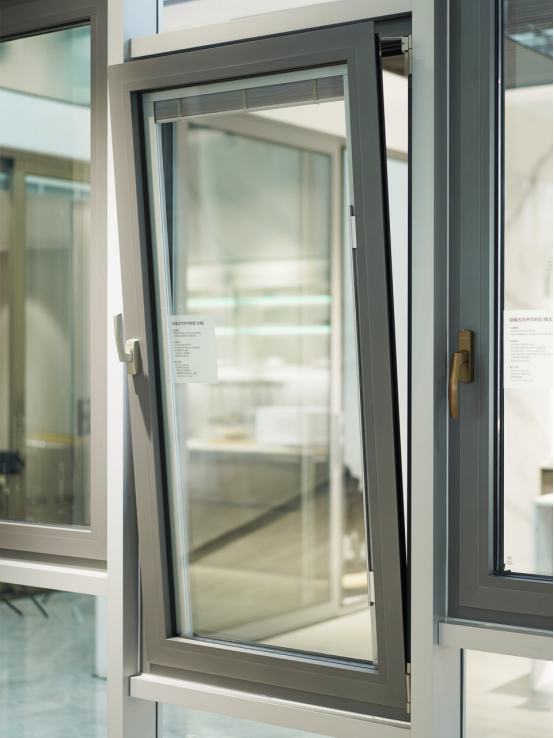
Why Do Hot, Dusty Climates Break Window Hardware First?
Moving parts fail first because heat, dust, and moisture reach them every time a sash opens. Frames sit still, while hinges, gearboxes, and gaskets work through every cycle.
What Does Dust Do to Moving Parts?
Fine airborne particles can enter exposed or insufficiently protected moving components, potentially increasing friction and contributing to wear over repeated operating cycles. The scale is real. During the May 2022 sandstorm, Dubai’s city-wide average PM10 concentration reached 784.7 µg/m³, according to Swiss air quality technology company IQAir. PM10 refers to airborne particulate matter with an aerodynamic diameter of 10 micrometers or less. It is an air-quality indicator rather than a direct measurement of sand particles entering window hardware.
As a result, a sash that glides on day one can drag within a few seasons if the drive parts have play or exposed gaps.
How High Temperatures Degrade Hardware Performance
Sustained heat degrades lubricants, gaskets, and metal fits at the same time. In the UAE, Sweihan hit 51.8°C on August 1, 2025, just short of the national record of 52.1°C set in July 2002, based on National Center of Meteorology (NCM) data reported by Reuters.
Three mechanisms matter for hardware:
- Grease oxidation: Elevated temperatures accelerate lubricant degradation in gearboxes and hinges. As the lubricant loses its effectiveness, friction and component wear may increase.
- Gasket degradation: Prolonged exposure to elevated temperatures can accelerate aging in certain sealing materials, potentially causing hardening, loss of elasticity, or reduced sealing performance. The extent of degradation depends on the gasket material and its temperature resistance.
- Differential thermal expansion: Different metals expand at different rates when temperatures change. Depending on the hardware design, material combination, and installation conditions, this may affect fitting clearances or operating resistance. However, changes in sash alignment also depend on factors such as hinge geometry, installation accuracy, and adjustment.
How Does Humidity in Southeast Asia Change the Risk?
Humid, coastal air attacks metal through corrosion rather than abrasion. According to the Thai Meteorological Department’s Climatological Data of Thailand for 30 Year Period (1991–2020), Bangkok’s average monthly relative humidity ranges from 66% to 79%, as also reported by Thaipedia in its Bangkok Weather by Month climate reference.Exposed steel pins, fasteners, and thin plating are the usual weak points.
| Risk | Where it dominates | Hardware parts most exposed |
| Dust | الشرق الأوسط | Gearbox teeth, hinge pivots |
| High temperature | الشرق الأوسط | Lubricants, gaskets, fitting clearances |
| Humidity and coastal air | جنوب شرق آسيا | Fasteners, plated parts |
What Does EN 13126-8 Tell You About European Tilt and Turn Windows?
EN 13126-8 is the European standard that sets requirements and test methods for tilt and turn hardware, so it works as a ready-made specification tool. It uses a four-box classification system covering durability, maximum tested sash mass, corrosion resistance, and test sizes. Developers can use these four categories to define measurable hardware requirements in project specifications.
How Do the Classification Boxes Translate Into Project Decisions?
Each box answers a different project risk, as the table shows.
| Class | What it tells you | Where it matters most |
| متانة | How many operating cycles the hardware endured in testing. A higher class typically means longer intervals before replacement. | Long-term maintenance cost on any project |
| Mass | The sash weight the hardware was tested to carry. | Large glazed sashes in high-rise and luxury villa projects |
| Corrosion resistance | How the parts held up in corrosion testing. | Coastal, high-humidity, and salt-exposed sites |
Therefore, write the required class for each box into your hardware specification. Then ask every supplier for the matching test report for the exact hardware set. A catalog line that says “tested to standard” proves nothing about a specific class.
Does “German” Hardware Mean Certified Hardware?
No. The term “German-style tilt and turn windows” generally describes a window design associated with German or European window traditions. It does not, by itself, confirm the country of manufacture or prove that the hardware has passed specific performance tests.
Similarly, European-style tilt and turn windows can be fitted with hardware from different manufacturers. Design origin and production location are not equivalent to certified performance.
Which Hardware Questions Should Developers Ask Before Specifying Turn and Tilt Windows?
Ask three questions about weight, drive wear, and sealing before you approve a supplier. Each one maps to a failure you can see on site within a few years, and each matters more in hot, dusty climates.
How Much Sash Weight Can the Hinges Carry?
Hinge load rating must exceed your heaviest sash, with margin. Ask for the rated load, the sash size range, and the support arm material.
Why it matters more here: larger glazed openings can place greater demands on the hinge assembly, so developers should verify the selected configuration against the actual sash dimensions and weight.
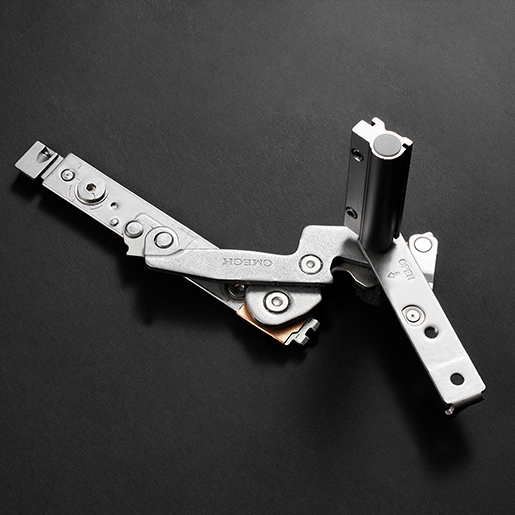
How Does the Drive Gearbox Resist Wear and Drift?
The gearbox converts handle movement into locking movement, so play in its gears becomes a loose, rattling sash. Ask whether the gears mesh without backlash and whether the faceplate is stainless steel.
Why it matters more here: a backlash-free dual-gear design leaves less room for fine dust to act as an abrasive between meshing teeth, which extends service life in sandy environments.
Can Sealing Geometry Be Adjusted After Installation?
Adjustable sealing lets a technician restore compression after the building settles or the gaskets age. Without it, a window that is dust-tight on day one can leak by year three.
Why it matters more here: on-site recalibration keeps the window dust-tight after heat has degraded the gasket, which stops sand from reaching the internal hardware.
[Insert Flowchart here: a three-step supplier check covering hinge load, gearbox wear, and seal adjustment, each tagged with its hot-climate risk.]
What Does CMECH’s Tilt and Turn Window Hardware Offer?
CMECH supplies concealed-hinge hardware for its إمالة واستدارة النافذة with a concealed hinge configuration range, and its published specs answer the three questions above. The company’s origins can be traced back to the 1990s, and it reports nearly 30 years of industry experience.
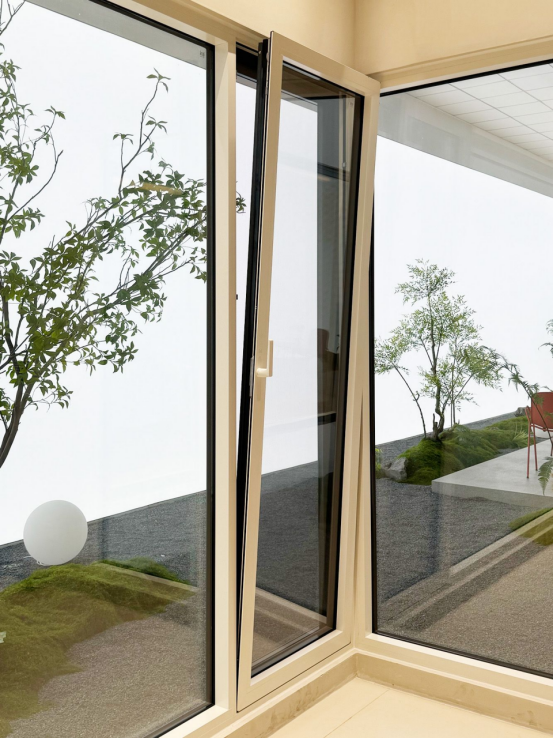
How Do the Published Specs Answer the Three Questions?
Each published detail maps directly to one of the selection questions.
| Your question | Published CMECH detail |
| Hinge load capacity | Available hinge ratings from 80 kg to 130 kg, with thickened 304 stainless steel support arms |
| Gearbox wear and drift | Patented dual-gear technology that eliminates play and backlash, an anti-drift design, and a stainless steel faceplate |
| Seal adjustability | Fully adjustable sealing geometry |
These features directly address the core hardware failure risks in hot, dusty, and humid climates: thickened stainless steel support arms reserve load margin under high-temperature thermal expansion; the backlash-free dual-gear design reduces abrasive wear from fine sand ingress; and adjustable sealing geometry sustains dust-tight performance long after installation.
The sash range matters for large openings. The product page lists an applicable sash width range of 490–1,200 mm, a sash height range of 600–2,800 mm, and a maximum load-bearing capacity of 130 kg for this concealed-hinge configuration.
The hinges are concealed, so no exposed parts show on the frame, and no color-matching of window stock is needed. The concealed-hinge configuration can be paired with Milan Series or Venice Series handles, which have received German Red Dot and iF Design Awards.
However, the product page does not publish a corrosion class or dust test results. Request both documents from the supplier before you finalize a specification.
Who Should Choose It: Developers, Fabricators, or Designers?
- Developers: the graded load ratings help you match hinge capacity to the heaviest sash on your window schedule.
- Fabricators: the published sash width and height range lets you check hardware fit before you quote.
- Designers: concealed hinges and the Milan or Venice handles keep the interior line clean.
Conclusion:Specifying Hardware for Harsh Climates
Hot, dusty, and humid climates place different demands on tilt and turn window hardware. High temperatures can accelerate lubricant degradation and affect material performance, dust can increase friction and wear, while moisture raises the risk of corrosion. These factors may also interact, affecting hardware operation and service life.When specifying tilt and turn window hardware, consider the operating environment, material compatibility, corrosion protection, sealing performance, and maintenance requirements. Matching hardware specifications to actual climate conditions helps reduce premature wear and supports reliable window operation over time.



 English
 Arabic
 Chinese
 French
 Thai
 Vietnamese