


Choosing door and window hardware is a project decision, not simply a price comparison. Poorly fitting hinges, awkward handles, or missing replacement parts can delay installation and complicate handover.
موثوق بها door hardware supplier offers compatible components, verifiable test results, and coordinated deliveries. Use this checklist to compare suppliers before ordering.

What Should You Check Before Contacting Hardware Suppliers?
Start with an opening schedule. It gives designers, fabricators, and suppliers a shared reference for comparable quotations.
How Do Building Requirements Affect Hardware Selection?
Each opening has different demands. Hotel entrances receive frequent handling, apartment windows require practical ventilation, and large glazed doors place greater loads on hinges. Specifications must reflect use, not appearance alone.
Record the following information for every opening type:
- Dimensions and weight: Frame material, sash width and height, finished weight, and opening direction.
- Operation: Locking method, expected use, accessibility, and clearance around handles.
- Exposure: Rain, coastal air, dust, cleaning chemicals, and the position of exposed fittings.
- Project coordination: Finish, concealed or visible hardware, quantities, and installation phases.
In coastal Southeast Asia, examine corrosion protection. In the Middle East, check site-specific heat and dust exposure. Assess the individual building, not regional assumptions.
How Can You Confirm Profile Compatibility Before Ordering?
Compatibility begins with profile geometry and fixing positions. A hinge with an adequate weight rating still cannot be installed correctly if its mounting points or adjustment mechanism conflict with the frame.
Ask the fabricator to assemble a working sample using the intended profiles, glazing, hardware, and fixings. Check opening movement, handle clearance, locking engagement, and access for adjustment. Keep the approved drawings and component references for repeat orders.
Document any installation difficulties identified during the trial assembly, and update the production drawings and installation instructions before approving the final configuration.
For openings with different dimensions or operating requirements, identify any variations in the required hardware configuration before approving the final schedule.
How Can You Verify Hardware Quality and Performance?
Look for evidence covering the proposed model. Check test conditions against the intended application.
Which Tests and Certifications Matter Most?
Request relevant load, operating-cycle, corrosion, and locking reports. Every report should identify the specimen, test method, conditions, and result. A handle cycle test cannot establish the durability of a complete door or window assembly.
| Evidence | What to verify |
| Load and cycle tests | Component model, applied load, cycle count, and pass criteria |
| Corrosion test | Base material, finish, exposure method, and specimen |
| Certificates | Issuing organisation, validity, applicable standard, and scope |
| Installation instructions | Compatible profiles, fixings, adjustments, and servicing access |
Design recognition and technical certification serve different purposes. Awards recognise design qualities, while certification covers a defined scope. If a project requires a particular standard, request documentation for the exact model or assembly instead of assuming an entire product range qualifies.
How Do Hinges, Handles, and Finishes Influence Maintenance?
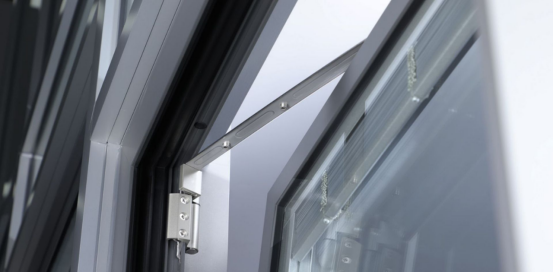
Concealed hinges preserve uninterrupted frame lines when an opening is closed. Exposed hinges create a different visual effect. Both require suitable load capacity, mounting space, and practical access for adjustment or replacement.
Finish selection matters wherever metal components encounter moisture, cleaning agents, or salt-laden air. Compare the tested coating and base material with the products actually being ordered. Do not apply one corrosion result to unrelated finishes.
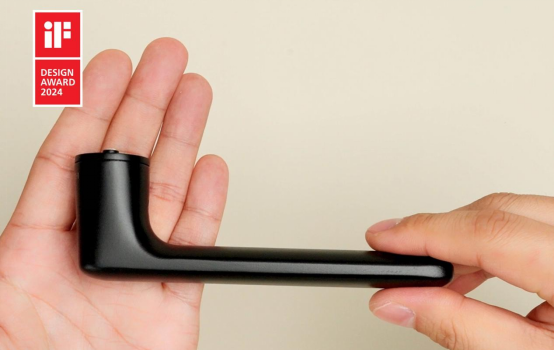
Test handles on a full-size sample. Check the grip area, finger clearance, return movement, and locking feedback. This simple review can expose usability issues that are difficult to judge from drawings or catalogue photographs.
How Do You Compare Production, Delivery, and Support?
Suppliers must reproduce approved configurations across construction phases. Production controls and change responsibilities matter alongside price.
What Should You Ask Window Hardware Manufacturers About Production?
Ask window hardware manufacturers about incoming-material inspection, assembly checks, and batch identification. Find out how defective components are traced and how replacement parts are matched to the original hardware schedule.
Before production starts, agree on who approves changes to profile drawings, finishes, and locking arrangements. A documented change process helps prevent installers on different floors or buildings from receiving incompatible versions of similar-looking hardware.
For large developments, request a delivery plan by building, phase, or opening type. Clear labels and part codes simplify site checks. Agree on a procedure for checking shortages against packing lists when shipments arrive.
What Service Terms Should a Commercial Door Hardware Supplier Offer?
A commercial door hardware supplier should support installation as well as procurement. Technical drawings, adjustment instructions, clear warranty conditions, and access to replacement parts all affect the work required after delivery.
Evaluate لوازم أجهزة الأبواب capabilities with these questions in mind:
- Technical support: Who provides technical drawings, installation guidance, and assistance with configuration questions?
- Delivery control: Who approves changes in quantities, dates, and component specifications?
- Warranty: Which defects are covered, and what documents are needed for a claim?
- Aftercare: How are matching hinges, handles, and locks identified after handover?
Ask every shortlisted supplier to quote the same approved configuration. Include required accessories and installation support in the comparison. Low prices offer little value if accessories are excluded.
Which CMECH Hardware Features Suit Different Projects?
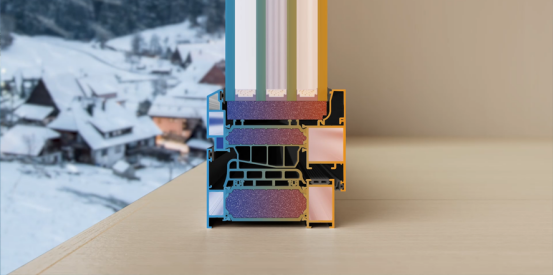
Product details matter when they solve a specific project problem. CMECH provides door and window hardware solutions for architectural applications. According to its official company information, CMECH operates a 70,000㎡ smart manufacturing facility and holds more than 400 global patents.
These company-level figuresprovide background on its manufacturing and R&D capabilities but should not be treated as evidence of individual product performance.
What Makes Hinged Door Hardware Practical for Installation?
The hinged-door range addresses weight, alignment, and architectural detailing.
- Load and adjustment: CMECH’s hinged-door hardware solution offers hinge load ratings of 120 kg, 140 kg, and 180 kg, with three-axis adjustment to help installers fine-tune door alignment.
- Handle and appearance: The hinged-door handle has been tested to 120,000 operating cycles. The concealed-hinge configuration and split-handle design also offer an option for projects seeking a less visually exposed hardware arrangement.
Confirm the finished door weight, fixing arrangement, and applicable hinge configuration before approving a sample.
When Does Concealed Tilt-and-Turn Hardware Make Sense?
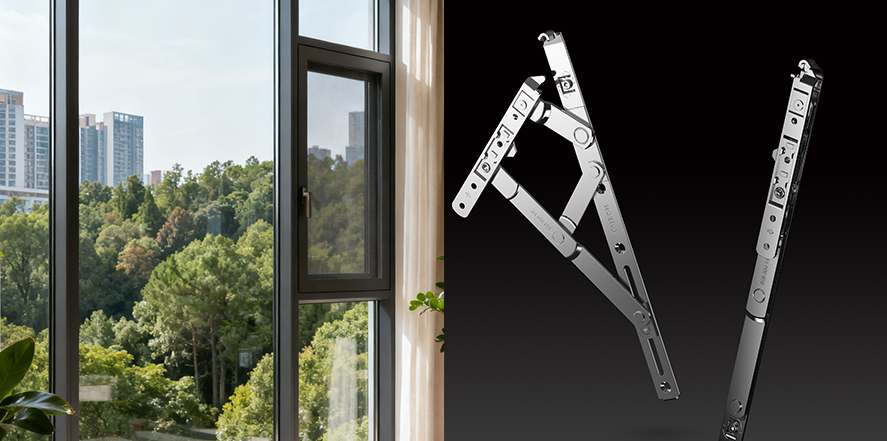
Concealed tilt-and-turn hardware suits clean window frames, subject to sash loading and access.
- Application range: CMECH’s concealed-hinge tilt-and-turn configuration supports sash widths of 490-1,200 mm and heights of 600-2,800 mm, with a maximum load-bearing capacity of 130 kg. The applicable hinge load rating should be selected according to the specific hardware arrangement.
- Component design: Hinges use thickened 304 stainless steel support arms. Concealed installation also reduces the need to coordinate visible hinge-cover colours with every frame finish.
Which Sliding Hardware Features Deserve Attention?
Sliding windows and doors have different handle requirements.
- Sliding windows: Roller options support 120–300 kg depending on configuration. The S Metro handle is tested to 25,000 cycles and includes a child safety lock and a ±3 mm self-adjusting hook.
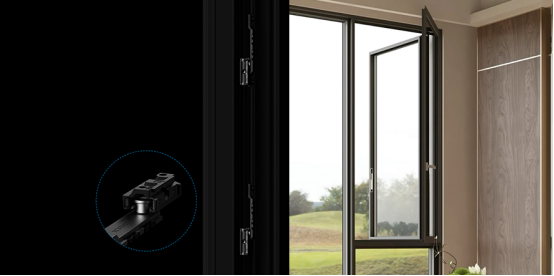
- Sliding doors: The Metro Handle combines an integrated handle and locking mechanism, using an up-and-down push action for unlocking. Its appearance is patented. Buyers should assess its compatibility with the intended door profile and avoid applying the S Metro handle’s 25,000-cycle test result to this separate product.
Conclusion: How Do You Make the Final Supplier Decision?
Choose a supplier after checking the opening schedule, testing a working sample, and reviewing model-specific performance evidence. Compare quotations against the same hardware specifications and required accessories, not just their unit prices.
Before production, confirm delivery milestones, technical responsibilities, warranty terms, and replacement-part procedures. Keep approved drawings and component references accessible to installation and maintenance teams throughout the project and after handover.
For developments seeking concealed hinges and minimalist handles, CMECH offers hinged-door, tilt-and-turn, and sliding hardware options. Match each configuration to the specified profiles, load requirements, and site conditions before ordering.

 English
 Arabic
 Chinese
 French
 Thai
 Vietnamese