
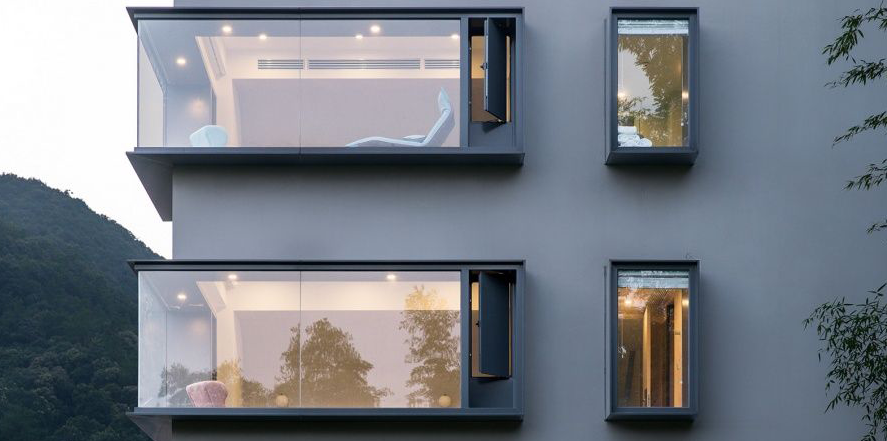


The visible difference between premium casement hardware and a conventional assembly is small until the sash closes under wind pressure. Then hinge position, locking travel, and gasket compression determine whether force spreads through the frame or concentrates at one corner. That mechanical difference affects air leakage, operating torque, service access, and the appearance of the facade over time.
في CMECH, we evaluate casement window hardware by checking how the hinge, drive, locking points, and profile work together during operation. Our engineering team looks at the hinge, spindle drive gearbox, locking points, fixing structure, and profile as one operating system. The useful question for B2B buyers is where each approach fits, not which label sounds premium.
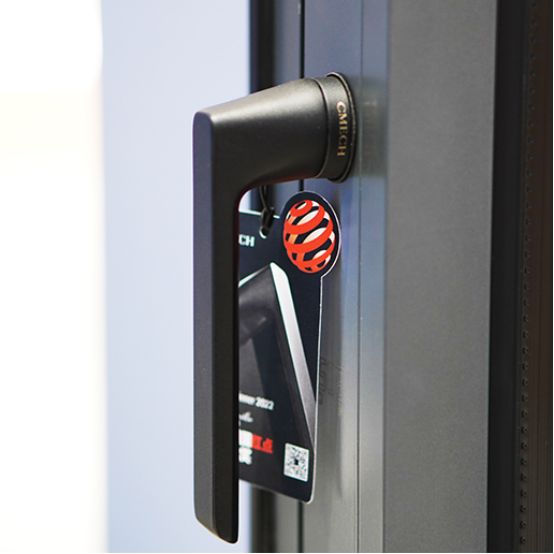
The Real Difference Is The Force Path
An outswing casement sash behaves like a lever supported along one side. Glass weight pulls downward, wind pushes across the panel, and the opening edge magnifies reaction at the hinge and fasteners. In a coordinated system, the hinge guides movement, the drive transmits handle torque, and locking points draw the sash toward the frame without asking one component to correct another.
Conventional market-standard hardware may use exposed hinges and base-mounted handles because those parts are familiar and accessible. That arrangement can suit a legacy profile designed around it. However, when the hinge axis, handle position, and keeper line are not controlled together, the sash can approach the frame unevenly, shifting load into fasteners and creating local gasket pressure.
The mechanical consequence is clear. A concealed or integrated casement opening system is preferable when the project needs controlled load transfer, a clean exterior line, and repeatable closure across units. An exposed conventional assembly remains suitable when existing profiles, service methods, and replacement geometry already depend on that architecture. Fit should follow the frame, not fashion in procurement.
How Does Sealing Compression Separate The Two Approaches?
Air-tightness comes from continuous gasket compression around the sash. The hinge establishes the approach path, the spindle drive converts rotation into locking travel, and the latch or locking point holds the final position. If one corner closes early, that area carries excessive compression while another section remains lightly engaged, creating a pressure-sensitive route for air and water.
ال ملحقات نوافذ جرارة configuration distributes closure through a spindle drive gearbox and locking elements rather than depending on one latch. The gearbox provides controlled travel, while locking points retain the sash against the frame after the handle stops. This makes contact sequence more important than handle firmness when comparing European casement fittings with conventional systems.
For procurement teams, the useful inspection is physical. Check that the sash approaches without rubbing, confirm keeper engagement, inspect gasket contact at corners, and then measure operating torque. A premium specification does not fix a distorted profile, but a coordinated drive and hinge arrangement makes uneven sealing easier to identify before the same error spreads across a project.
Selection Depends On The Project Boundary
High-end casement window hardware is not automatically the right answer for every opening. Selection depends on sash width, height, glazing mass, profile stiffness, reinforcement, keeper spacing, wind exposure, and how much adjustment access installers will have after the facade is closed. These variables determine whether the hardware can keep the intended force path inside the aluminum profile.
The published data gives a screening boundary: sash widths of 300–750 mm, heights of 300–1,800 mm, load-bearing up to 70 kg, spindle center distances of 11–35 mm, and T-drive lengths of 17–40 mm. These values do not replace checking the complete assembly.
Material and finish also influence the decision. A one-piece stainless steel handle structure resists wear differently from a traditional zinc-alloy handle, while 304 stainless steel in the friction hinge addresses the load-bearing interface. For exposed coastal or high-rise applications, choose the coordinated European-style system when corrosion, sealing, and repeatable adjustment matter together; choose conventional hardware when documented legacy compatibility is the controlling requirement.
The Outswing Casement Solution In A Premium Facade
Consider a resort tower where architects want a restrained exterior line, fabricators need a repeatable C-groove installation, and contractors must commission many outward-opening sashes before handover. The selected configuration should support the panel, control opening, retain the locking position, and leave technicians enough access to verify each seal line without dismantling finished interiors.
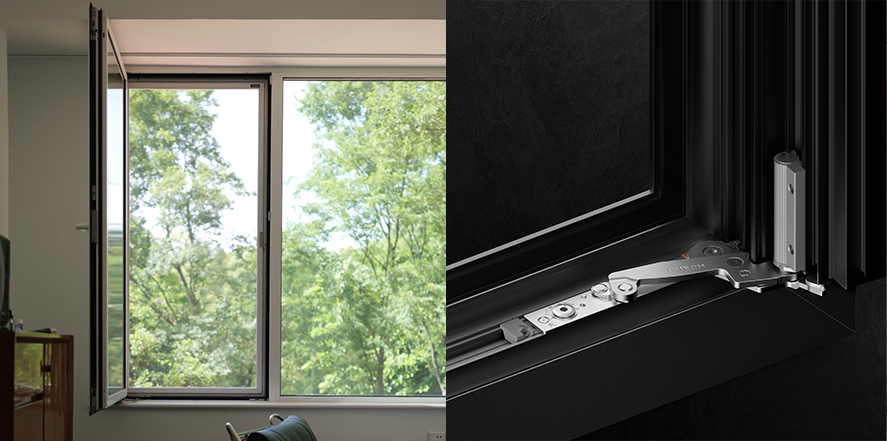
ال casement windows hardware solution combines Milan or Venice Series handles, a one-piece stainless steel handle structure, rolling spring-loaded steel-ball positioning, triangular fixation, a zinc-alloy bidirectional spindle drive gearbox, locking elements, and a 304 stainless steel C-groove friction hinge with a thickened 4 mm load-bearing arm. At CMECH, we apply this configuration where coordinated closure and visual integration are specified together.
The hinge supports up to 60 kilograms and includes a wind-resistant stop design tested against 1000N of destructive force, while the gearbox is tested to 30,000 open-close cycles. The engineering verdict is to select this coordinated solution for premium, wind-exposed, multi-unit facades after profile checks; conventional exposed hardware fits legacy frames or service programs whose existing geometry requires it in practice.
Comparison Ends With A Fit Decision
The coordinated configuration is the stronger choice for the resort facade when its concealed appearance, seal continuity, and repeatable commissioning are project priorities and the profile has been verified. Its components should be reviewed together, including their support limits and access for later adjustment.
Conventional exposed hardware can remain appropriate for an established opening designed around it. In either case, compare glazing weight, fixing positions, drainage, and lock engagement against the complete sash before choosing the arrangement that the installation team can verify and maintain.

 English
 Arabic
 Chinese
 French
 Thai
 Vietnamese