
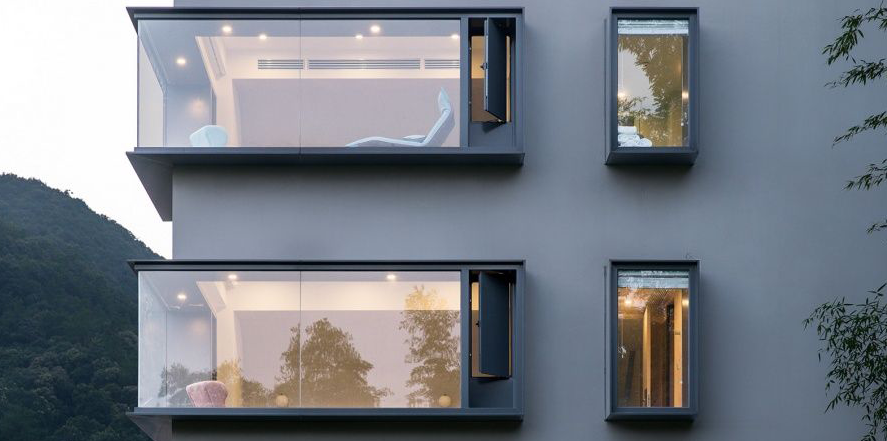


A casement window performs as one assembly, so its hardware should be specified the same way. A complete package is not simply a handle, hinge, drive, lock, and keeper placed on the same window; each component must suit the same sash size, profile, opening direction, load, and operating sequence.
For developers, contractors, designers, and window brands, the key question is not “Do we have every part?” but “Do these parts belong in the same configuration?” This configuration-based approach also shapes how CMECH develops door and window hardware solutions for different project requirements.
What Makes Casement Window Hardware Complete?
A complete hardware system is defined by how its components work together, not simply by whether every expected part is present. The first step is to identify the required components, then confirm that their dimensions, load ranges, interfaces, and operating sequence match the same window configuration.
Which Components Need to Work Together?
A complete casement window configuration includes every component needed to support, operate, lock, and position the sash. A typical specification includes:
- Handle: provides the user interface for opening and locking.
- Drive or spindle drive gearbox: transfers handle movement into the locking mechanism.
- Friction hinge or hinge set: supports the sash and controls movement.
- Lock points and keepers: secure the sash to the frame.
- Fixings and accessories: connect the main hardware to the profile.
The relationship between these parts matters more than the parts count. A handle, for instance, can look right on the sash and still be the wrong match for the drive. A hinge can fit the profile and still not take the sash weight.
Why Is a Complete Parts List Not Enough?
A complete system means the components are selected around the same window conditions. Compatibility depends on dimensions, load, profile geometry, fixing positions, and operating sequence.
The drive must move the intended lock points, those lock points must meet their keepers correctly, and the hinge must support the sash within its documented range.
How Do You Match a Complete Casement Window Hardware System?
A complete hardware system should be matched from the window configuration outward. The process starts with the sash, profile, opening method, and load conditions, then moves to component compatibility and final verification. The same principle applies whether the hardware is being specified for a new project or evaluated for replacement.
Which Window Specifications Should Be Defined First?
Start with the window itself, because the sash and profile determine what the hardware must accommodate. For teams specifying casement window hardware, technical compatibility comes before finish or handle styling.
The matching process should start with the window configuration rather than with individual hardware parts. Key specifications include the following:
| Check | Why It Matters |
| Opening direction | Confirms whether the hardware suits outswing, inswing, or another configuration |
| Sash width and height | Confirms the documented dimensional range |
| Sash weight | Determines load-bearing requirements |
| Profile and groove | Affects drives, hinges, keepers, and fixings |
| Drive dimensions | Confirms compatibility with the handle and locking mechanism |
| Locking layout | Confirms lock-point and keeper alignment |
These checks help prevent individual parts from being approved on appearance alone while their dimensions, load limits, or mechanical interfaces remain unverified.
How Should the Hardware Components Work Together?
Once the window conditions are defined, the next step is to check how the main components operate as one system. The hinge supports and guides the sash, the handle and drive transfer movement, and the lock points engage the keepers as the sash moves from open to fully locked.
A practical review asks:
- Does the hinge suit the sash size and load?
- Does the drive fit the profile and handle arrangement?
- Do the lock points travel to the intended positions?
- Do the keepers match the lock points and frame geometry?
- Can the sash be adjusted within the documented hardware range?
The aim is not simply to confirm that each component can be installed, but that the components belong to the same workable configuration and continue to interact correctly throughout the operating sequence.
A shared hardware specification also gives developers, contractors, designers, and window brands one technical reference. Developers can check consistency across multiple units, contractors can follow common installation and adjustment requirements, designers can verify visible hardware choices, and window brands can confirm compatibility with their profile systems.
What Should Be Verified Before Approval or Replacement?
For a new project, approval should come only after the selected hardware has been checked against the actual sash dimensions, weight, profile, groove, opening direction, drive arrangement, and locking layout. A complete parts list is not enough if one component falls outside its documented operating range.
The same compatibility principle applies when existing hardware needs attention. Casement window hardware replacement becomes relevant when inspection shows that the problem is limited to the hardware rather than the entire window.
Warning signs can include unusual resistance during handle operation, loose or visibly damaged hardware, lock points that no longer meet their keepers correctly, or changes in sash alignment and closing position. If repeated adjustment no longer restores normal operation, the existing configuration should be inspected before a replacement part is selected.
Similar appearance does not prove mechanical compatibility. Fixing positions, groove dimensions, drive geometry, hinge capacity, and locking travel can differ between components. Before replacement, confirm the window type and opening direction, then record the sash size and weight, profile and groove dimensions, hinge and drive details, and lock and keeper positions.
For larger developments, documenting these details in a hardware schedule also gives maintenance teams a consistent technical reference for future inspection, adjustment, and replacement.
How Does the CMECH Outswing Solution Apply This Matching Logic?
The CMECH Outswing Casement Window Hardware Solution shows how these matching principles can be applied within one documented configuration. It groups handles, drive parts, locking components, load-bearing parts, and accessories that still need to be checked against the actual window schedule before approval.
Its key elements include a base-free Milan Series handle or Venice Series handle, together with a bi-directional spindle drive gearbox and a C-groove friction hinge. Corresponding locking components and accessories complete the configuration.
CMECH also states that its wider hardware business is supported by more than 400 global patents and a 70,000 m² smart manufacturing facility. For project teams, however, the immediate concern is whether the selected configuration falls within the documented application range.
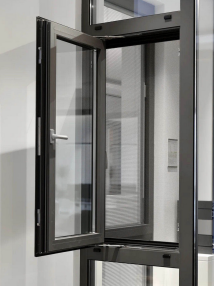
Project teams should compare the official applicable range with the actual sash:
| Official Specification | النطاق المطبق |
| Sash width | 300–750 mm |
| Sash height | 300–1,800 mm |
| حاملة الأحمال | ≤70 kg |
| T-drive length | 17, 20, 24, 28, 32, 36, 40 mm |
| Spindle drive gearbox center distance | 11, 13, 22, 25, 28, 30, 35 mm |
Component-specific limits also need to be read separately from the overall Solution specification. The C-groove friction hinge uses 304 stainless steel and a 4 mm load-bearing arm, supports up to 60 kg, and has passed 30,000 repeated operation tests. The bi-directional spindle drive gearbox is also listed as tested to 30,000 open-close cycles, with an anti-drift mechanism offering a maximum extension of 12.5 mm.
The 60 kg hinge figure and the ≤70 kg Solution figure are not interchangeable: the first refers to the friction hinge, while the second is the overall Solution load-bearing specification.
Handle selection also forms part of the same configuration. The Milan Series base-free handle provides a cleaner visible interface, but the visible design still needs to work with the drive, profile, locking, and load-bearing requirements. For teams comparing outswing casement window hardware, appearance and mechanical compatibility therefore belong within the same technical review.
Conclusion: What Makes a Well-Matched System?
A complete casement window hardware specification should make compatibility clear before installation. Project teams need to confirm that the opening type, sash dimensions, weight, profile, hinge, handle, drive, locks, keepers, and accessories belong within the same workable configuration.
The goal is to ensure that these parts operate together consistently, support the intended visible design, and leave a clear technical reference for future replacement or maintenance. For developers, contractors, designers, and window brands, that provides a practical basis for judging whether the hardware is truly complete and well matched.

 English
 Arabic
 Chinese
 French
 Thai
 Vietnamese