



Global procurement can treat a handle as a finishing item, yet a mismatched spindle, lock interface, or coating can compromise an entire window schedule. A reliable window handle must transmit torque, return cleanly, resist exposure, and fit the selected profile without forcing installers to redesign hardware during commissioning.
ที่ ซีเมค, we engineer handle series as working components within window hardware systems. We connect grip geometry, steel structure, roller action, spindle interfaces, and surface treatment so international buyers can compare performance rather than isolated prices. Our procurement view begins with mechanism, then checks compatibility, finish, documentation, and service support across regions.
Torque Transmission Defines Handle Reliability
When a user rotates a handle, torque travels through the grip, internal frame, spindle, and locking drive. The mechanism must convert that rotation into smooth movement without excessive play. A weak junction wastes motion as flex; a rough bearing adds resistance; a misaligned spindle transfers side load into the profile and eventually loosens the operating feel during repeated daily use.
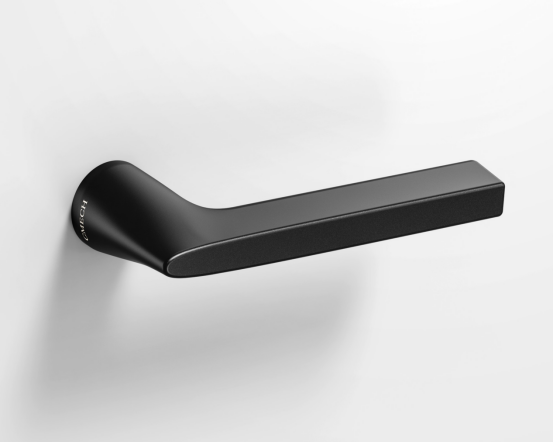
This load path explains why a slim exterior does not automatically mean a delicate part. The ROMA handle uses a high-hardness, one-piece cast-steel frame and a patented steel-ball roller mechanism. These structural features are designed to support stable operation and reduce handle wobble.
We evaluate the same principle across window hardware and door hardware, but window handles experience frequent short rotations rather than long lever swings. For global projects, spindle geometry, spring action, and lock compatibility are essential procurement fields. A visually similar handle can perform differently when its internal points do not match the selected European profile or locking system in service.
Which Specifications Should Global Buyers Verify?
The first check is interface compatibility: spindle length, square size, fixing centers, backset, and the lock case used by the fabricator. Next comes operating load, including expected cycles and sash resistance from seals. A buyer should also confirm whether the handle is intended for casement, awning, tilt-and-turn, or fly-screen applications before approving a mixed shipment for production and installation across profiles.
สำหรับ แฮนเดิลหน้าต่าง, we compare the handle body, roller or ball mechanism, finish, and application list as one package. The Roma series uses a base-free elongated form, high-hardness cast-steel inner frame, patented steel-ball roller mechanism, powder coating, and M-treatment for UV and salt-spray resistance. Those details connect appearance with measurable operating behavior during service and formal acceptance testing.
Consider a distributor preparing 4,000 handles for coastal apartment windows. If a corrosion-sensitive finish is mixed with a robust internal mechanism, replacement rates can rise despite correct spindle dimensions. In that scenario, a certified window handle should be selected by torque path, environmental finish, application fit, and traceable documentation rather than unit cost alone during tender review and final commercial approval.
Verification Prevents Problems Across International Shipments
We recommend a sample-first process. Install representative handles on the exact profile, lock case, and gasket arrangement, then record rotation effort, return action, spindle engagement, and final lock position. Repeat the test after exposure to moisture or salt-laden air when the project is coastal. A sample that fits visually but binds mechanically should not enter volume procurement without correction.
Packaging and identification also affect quality. Each carton should preserve model, finish, spindle, fixing, and application information so receiving teams can separate window hardware for different systems. Clear coding reduces the chance that an awning handle is installed on a tilt-and-turn sash, where operating sequence and locking points may differ during installation and commissioning across multiple lines.
An acceptance record can includes photographs, torque observations, coating checks, and installation notes. When an order crosses several fabricators, this evidence creates a common reference for warranty review and replacement planning. It also helps distinguish a defective handle from profile distortion, incorrect keeps, or seal friction that increases resistance before operation during service and inspection across regions and climates.
CMECH Handle Series Supports Certified Window Programs
For a coastal apartment program, CMECH can supply the Roma handle series alongside compatible window solutions. The window lock handle uses a slender base-free silhouette, high-hardness cast-steel one-piece inner frame, iron-triangle structure, and patented steel-ball roller mechanism. Powder coating and M-treatment add UV and salt-spray resistance, while the series supports casement, awning, inswing, outswing, and fly-screen applications across coordinated elevations.
The configuration suits procurement teams that need one visual language across several opening types without treating every handle as interchangeable. Its rounded grip edges support regular use, while the internal structure is intended to resist wobble and sagging. We would still confirm spindle, fixing, and lock-case dimensions on each profile before issuing a consolidated purchase order for production in each destination market.
For this scenario, the engineering verdict favors a documented series when climate exposure, multi-fabricator coordination, and consistent sightlines matter. A locally sourced window lock handle may fit a small interior package with one profile and low replacement risk, but global commercial schedules benefit from standardized interfaces, finish records, and an accountable product family across several sites and coordinated programs.
Procurement Discipline Protects Long Term Value
For the coastal apartment program, confirm the spindle length, lock-case interface, and fixing dimensions for each profile before consolidating the order. The same handle family can provide a consistent appearance across openings, but its compatibility still has to be checked at each interface.
Keep the approved samples, finish records, and interface drawings with the shipment documentation. Those records give distributors and fabricators a reference for incoming inspection and future replacement without assuming that visually similar handles are interchangeable.

 English
 Arabic
 Chinese
 French
 Thai
 Vietnamese