



At a beachfront resort, a patio door must move a heavy glass panel while resisting wind-driven rain, salt air, and constant guest use. The visible handle is only the command point. Behind it, lifting geometry, rollers, locking parts, and seals must share load and timing, or smooth operation can quickly become leakage, noise, and service disruption for operators and guests.
A lift-and-slide door handles movement and sealing in separate stages: the panel rises for travel and lowers onto its seals when closed. ซีเมค coordinates the handle, drive, rollers, and locking parts around that sequence, giving resort teams a concrete basis for evaluating guest use and coastal exposure.
Weather Resistance Begins With The Lift Path
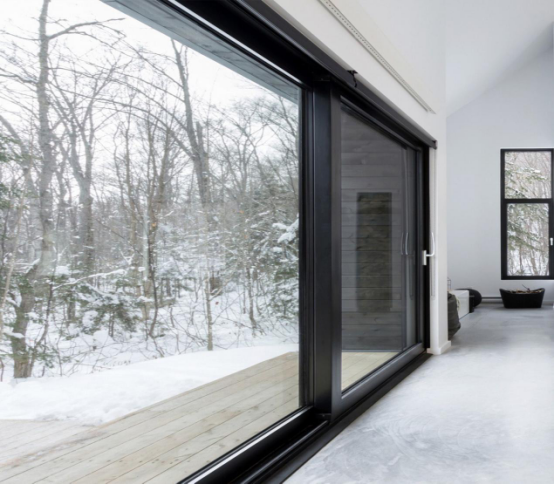
A lift-and-slide panel seals effectively when its weight is carried during travel and released only at the opening command. Rotating the handle lifts the sash before rollers move it, reducing seal drag. Returning the handle lowers the panel into the frame, so compression resumes around the perimeter. The engineering consequence is lower wear during travel and more stable weather contact when closed.
The load path starts at the handle, passes through the espagnolette and lifting mechanism, then reaches roller carriages and the frame. If one link flexes or carries too little capacity, the panel can settle unevenly. That changes gasket pressure, creates local air paths, and forces operators to use excessive hand effort, especially after repeated guest cycles and cleaning.
For a resort lobby opening, we would define panel mass, width, height, wind exposure, and expected operating frequency before selecting lift and slide door hardware. A high-capacity system may move a large panel, but the surrounding profile, anchors, glazing, and drainage must support the same reactions. Door hardware works as weather protection only when its load path is complete.
How Does Gear And Roller Action Protect The Seal?
The critical action is sequential: handle rotation releases or applies lifting force, then the gear-and-roller mechanism carries the raised sash across the track. Rubber-coated rollers support quieter travel and reduce surface damage. When the handle returns, the sash lowers into its weather position. This physical timing keeps movement and sealing from fighting each other during operation.
On a resort specification, อุปกรณ์บานเลื่อนยก should be checked against panel size and load, not selected from appearance. The convention configuration covers sash widths from 720 to 3,300 mm, heights from 1,800 to 2,700 mm, and load-bearing options from 200 to 450 kg. Those numbers define practical fit boundaries for large openings and replacement planning.
We also review handle geometry because the product lists a 180° rotation for lifting and lowering control. The handle centerline is positioned 955 mm from the roller carriage attachment surface and 37.5 mm from the espagnolette surface. Consistent interfaces help installers preserve movement timing, while mismatched dimensions can leave a panel difficult to lift or close during service and emergency response.
Coastal Specifications Need Materials And Drainage Coordination
Salt air changes the maintenance problem by accelerating corrosion at exposed surfaces and fasteners. We therefore examine finish, material compatibility, drainage paths, and access for cleaning together. Effective drainage depends on the frame and sill design, while the hardware supports proper sash positioning and locking.
The handle is precision-cast from industrial-grade aluminum alloy and includes a compensation mechanism intended to remove play. The espagnolette uses a gas spring to absorb rebound and assist controlled movement. These details influence user feel, but they also have an engineering consequence: reduced shock at the command point can help protect locking engagement over repeated resort operation, cleaning, and seasonal inspection.
A coastal resort should test the complete door after glazing and hardware installation. Observe lift effort, roller travel, lock engagement, and seal contact under the specified panel weight. Inspectors should repeat the sequence after exposure trials or scheduled cleaning. Window hardware may share similar corrosion concerns, yet patio doors carry larger moving masses and deserve their own acceptance criteria and service records.
The CMECH Convention Configuration Fits Resort Openings
For a beachfront hotel terrace, the sliding patio door hardware solution from CMECH combines an aluminum-alloy handle, gas-spring-assisted espagnolette, patented gear-and-roller lifting mechanism, rubber-coated lifting rollers, drive parts, lock parts, and load-bearing accessories. Flexible roller configurations match door weight, while the high-strength structure supports large glazed panels requiring controlled lifting and lowering during frequent guest traffic and scheduled coastal maintenance.
The configuration suits resort openings where designers want broad views without making guests drag a sealed panel across its gasket. We would align the 200–450 kg load class with sash mass, then confirm the 720–3,300 mm width and 1,800–2,700 mm height range against the profile schedule. Weather performance still depends on glazing, seals, drainage, and anchorage under local exposure conditions.
Our engineering verdict is clear: choose an integrated lift-and-slide architecture for large, frequently used resort openings; reserve simpler sliding patio door hardware for lighter panels, sheltered exposures, and projects that can accept more frequent adjustment. The integrated route costs more design attention, but it gives the operator a more traceable relationship between movement and sealing.
Weatherproof Performance Has Practical Limits
Commission the terrace opening with its actual glazing in place. Measure operating effort, inspect the lowered seal line, and confirm that water can drain away; a smooth-moving panel alone does not demonstrate that the closed door meets the project’s weather requirements.
For long-term resort operation, preserve the load class, adjustment settings, and cleaning and inspection instructions. Following storms or major maintenance, repeat the movement and seal checks so corrosion, drainage problems, or a change in alignment can be identified before guests encounter them.
 English
 Arabic
 Chinese
 French
 Thai
 Vietnamese