



When a distributor replaces hundreds of outward-opening sashes, the order is not a box of handles; it is a load path delivered in repeatable pieces. Casement window hardware must transfer sash weight, resist wind-driven movement, and preserve seal compression while installers match profiles across multiple projects without stopping the site schedule.
ที่ ซีเมค, we engineer hardware systems for buyers coordinating specifications, batch consistency, and field installation. Our global R&D and production base covers 70,000 m², with annual output reaching 60 million units, so procurement teams can evaluate replacement casement window hardware as a controlled system rather than a collection of unrelated parts.
The Load Path Defines Replacement Reliability
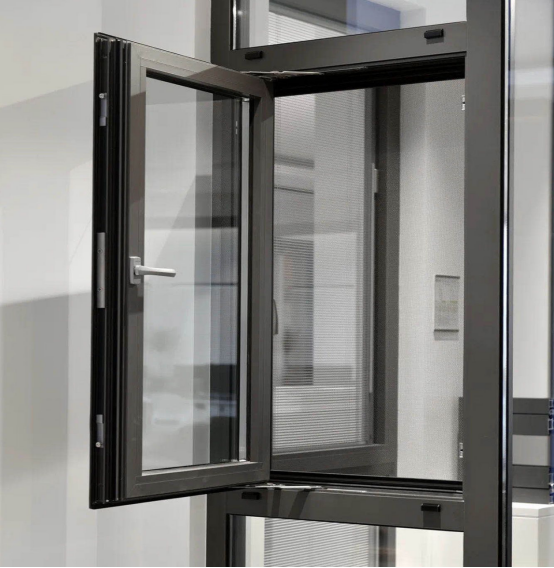
An outward-opening sash loads the lower friction hinge first, then transfers force through its load-bearing arm into the frame. The handle does not carry the sash by itself. Its spindle turns the drive gearbox, the gearbox moves locking elements, and those elements keep the closing edge aligned while the hinge resists gravity, wind, and repeated opening forces.
That sequence matters in procurement because a small weakness repeats on every unit. A loose handle fixing can reduce spindle engagement; reduced engagement leaves locking points short of intended travel; uneven travel changes gasket compression. This causes more adjustment at installation, slower commissioning, and a chance that replacement casement window hardware will be blamed for a profile or fixing error.
For a distributor, the useful specification is therefore the complete force route, not a decorative handle description. Review hinge arm thickness, gearbox drive geometry, locking-element compatibility, and the sash envelope together. This differs from door hardware, where a leaf often hangs on concentrated hinges; a casement system distributes movement along a window perimeter and shares stress across several interfaces.
Which Procurement Variables Control Batch Consistency?
We start with the sash envelope because dimensions set the mechanical boundary. Our specified outswing configuration accommodates sash widths of 300–750 mm and sash heights of 300–1,800 mm, with a stated application load limit of 70 kg. Those limits help buyers reject mismatched casement window hardware before it reaches a fabrication line and creates avoidable rework.
Next, we check the interface variables that determine whether one batch behaves like the next: C-groove compatibility, spindle-drive center distance, T-drive length, and available anti-drift adjustment. The zinc-alloy bidirectional gearbox provides up to 12.5 mm of anti-drift correction, allowing installers to recover alignment after profile tolerances or modest site movement during commissioning without replacing the complete operating set onsite.
The final variable is evidence. A gearbox tested for 30,000 open-close cycles gives a procurement team a repeatable reference, while stainless-steel hinge construction and a documented finish support corrosion planning. We read these indicators together with window hardware drawings, packaging control, and documented certification records; no single number substitutes for a verified assembly fit across every ordered opening in production.
Verification Connects Certificates With Physical Behavior
Before approving a bulk order, we verify the applicable certification documents and confirm that their scope matches the hardware configuration and project requirements. For an outward casement, wind resistance depends on how the hinge stop, locking elements, and frame interface share force. A test result becomes meaningful when the supplied configuration matches the tested sash dimensions, profile groove, fixing method, and seal arrangement for that project class.
Our engineering review treats the ฮาร์ดแวร์หน้าต่างบานกระทุ้ง assembly as a chain of interfaces. We compare drawings, spindle positions, hinge clearances, and gasket contact before approving a bulk order. If one component is substituted without checking neighboring geometry, the handle may still turn while the locking perimeter fails to compress evenly and air leakage rises.
For buyers managing fabricators, this interface discipline reduces hidden variation. The same friction-hinge layout can produce different results when screws, profile walls, or seal sections change. An acceptance file should connect material, surface treatment, cycle evidence, and installation dimensions. That record lets a distributor explain performance in mechanical terms instead of relying on a marketing label or an isolated certificate alone.
The Outswing Casement Hardware Solution Fits Multi–Site Replacement
For a multi-site education retrofit, we specify an outswing hardware solution for replacement casement windows: a Milan or Venice Series stainless-steel handle, spring-loaded steel-ball positioning, triangular fixation, zinc-alloy bidirectional spindle gearbox, locking elements, and 304 stainless-steel C-groove friction hinge. Its C-groove friction hinge features a 4 mm thickened load-bearing arm and supports sash loads of up to 60 kg. The complete hardware configuration has a stated application load limit of 70 kg, subject to the applicable system requirements.
The configuration suits fabricators who need a common outward-opening architecture across classroom and administration windows. The gearbox is tested to 30,000 cycles, and its 12.5 mm anti-drift mechanism helps correct sash position during commissioning. In a coastal school district, stainless steel at the hinge and a controlled surface finish give the purchasing team a clearer maintenance assumption than mixed, unverified parts across each ordered opening.
We present this as a system choice, not a universal substitute. The right selection matches profile groove, sash dimensions, load, drainage, and installer tooling across the whole order. That boundary protects the specification from being stretched to openings outside the tested envelope and keeps replacement planning auditable for purchasing teams.
A Controlled Specification Makes Bulk Replacement Predictable
A repeatable order starts with a window schedule that identifies the profiles, sash dimensions, load limits, and component configuration used at each site. Where those conditions match, a coordinated casement package gives purchasing and installation teams a common reference for receiving checks and commissioning.
The fabricator remains responsible for checking screw engagement, drainage, and actual opening conditions. Retain the approved parts list and adjustment records with each delivery so any exception can be traced to a specific window rather than repeated throughout the procurement program.
 English
 Arabic
 Chinese
 French
 Thai
 Vietnamese