
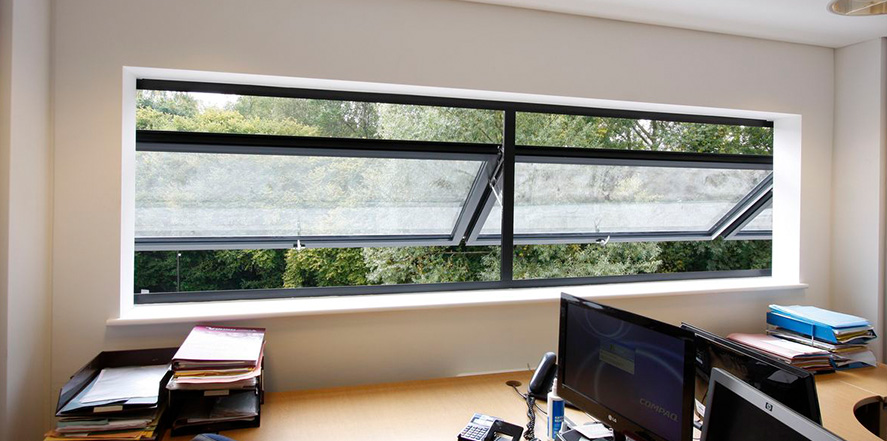


An awning sash closes in the workshop but needs a firm push to lock once installed. Replacing the handle might seem like the quickest answer. Yet if one corner has dropped, the handle may be working correctly while the locking point misses its keeper.
Common awning window problems include stiff movement, sagging, incomplete locking, draughts and water entry. The repair depends on the failing interface. Inspect the sash support, operating drive, locking points, gasket, glazing and installation separately before ordering a component.
| Reported symptom | First check | What the finding may lead to |
| Difficult to open or close | Hinge, stay, drive and clearance through the opening path | Cleaning, permitted adjustment or a matched replacement |
| Sash rubs or sits low | Hinge support, fixings, finished sash weight and frame geometry | Alignment work or support-system review |
| Handle turns but lock misses | Sash position, drive, locking points and keepers | Correction of the actual engagement fault |
| Draught around closed sash | Reveal, gasket and contact at each locking point | Alignment or gasket work |
| Water appears at the window | Sash seal, glazing, drainage and installation joint | A repair based on the traced water path |
Identify the awning system before removing parts
An awning window is top-hung and opens outward from its lower edge. That description establishes the opening mode, but not its hinge groove, stay length, drive connection or fixing pattern. Record the window’s profile code and revision, finished sash size and weight, and the references stamped on its components where available.
CMECH’s Outswing Awning Window Hardware Solution is available in standard and curtain-wall configurations for sash widths and heights of 400–2,000 mm, with a load-bearing limit of 130 kg. A limiting stay and friction hinge manage the sash as it opens, while a coordinated multipoint lock engages it when closed. Fabricators should match the configuration to the finished sash weight and profile, then check the stay, hinge and locking positions against the installation drawings.
Photograph the hinge, stay, handle drive, locking points, keepers and gasket before changing a setting. If several windows show the same symptom, record whether they share a profile, hardware batch or fabrication detail. That pattern may be more useful than a photograph of one damaged handle.
A stiff sash needs a movement check
Operate the unlocked sash slowly and note when resistance starts. A sash that is stiff throughout its travel calls for a different inspection from one that catches only near closure. Watch both hinge sides and the stay while checking for debris, rubbing, loose fixings or uneven movement.
CMECH’s awning solution offers friction hinges in C-groove and K-groove versions and limiting stays in several sizes. Its page reports more than 35,000 opening-and-closing cycles for the friction hinge. That figure relates to the named component; it does not diagnose an installed fault or predict the life of the complete window.
Clean an obstruction where appropriate and follow the selected product’s maintenance instructions for any lubrication. If a hinge arm, pivot or fixing is damaged, compare the replacement’s groove version, dimensions and mounting points with the original configuration. A hinge that looks similar may locate the sash differently.
A dropped sash affects the lock and the seal
A low corner can produce three complaints at once: rubbing during movement, a lock that needs force and a draught at the closed edge. Compare the reveal around the sash while closed and partly open. Then inspect the hinge arms, fasteners and supporting profile material for movement or distortion.
Review the finished sash mass, including glazing, against the selected hardware arrangement. Where adjustment is permitted, use the manufacturer’s drawing and record the original position before changing it. Do not use adjustment to disguise a loose fixing or an unsuitable support.
After correcting the identified cause, operate the window through its full opening path. Confirm that the sash is stable, the reveal is consistent and the hardware reaches its closed position without being lifted by hand.
A handle that turns without locking may be following a misaligned sash
When the sash reaches the frame but will not lock, identify the first point that fails to engage. Does one locking point miss its keeper, or does the entire drive stop short? Does lifting the lower sash edge change the result? Those observations help distinguish an alignment fault from a damaged drive.
CMECH’s Outswing Awning Window Hardware Solution uses a coordinated multipoint locking arrangement intended to support weather sealing and sash stability. For that arrangement to work, the locking points must reach their keepers and the sash must contact the specified gasket consistently.
Check the assembled frame and sash sections together. A correctly functioning handle cannot compensate for a keeper in the wrong position, an uneven sash or an incompatible gasket. Avoid forcing the handle, since this may damage the drive without resolving the original fault.
Trace a draught or leak before changing hardware
A draught at the closed sash may indicate poor gasket contact, damaged weatherstripping or a sash that is not reaching its intended position. Air can also pass through the joint between the installed window frame and the surrounding construction. Note where the air is felt before adjusting the locking points.
Water is equally easy to misdiagnose. Examine the first visible staining and inspect the gasket line, glazing rebate, intended drainage route and frame-to-wall joint. Water at the sill does not necessarily enter at the sill. Sealing a drainage opening could make an existing problem worse.
Mist between panes points to the glazing unit rather than the awning hinge. Surface condensation has a different cause again. Record the location of the moisture clearly so a glazing issue does not become an unnecessary hardware order.
If a project requires documented air or water performance after a recurring fault, agree the assessment and test scope for the specified finished window. A component cycle figure or a description of multipoint locking is not a result for the installed assembly.
Turn the diagnosis into a repeatable repair specification
For a one-off repair, record the component replaced, the approved adjustment and the result of the full operating check. For a production batch or multiple installed units, the record needs more detail: profile and drawing revisions, sash dimensions and weight, hardware codes, fixing positions and photographs of the fault.
Fit an agreed sample before issuing replacement parts across the batch. Check that it opens freely, remains supported, closes evenly and engages every intended locking point. If the same symptom remains, return to the assembly diagnosis rather than repeating the part change.
This approach also helps purchasing. An order for “awning hinges” is too broad when the selected system has different groove versions and sizes. The component reference and installation drawing should travel with the order and receiving inspection record.
Frequently asked questions
What are common solutions for window issues and problems?
For an awning window, the solution may be cleaning an obstruction, correcting a permitted adjustment, replacing a confirmed faulty hinge, stay, drive, lock or gasket, clearing a designed drainage route, or addressing a glazing or installation defect. Identify the fault before selecting the repair.
Why does an awning window close but fail to lock?
The sash may be out of alignment, a locking point may miss its keeper, or the drive may not complete its travel. Observe the closing sequence and compare the installed positions with the selected system drawing.
Will replacing the friction hinge stop a leak?
It can help if a faulty hinge prevents the sash from reaching its intended sealed position. A leak may also come from glazing, drainage or the frame-to-wall joint. Trace the entry path before specifying a hinge.
Does the 35,000-cycle figure apply to the complete window?
No. CMECH’s friction hinge was tested through more than 35,000 opening-and-closing cycles. This is a test result, not a limit at which the hinge stops working. It also does not establish the service life or air and water performance of the finished window.
Review the faulty configuration with CMECH
When the diagnosis points to an awning hardware component, send the profile drawing, finished sash dimensions and weight, installed component references and photographs of the fault to ซีเมค. Request the drawing for the relevant outswing awning configuration before ordering replacements for a wider batch.

 English
 Arabic
 Chinese
 French
 Thai
 Vietnamese