



Imagine a new residential tower half a year after handover. One resident twists their entry door handle and notices it’s loose, though the door still functions.
Further down the corridor, maintenance staff rework a hinge; rain makes the door scrape against its frame every time it’s opened.
Neither issue stems from the door itself. Both trace back to the swing-door hardware behind it—the hinges, handles, and locks that endure daily wear long after design approval.
Choosing swing door hardware seems easy, yet poor fittings lead to rework. Hardware determines long-term smooth use.This guide outlines what to check before specifying, and where hardware differences actually matter on site.
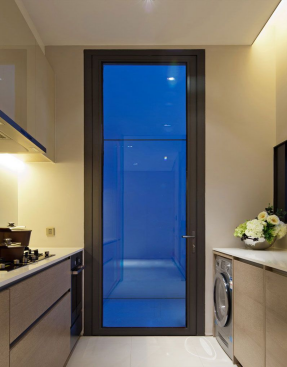
What Is Swing Door Hardware and Why Does the Hardware Matter More Than the Door?
Swing door hardware is the mechanical assembly — hinges, handles, locks, and connecting parts — that lets a hinged door open, close, and lock securely.
The door panel gets most of the attention during design. However, the hardware is what we actually touch every single day. A door slab rarely fails on its own, but poorly matched hardware fails often, because it carries the physical load.
What Problems Show Up When Swing Door Hardware Is Poorly Specified?
Undersized or poorly adjusted hardware creates predictable, expensive problems on a job site. Because these issues tend to surface after handover, they cost more to fix than they would have cost to prevent at the specification stage.
- Handle sag — the handle drops over time, making the door harder to lock and unlock.
- Hinge misalignment — the sash drags on the frame, causing draughts and noise.
- Weak locking engagement — multi-point locks that don’t seat properly compromise security
- Installation delays — hardware that resists fine adjustment slows down every door on the project.
What Key Criteria Should You Evaluate for Hinged Door Hardware?
Selecting suitable hinged door hardware hinges on three core evaluation criteria: loadcapacity, adjustability, and locking security.
Choosing hinged door hardware comes down to matching the three factors to your project. Skipping any one of these tends to surface as a maintenance issue later, so it’s worth reviewing all three before finalizing a supplier.
What Load Capacity Do I Need for My Door Sash?
When selecting hinges, refer to your door’s real sash weight and dimensions. Hinges that cannot match the load requirement are likely to cause sagging or earlystage performance issues.
| Hinge Capacity | Typical Use Case |
| 120 kg | Standard residential swing doors |
| 140 kg | Mid-size commercial or heavier residential doors |
| 180 kg | Large, heavy-duty, or high-traffic doors |
For example, a hotel corridor door that sees heavy daily traffic needs the 180kg-rated hinge, while a standard apartment entry door is well matched to the 120kg option. As a result, matching capacity upfront avoids replacing hinges mid-project.
Should I Choose a One-Piece Handle or a Split Handle Solution?
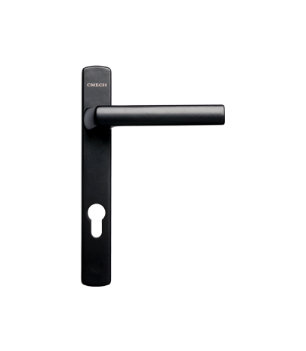
A split-handle solution separates the handle from the lock body; a one-piece design integrates them into a single unit. While the one-piece design is common and often the first option buyers see, it’s not the only choice.
This difference matters for two reasons. First, split handles create a cleaner, more minimal appearance on the door, as the lock body is recessed rather than protruding. Second, splitstyle hardware enables separate servicing and component replacement, which can simplify longterm maintenance for facility teams.
What Locking-Security Features Matter for Hinged-Door Hardware Specification?
Lock‑related performance for a hinged door includes many aspects, with two key areas for practical evaluation: its ability to resist applied force, and the long‑term durability of its components.
If you select hardware that does not meet your project requirements, security weaknesses may show up — often when someone tries to force the door open, or after years of constant wear.
Force resistance is the first thing to check. Relevant European standards set standard test methods for forcedentry protection, but they do not set one single required force value for all products.
When comparing hardware options, specifiers should use official labtested performance data as a clear reference, instead of trusting broad security statements from suppliers.
Component durability is the second key factor. Multipoint locks with stainlesssteel faceplates resist scratches and corrosion where the lock meets the frame, while zincalloy housings shield inner lock parts from damage.
These two materials handle different types of stress: outer surface exposure and inner mechanical load. Both should be considered together and cannot be used in place of one another.
How Does CMECH’s Hinged Door Hardware Solve These Problems?
CMECH is a global one‑stop window and door hardware manufacturer with nearly 30 years of experience. Its 铰链门五金 solution is built around the split-handle and concealed-hinge approach described above.
The handle features a cam‑roller mechanism with four‑spring auto‑return, a design that completely eliminates handle sag across its full test‑life cycle.
The slider is made from imported highwearresistant plastic to help minimize friction and wobble. Labtested by CMECH, the handle achieves 120,000 openclose cycles and 2,500N of antiforcedentry strength.
The CMECH swing-door hinge range covers load ratings from 120 kg to 180 kg. The concealed hinge is rated at 120 kg, while the flush-fit hinge is available in 140 kg and 180 kg for heavier doors. Each version includes a built-in anti-sag safety feature and anti-corrosion surface treatment.
The multi-point lock pairs a stainless steel faceplate with a zinc alloy housing for scratch resistance and durability, while a bi-directional shoot bolt connector uses a groove-penetration design with a precision steel ball to reduce play and extend service life.
Combined, these construction features support reliable door operation and locking performance for highuse residential and commercial projects.
How Do Concealed Hinges Compare on Adjustability and Installation Speed?
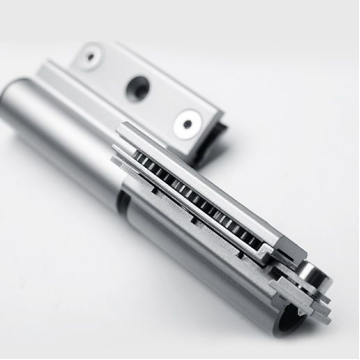
Three-axis adjustment on a concealed hinge lets an installer correct height, depth, and lateral alignment. This directly affects two things contractors and project owners track closely: how long installation takes and how many callbacks follow handover.
Why Does Three-Axis Adjustment Matter On-Site?
A hinge that only adjusts along one or two axes forces installers to shim, re-hang, or partially disassemble the door to fix alignment problems.
Because CMECH’s hinge adjusts across all three axes, on-site teams can fine-tune sealing and alignment directly at the frame.
| Adjustment Type | What It Corrects | Site Impact |
| Vertical | Sash sitting too high or low | Prevents dragging on the frame |
| Horizontal | Gap consistency along the hinge side | Improves sealing and draught resistance |
| Depth | Door sitting too far in or out of the frame | Ensures the lock engages the strike cleanly |
For a project owner managing dozens or hundreds of doors, this adjustability compounds. Therefore, fewer return visits for hinge correction translate into lower labor cost across the full project timeline.
What Should Developers, Contractors, and Designers Each Prioritize?
Each stakeholder on a project cares about a different part of the same hardware solution, so it helps to separate priorities by role before comparing suppliers.
- Developers — durability and long-term maintenance cost across the building’s lifespan, plus consistent supply for repeat projects
- Contractors and installers — installation speed, since faster hinge adjustment and handle fitting reduce labor hours per door
- Designers and door/window brands — the visual line of the hardware, where a split handle avoids the bulkier look of a combined lock-and-handle unit
Reviewing CMECH’s project portfolio shows this hardware applied across hotels, residential towers, and hospitality developments in multiple regions, which gives each stakeholder practical case examples.
Conclusion — How Do You Move From Choosing to Specifying?
Choosing the right swing door hardware means checking load capacity, adjustability, and locking security against your project’s actual door dimensions and use case — not just comparing price sheets.
Once those three factors are confirmed, the next step is requesting spec sheets or samples from your supplier to verify sash range, hinge capacity, and lock body centerline against your door schedule.
For a project spanning many doors, small differences in adjustability and installation time add up quickly across the full build. Getting the hardware right at the specification stage is what keeps those doors performing years after handover.


 English
 Arabic
 Chinese
 French
 Thai
 Vietnamese