
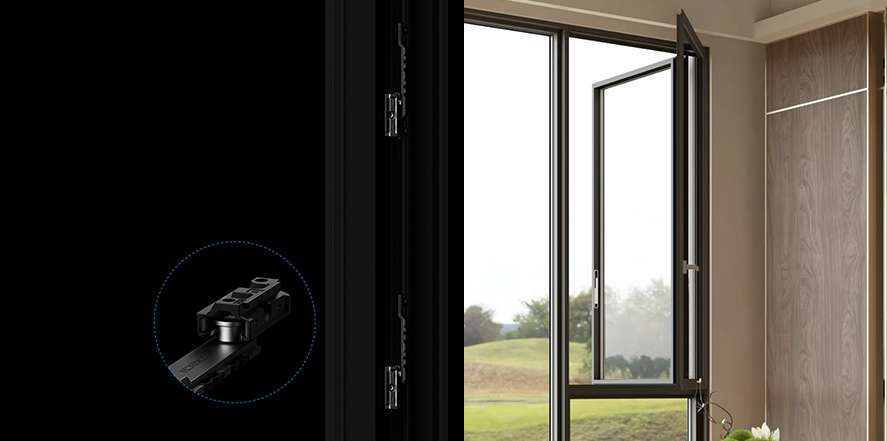


Window security and weather performance are often considered separately, yet both depend on the same critical detail: how securely and evenly the sash is held against the frame. A well-designed multipoint locking system can make forced separation more difficult while helping the gaskets maintain consistent contact around the window.
This article examines how multipoint locking affects security, window sealing performance, air leakage, water resistance and wind pressure. It also explains the roles of keeps, profiles, gaskets, alignment and installation and what complete-window testing should demonstrate before fabricators or specifiers rely on a performance claim.
How does a multipoint locking system work?
When the handle is turned, a connected mechanism moves several locking components into matching keeps around the frame. Depending on the design, these components may include rollers or cams that draw the sash towards the gaskets, as well as hooks or bolts that help resist the sash being forced away from the frame.
For this window security hardware to work effectively, the locking components must suit the sash and profile, while the keeps require secure fixings and accurate alignment. A properly designed multipoint locking system should hold the sash evenly and operate smoothly without requiring the user to force the handle.
Are multipoint locks more secure than single-point locks?
In general, yes, provided the two systems are of comparable quality and are correctly installed. A multipoint locking system secures the sash to the frame at several positions rather than relying on one central latch. This can make it more difficult to force open a corner or concentrate pressure on one vulnerable area.
However, the security of a window depends on more than its lock. The performance of the complete window security hardware arrangement also depends on the keeps, fasteners, reinforcement, profile, glazing retention, hinges and installation. Simply adding more locking points does not create a recognised security rating, and a poorly aligned multipoint system may perform worse than a well-made window with a simpler lock.
When comparing systems, request evidence showing what was tested, which components were included and whether the result applies to the lock alone or the complete window. The testing should also be relevant to the destination market, as evidence produced under one regional standard may not meet another market’s requirements.
How does multipoint locking support a tighter seal?
Correctly positioned points draw the sash towards the frame at several locations. This can spread pressure along the gasket instead of concentrating it beside one latch, helping reduce small gaps at corners and along long edges.
This is the link between the mechanism and window sealing performance. The lock supports gasket contact; it does not create airtightness alone. Gasket material, corner joints, drainage, sash stiffness, hinge alignment and fabrication tolerances still have to work together.
Compression must be balanced. Too little may leave a leakage path; too much can make the handle stiff, deform the gasket or increase wear. Good weatherproof window hardware therefore provides a defined adjustment range and clear setting instructions.
What does this mean for rain and wind?
Wind-driven rain finds weak points where the sash, frame or gasket loses contact. Multiple points can limit local movement and maintain a more continuous seal under pressure, but they cannot replace drainage, profile strength or correct perimeter installation.
Weatherproof window hardware should therefore be assessed within a representative complete window. Request specimen size, opening direction, pressures, duration, glazing and failure criteria. Confirm whether the evidence came from a type test, production sample, project mock-up or field test. These details make window sealing performance claims comparable and prevent a component feature from being mistaken for a whole-window rating.
Multipoint versus single-point locking Comparison
| Criterion | Single-point locking | Multipoint locking | Evidence to verify |
| Sash restraint | Concentrated near one latch | Distributed at several positions | Lock layout and keep locations |
| 安全 | One primary engagement area | Several points resist sash separation | Component grade and whole-window test |
| Gasket compression | May vary along long edges | Can spread pressure around more of the sash | Adjustment range and air-leakage result |
| Rain resistance | Depends heavily on sash stiffness and seals | Can support more consistent gasket contact | Complete-window water test |
| Wind response | Edges may move if restraint is insufficient | Multiple points can limit edge movement | Structural and wind classification |
| Fabrication | Simpler routing and adjustment | Requires coordinated machining and alignment | Drawings, tolerances and installation process |
| Maintenance | Fewer moving parts | More linked components and keeps | Cycle test, lubrication and replacement guidance |
The comparison shows why “more points” is not a complete specification. Choose the arrangement that delivers the required restraint and compression while remaining compatible with the profile, sash and maintenance plan.
What should fabricators verify before specification?
Specify weatherproof window hardware from finished-window requirements. For reliable window sealing performance and operation, identify:
- Opening type, sash dimensions, calculated weight, glazing and profile groove.
- Lock type, backset, drive length, point locations, keeps and fasteners.
- Gasket design, nominal compression and permitted adjustment range.
- Cycle, corrosion, operating-force and security evidence for named components.
- Air, water and wind evidence for a representative complete window.
- Installation, adjustment, inspection, lubrication and replacement guidance.
This information makes faults easier to diagnose. If a window leaks or the handle becomes stiff, the team can separate lock engagement from gasket damage, blocked drainage, profile movement or installation leakage.
CMECH multipoint locking configurations
CMECH’s Inswing Casement Window Hardware Solution accommodates sash widths of 300–1,600 mm and heights of 400–2,400 mm, with a load-bearing capacity of up to 100 kg. Its hexagon spindle drive gearbox has been tested through more than 30,000 opening-and-closing cycles, supporting smooth, reliable operation across the stated application range.
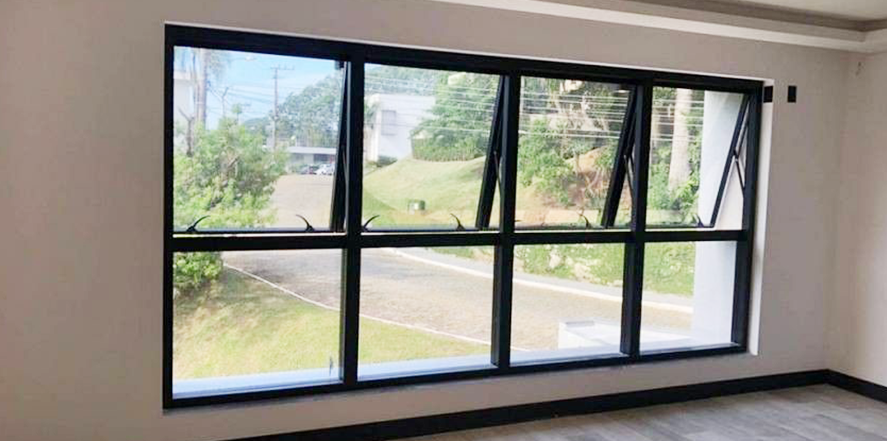
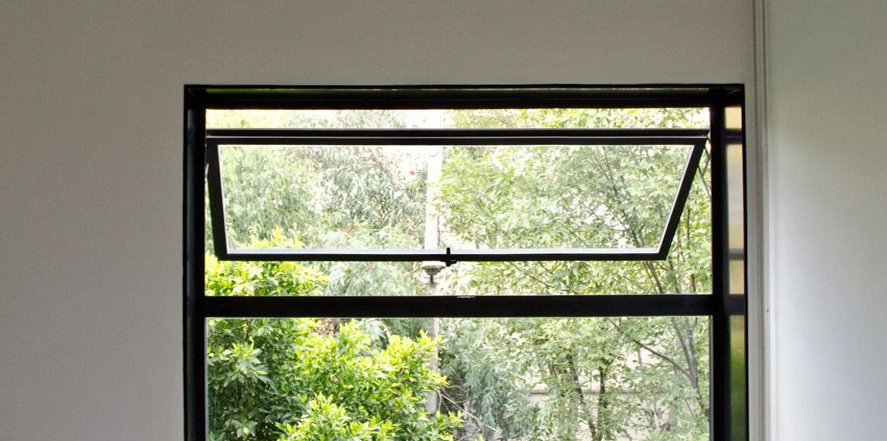
For top-hung openings, CMECH’s Outswing Awning Window Hardware Solution incorporates multipoint locking across sash widths and heights of 400–2,000 mm, with a load-bearing capacity of up to 130 kg. Its friction hinge has undergone more than 35,000 opening-and-closing cycles.
These configurations give fabricators and specifiers a practical starting point when selecting window security hardware for different sash sizes and opening types. As the cycle figures relate to specific components, final selection should also consider the project’s profile, glazing weight, sash dimensions and required air, water, wind and security performance.
CMECH multipoint locking configurations
CMECH’s Inswing Casement Window Hardware Solution uses 304 stainless-steel locking points with enlarged 12 mm diameter rollers that engage closely with zinc-alloy keeps on the frame. This helps secure the sash at multiple positions while supporting consistent contact with the seals. The system accommodates sash widths of 300–1,600 mm and heights of 400–2,400 mm, with a load-bearing capacity of up to 100 kg. Its hexagon spindle drive gearbox has also been tested through more than 30,000 opening-and-closing cycles.
For applications where sealing performance is a particular priority, CMECH’s Tightly Sealed Sliding Window Hardware System uses adjustable mushroom-head locking points with pre-tightening screws. CMECH’s technical material states that the locking points can achieve tensile resistance of more than 5,000 N without obvious deformation, while their height can be adjusted to accommodate installation tolerances. The system also uses quick-install locking points that do not require the connecting rod to be pre-punched, together with locking-point seats designed for easier positioning and adjustment.
Together, these configurations show why effective window security hardware depends not simply on the number of locking points, but on how accurately the locks and keeps engage, how well they hold the sash against the seals and whether the finished window has suitable security, air, water and wind performance evidence.
Find the right multipoint locking system for your project
A secure, closely sealed window begins with hardware designed to work as one system. The lock, keeps, profile, gaskets and installation must work together if a multipoint locking system is to support both security and consistent window sealing performance.
Planning a new window system or reviewing an existing hardware specification? Contact CMECH to discuss the opening type, profile, sash dimensions, glazing weight and required performance. Explore CMECH’s multipoint configurations and request the relevant drawings and test information to select weatherproof window hardware for the project with confidence.
Frequently asked questions about multipoint window locking
What is a multipoint window lock?
A multipoint locking system operates several locking points from one window handle. As they engage with matching keeps on the frame, they restrain the sash in more than one place. The number, position and type of points vary with the window design.
Are multipoint window locks more secure than single-point window locks?
They can make it harder to prise an opening sash away from its frame because force must overcome several engaged points. The result still depends on the keeps, fixings, hinges, glazing and frame. Ask for security evidence for the complete window configuration rather than assuming that more locking points guarantee a particular rating.
How do multipoint locks improve window airtightness?
Engaged locking points can draw the sash against its gaskets at several locations, helping maintain contact along the opening edge. That supports window sealing performance, but the lock cannot correct a damaged gasket, warped sash or poorly sealed installation. Compare air-leakage test results for the finished window.
Can multipoint locking improve resistance to wind-driven rain?
It can help the sash remain seated against the seals as wind pressure changes. Water resistance also depends on the profile, drainage, gasket joints and installation. A lock’s design alone cannot establish a watertightness rating; review water-test evidence for a representative complete window.
Which window components matter most for sealing besides the lock?
The gaskets and their corner joints, sash and frame profiles, hinge alignment and drainage paths all affect how the window closes and sheds water. Even well-designed weatherproof window hardware needs correct fabrication and installation to maintain gasket contact and avoid leakage paths.
What should fabricators check before selecting a multipoint window lock?
Match the mechanism and keep to the opening type, profile groove, sash dimensions and weight. Check point locations, fixing and adjustment details, operating force and applicable component tests. Request air, water, wind and security results for a representative finished window when those outcomes form part of the specification.
Can an existing window be retrofitted with a multipoint lock?
Only if the sash and frame can accept a compatible mechanism and securely fixed keeps without compromising the profile, glazing or operation. Check the available groove, backset, handle drive and clearances with the window or hardware supplier. Where those features do not match, replacing a failed mechanism with a compatible part or assessing the complete window may be more practical.
Find the right multipoint locking system for your project
A secure, closely sealed window begins with hardware designed to work as one system. The lock, keeps, profile, gaskets and installation must work together if a multipoint locking system is to support both security and consistent window sealing performance.
Planning a new window system or reviewing an existing hardware specification? Contact CMECH to discuss the opening type, profile, sash dimensions, glazing weight and required performance. Explore CMECH’s multipoint configurations and request the relevant drawings and test information to select weatherproof window hardware for the project with confidence.

 English
 Arabic
 Chinese
 French
 Thai
 Vietnamese