


Specifying inswing casement window hardware is not just a checkbox on a bill of materials. It determines whether a window seals tight through a storm or leaks within two seasons. For architects, fabricators, and procurement managers across the Middle East and North America, this choice protects both the building envelope and the budget.

Inswing casement hardware is a distinct category from tilt and turn windows. Tilt and turn windows add a separate tilt-ventilation mode on top of the turn function, using the same handle at a different angle. Specifiers should not treat the two as interchangeable when writing a hardware schedule.
What Makes Inswing Casement Window Hardware Solution Different From Other solution?
Inswing casement window hardware pulls the sash inward and compresses it against the frame using a handle-driven gearbox and hinge assembly. Because the entire perimeter engages at once when the handle turns, this action separates casement performance from sliding or hung windows.
How Does the Opening Mechanism Affect Performance?
The opening mechanism affects performance because the gearbox controls how evenly compression reaches the whole sash. A hexagon spindle drive gearbox links the handle to the sash through a center-distance spindle, turning one motion into full-perimeter movement.
As a result, the sash does not rely on gravity to stay sealed. Fabricators who skip this detail often see sashes drift out of alignment within a year, so the gearbox and hinge should be specified as one solution.
What Role Does Compression Sealing Play in Multi-Point Locks?
Compression sealing is what lets a multi-point lock outperform a single-latch design on air and water tightness. A multi-point solution engages hooks and bolts into the keeper profile at once, keeping pressure even along the sash [source: WindowHub].
For example, on a high-rise facade, a single-point latch may hold the center tight while corners flex open under wind-driven rain. A multi-point solution prevents that flex and resists both entry and water infiltration.
What Problems Come From Choosing the Wrong Casement Hardware?
The wrong hardware shows up as air leaks, sagging sashes, or handle failure, usually within two years. Most trace back to undersized hinges and gearboxes never cycle-tested to a real benchmark.
Why Do Some Windows Fail Air and Water Tightness in the Field?
Windows fail testing because the hardware cannot hold even compression across the full sash. Thermal expansion and building settlement shift the sash over time, and hinges without fine adjustment cannot correct that drift.
Compression seals, not the gasket alone, are the primary defense against wind-driven rain [source: Chalco Aluminum]. A premium gasket paired with a fixed, non-adjustable hinge will still leak once the frame shifts.
What Happens When Hinges Aren’t Rated for the Sash Load?
An underrated hinge causes sagging, misaligned lock points, and early gearbox wear. As the sash drifts from the keeper profile, the multi-point lock can no longer engage cleanly.
This is more common now because insulated and laminated glass has made sashes heavier. Specifiers who reuse older residential hinge ratings on commercial glass are the ones most likely to see callbacks.
What Should You Check Before Specifying Casement Window Hardware Solution?
Confirm three things before specifying: hinge load rating against actual sash weight, gearbox cycle-testing data, and compliance with recognized test standards. Skipping any one turns the specification into a guess.
| Check | What to Confirm | Why It Matters |
| Hinge load rating | Matches or exceeds calculated sash weight (glass + frame + hardware) | Prevents sagging and lock misalignment |
| Gearbox cycle testing | Independently stated cycle count | Predicts hardware lifespan under daily use |
| Test standard compliance | Air, water, and structural performance per recognized standards | Confirms real-world weather and wind performance |
How Do You Match Hinge Load Rating to Sash Weight?
Match hinge load rating by calculating the combined weight of the glass, frame, and hardware, then choosing a hinge rated above that figure with margin for wind load. Insulated and laminated glass add load beyond what older residential hinges were built for.
For example, a large commercial opening with double-glazed units needs a higher-rated hinge than a small residential sash. Confirming this at the specification stage avoids costly hardware swaps later.
What Cycle-Testing Benchmarks Should a Gearbox Meet?
A gearbox should carry a clearly stated cycle count before it is specified for commercial or high-traffic use. Cycle testing simulates years of daily operation and reveals whether the mechanism wears out early.
Without this number, a specifier is relying on a claim, not a verifiable figure. Asking for the cycle-test count directly separates durable hardware from hardware that only looks solid in a showroom.
Which Test Standards Verify Air, Water, and Structural Performance?
Performance in North America is verified against NAFS, the North American Fenestration Standard jointly published by AAMA、WDMA、CSA. It incorporates ASTM E283 for air leakage, E330 for structural load, and E547 or E331 for water penetration .
These standards give specifiers a common language across manufacturers. Procurement teams should request documentation referencing them instead of accepting general performance claims.
A Closer Look at CMECH’s Inswing Casement Window Hardware Solution
CMECH is a global window and door hardware manufacturer supplying commercial and residential projects across the Middle East and North America.
Its inswing casement window hardware solution combines an award-winning handle, a hexagon spindle drive gearbox, and adjustable stainless steel hinges for concealed, exposed, or fly-screen-integrated configurations.
What Components Make Up the Solution?
The solution centers on three parts: the handle, the gearbox, and the hinge. The gearbox snaps into the C-groove using a spring-loaded design that needs no secondary profile machining.
Because of this, installation takes fewer steps and leaves less room for on-site error. The hinge comes in 60kg, 80kg, and 100kg grades, and the gearbox is rated to more than 30,000 open-and-close cycles.
What Are the Applicable Specifications?
| Specification | Range |
| 窗扇宽度 | 300–1600 mm |
| 窗扇高度 | 400–2400 mm |
| Load-Bearing Capacity | Up to 100 kg |
| T-Drive Length | 17, 20, 24, 28, 32, 36, 40 mm |
| Spindle Drive Gearbox Center Distance | 11, 13, 22, 25, 30, 35 mm |
These ranges cover standard residential openings as well as larger commercial sashes. Fabricators can standardize on one hardware family across a mixed project scope.
Aluminium Tilt and Turn WindowHardware Solution: Which One Fits Your Project?
The right configuration depends on the visual finish needed and the climate the window will face. Aluminium casement window hardware generally comes in concealed-hinge and exposed-hinge versions, each suited to a different priority.
The same logic carries over to aluminium tilt and turn windows. Because both families share hinge and locking principles, fabricators supplying both lines can often standardize on one configuration approach.
Concealed vs Exposed Hinges — What’s the Difference?
Concealed hinges hide inside the frame when closed, while exposed hinges sit visibly on the frame surface. This visual difference is the main reason architects pick one over the other.
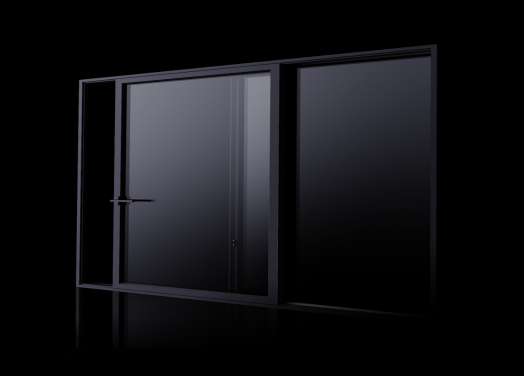
Concealed hinges suit high-end facades needing a clean sightline, but they require tighter fabrication tolerances. Exposed hinges tolerate more field variability, which suits large-scale or fast-track builds needing easy maintenance access.
CMECH’s concealed hinge solution match the structural performance of its exposed alternatives while giving a seamless exterior finish. Because concealed designs skip the color-matched SKUs exposed hinges need, this configuration is widely adopted on Middle Eastern projects.
Inswing vs Outswing — Which Suits Your Climate?
Inswing casement windows open inward, sheltering exterior hardware from weather and simplifying cleaning from inside. Outswing windows open outward, which improves ventilation capture but exposes hardware more directly to rain and wind.
As a result, coastal or high-wind zones typically favor outswing solution with weather-resistant hardware. Projects with interior furnishing constraints favor inswing hardware instead.
How Do You Choose a Casement Window Hardware Manufacturer?
Choose a manufacturer that supplies documented load ratings, cycle-test figures, and specification ranges, not just marketing copy. A supplier that answers technical questions directly, without redirecting to generic brochures, is easier to specify against.
What Qualities Should You Look for in Tilt and Turn Window Manufacturers?
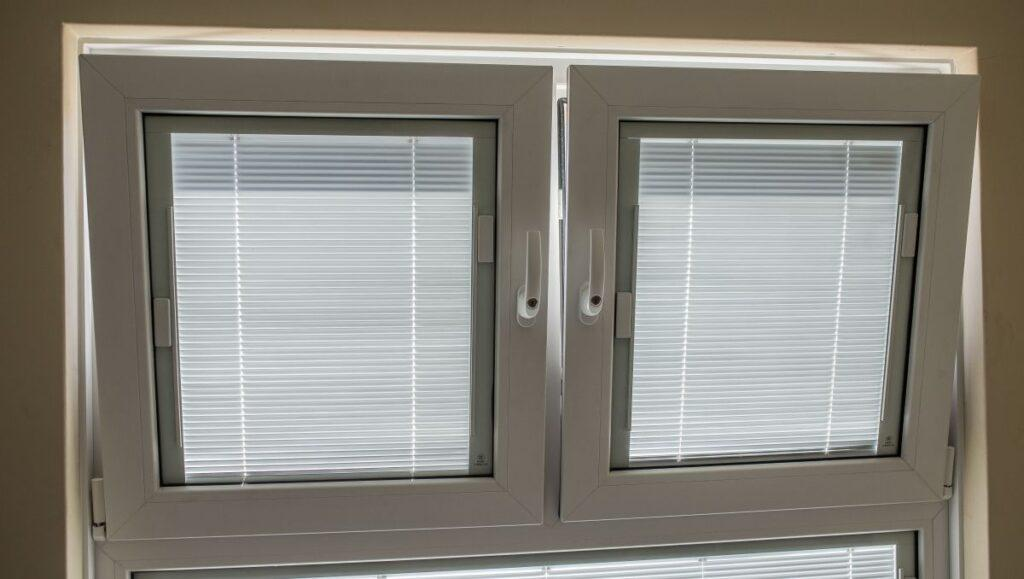
Strong tilt and turn window manufacturers stand apart on four points: verified test data, full configuration coverage, a global project record, and local technical support. Verified test data means independent cycle and load figures, not just internal claims.
Full configuration coverage matters because one project often needs concealed hinges on one facade and both tilt and turn window hardware and casement hardware elsewhere. A supplier limited to one configuration forces the project to split its supply chain.
What Should You Ask a Supplier Before Signing a Contract?
Ask for the hinge load rating in kilograms, the gearbox’s tested cycle count, the sash size range supported, and whether test data references standards such as NAFS or ASTM E283/E330/E547. These four points show whether a supplier engineers to a standard or just assembles parts.
Manufacturers serving both Middle Eastern and North American markets should confirm regional compatibility, since climate exposure and code references vary between regions. A documented project portfolio across multiple climates helps confirm this.
Key Takeaways for Specifying Inswing Casement Window Hardware
Choosing inswing casement window hardware comes down to three checks: does the hinge rating match the sash weight, does the gearbox carry a verifiable cycle-test figure, and does the solution reference recognized test standards? Skipping any of these turns a specification into a guess.
Confirming these details upfront avoids the sagging sashes, failed seals, and handle breakdowns that come from underspecified hardware. Aluminium casement window hardware built around CMECH’s hexagon spindle drive gearbox and multi-rated hinge solution gives project teams a documented starting point.
 English
 Arabic
 Chinese
 French
 Thai
Thai Vietnamese